Stucco Contractor & Stucco Repair in La Verkin, UT | Washington Elite Stucco

Washington Elite Stucco is a stucco contractor with 15 years of work behind it, and we serve La Verkin, UT as part of our Washington County stucco company footprint.

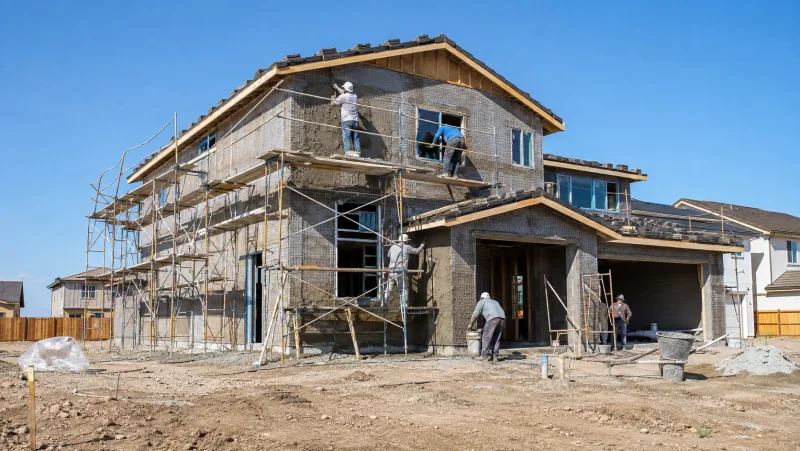
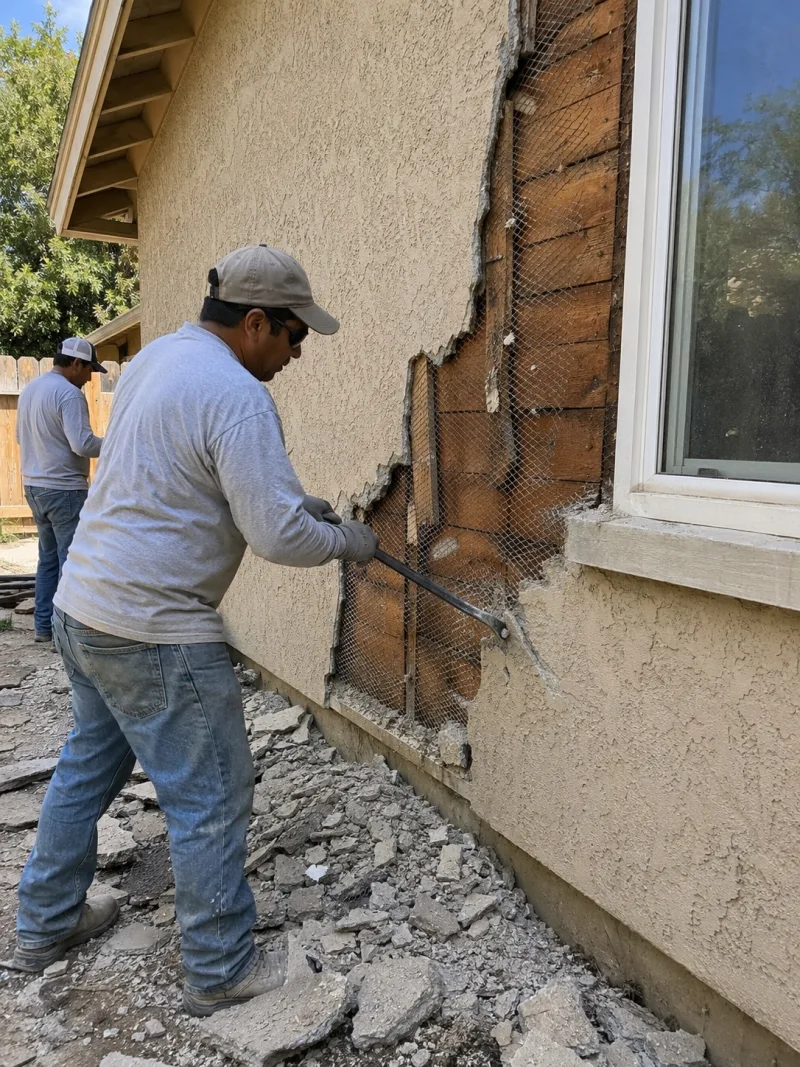
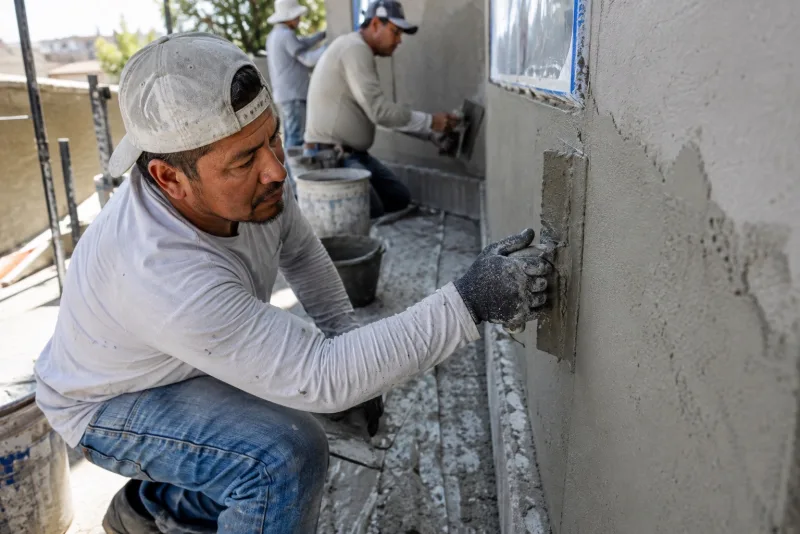
Stucco is cement plaster on the outside of a wall, and we group the work by what your wall needs. We handle stucco repair for cracks and patches, recoat a tired elevation, the side of the house a contractor treats as one face, remove and rebuild failed walls, add plaster to houses and block walls, trace water damage, renew color with an acrylic finish, and work on commercial walls, new construction, additions, decorative detail, and interior plaster.

That range matters because La Verkin homes do not all reach the same stucco problem at the same time. A newer wall may need sealant or color work, while an older face may need deeper repair before another coat belongs on it. The first visit sorts those paths before pricing.

La Verkin sits on the rim above the Virgin River at 3,816 feet, so one face of a building can take far more sun than another. We plan around ASTM C1063 control joints and the code curing intervals, and our 1,000+ completed projects give the estimate a practical base before work is priced.

For a free estimate in La Verkin, call (435) 319-6039 or use the quote form.

Get A Free Estimate

Why La Verkin Property Owners Call Washington Elite Stucco

Walls on open, high ground spend long days in sun and then cool after dark, so a stucco contractor has to think about movement before the finish goes on. Washington Elite Stucco brings 15 years on Washington County walls to that kind of surface, along with the planning a local stucco company needs before anyone touches your wall.

We also work across the river in Hurricane.

Washington Elite Stucco is a licensed stucco contractor and is insured, carries general liability and workers compensation for crews on the property, gives free estimates, and has completed 1,000+ projects. The estimate visit gives you a written scope within 24 to 48 hours, and that scope names the system, coats, finish, and color instead of leaving the work open-ended.

The same scope also explains how we will control movement in the wall:

  • We lay out each control joint, a deliberate break where the wall can move instead of cracking across the open field.
  • We follow ASTM C1063 panel limits: about 144 square feet, no side longer than 18 feet, and a length-to-width ratio no greater than 2.5 to 1.
  • We choose one-coat, three-coat, or acrylic finish systems by the surface underneath and the way the wall is used.
  • We match texture and color by hand, so a repair does not announce itself.

To book a free estimate visit, call (435) 319-6039 or use the quote form.
Stucco Contractor Services Across La Verkin, Utah

A La Verkin address does not change which stucco services you can get, but it does change the order a stucco contractor should inspect and plan them. We look first at exposed faces, then at the surface underneath the cement plaster or acrylic finish.

Why One Side of a La Verkin House Ages First

Open ground at 3,816 feet leaves many La Verkin walls with almost nothing to shelter them. The sun crosses the house through the day, and the south and west elevations usually take the hardest sun exposure. Color goes flat first on those faces, and sealant at windows, doors, and other openings dries and shrinks there before the shaded sides show the same wear.

We read each elevation separately because the four sides of your house can be in different condition. That keeps stucco repair from becoming a whole-house price when only one or two faces need attention.

  • We compare color on each face against a sheltered reference area on the same house.
  • We check the sealant joint, the flexible line that closes the gap around an opening, at every window, door, and wall penetration.
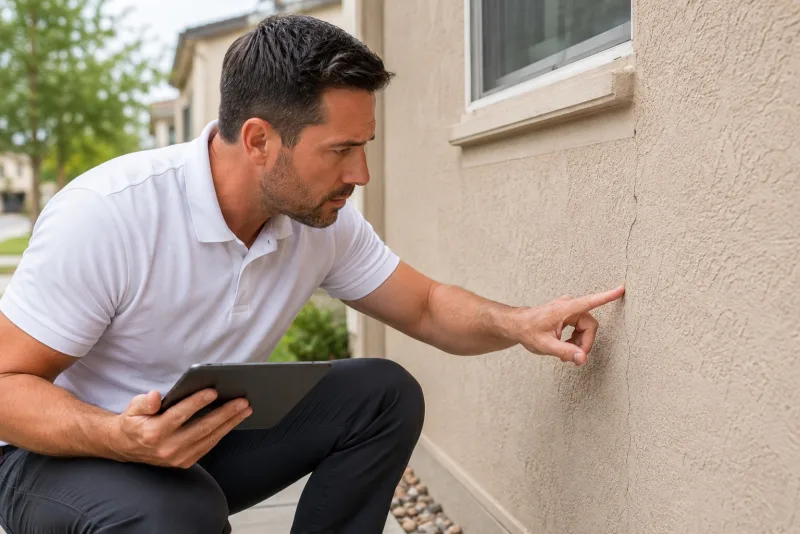
  • We measure crack width, and a crack over about 1/16 inch gets a closer look before anyone fills it.
  • We record control joints as stopping points for inspection and repair.
  • Where a face has been wet, we use a moisture meter on wood sheathing; about 19 percent moisture content means investigate before rot becomes more extensive.

That moisture number is a signal to look farther, not proof that the wall has failed and not a reason by itself to condemn the wall. The same practical limit applies to the rest of your inspection: two faces may need nothing this year, while the sun-struck side needs repair or recoating planned on its own.

About La Verkin, Utah

La Verkin, Utah was settled in 1897 under Thomas Judd and became a city in 1927. The town had 4,354 people at the 2020 census, and it sits on the bench above the place where Ash Creek and La Verkin Creek meet the Virgin River.

Confluence Park fills 344 acres in the gorge below the basalt cliffs on Red Cliffs Desert Reserve land. An old hydroelectric plant and a grain silo still stand there, while Pah Tempe Hot Springs sits along the Virgin River as a sulfur spring site. In town, La Verkin Elementary School is the only public school, and older students cross the river to Hurricane.

State Route 9 passes through La Verkin as the Zion Park Scenic Byway, so you see the town as the threshold between the Washington County valley floor and the road toward Zion. The town name has two separate origin accounts: one traces it to the Spanish phrase la virgen, after the river, and another traces it to an 1852 transcription meaning beaver skin.

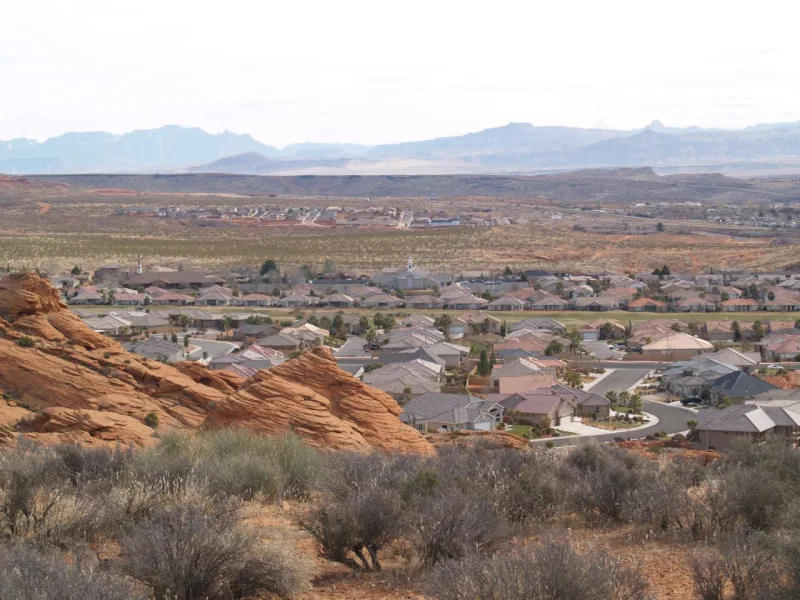
Red rock country in Washington County, Utah

The La Verkin Subdivisions a Stucco Contractor Sees Most

La Verkin was built in distinct pushes, so houses on the same streets often reach the same stucco problems at about the same time. A little over half the town's houses wear stucco or plaster, but the age of the walls and the material on the front of the house change from subdivision to subdivision.

Pheasant Glen: Crack and Sealant Work on Thirty-Year-Old Plaster

Pheasant Glen streets filled in through the 1990s, and the largest group of houses was finished in 1995 and 1996. Thirty-six houses in that group have cement plaster, so many calls begin with tired sealant at the openings and movement showing at the joints. Your next-door house may be the same age, but its sun-facing wall can look different from yours.

Hillside Terrace: Resurfacing and Recoating a Faded Elevation

Hillside Terrace is mostly single-story houses built from the early 1990s through the mid 2000s. One house on the street is not plaster; the rest are. The houses average around 1,360 square feet, so the long, low walls put much of the surface on one or two elevations. Here, the work is usually a whole sun-facing side rather than a small patch.

Crestview: Removal and Replacement Where a Patch Will Not Hold

Crestview mixes older and newer houses, with construction dates from 1977 through 2010. Cement plaster sits next to lap siding, overlapping boards or panels used as siding, and masonry veneer, a thin brick or stone face over a framed wall. Because the street is mixed, we read the match from your house. On the oldest plaster, the question is whether another patch will hold; when it will not, the plaster and lath come off and the sheathing can be seen open.

Cottonwood Hollow: Matching an Addition to a Wall Only a Few Years Old

Cottonwood Hollow houses are recent, finished between 2020 and 2022, and about thirty average roughly 2,080 square feet. Matching an addition means coating the new wall so it meets the existing wall without leaving a visible stop line. Because those walls are barely weathered, color is often easier to match than texture, so we plan the join where the wall turns. The sealant is still on its first cycle, usually five to ten years.

Patch, One Face, or the Whole Wall

A patch, one whole face, and more than one face are the stucco services behind one decision: where can the new work stop without showing? A small repair can work when damage is contained and the edge can disappear. Fresh color beside weathered color, or a texture that is close without matching, draws attention even when the plaster underneath is sound.

We sort that choice by looking for places where the wall already changes:

  • We stop a patch or stucco resurfacing at a control joint, an inside corner, or a change of plane.
  • We match lace, smooth, knockdown texture, or sand texture by hand on a sample board first.
  • We use integral color, the color mixed through the finish coat, when the wall calls for it.
  • We use a fog coat, a thin color coat over cured stucco, when a whole elevation needs one tone.

An acrylic finish is a finish material; putting one on a hard-coat wall, a wall made from cement plaster rather than a lightweight exterior insulation system, does not make that wall EIFS. The choice is how the finish handles water and movement on your wall.

One whole face becomes the better answer when fading has gone too far for a patch to match, cracks run through the open field, sealant is gone at most openings, or damage covers a large share of the elevation. That choice gives you one continuous finish, one color, and joints reset together, but the scope is not decided in advance.

Curing also shapes the schedule. We apply the brown coat, the leveling coat under the finish, no sooner than 48 hours after the scratch coat, the first rough coat. We apply the finish coat a full seven days after the brown coat. In hot dry air, those intervals are minimums to stretch, so fresh plaster gets moist curing, added water that lets plaster harden instead of drying too fast.

Late-summer monsoon rain can drive water onto green plaster, uncured plaster that has not hardened enough to resist it, and near-freezing nights stop application. La Verkin sits at 3,816 feet, above the valley-floor towns and well below the highest communities we serve, so colder nights change timing more than wall design. Where water has got in, we settle that before anything is taken whole. Wall area, access, and whether the lath comes off drive cost, so call the stucco company at (435) 319-6039 or use the quote form.
Stucco Questions From La Verkin Owners

These are the questions La Verkin owners usually need answered before they ask a stucco contractor to inspect the house.

Why is the south side of our house so much worse than the north side?

The south side gets much more direct sun, and the north side gets the least. The added point for your wall is comparison: two faces on the same house can look a decade apart, so a repair plan should be based on the damaged face, not the age of the house as a whole.

Can you recoat one wall, or does it have to be the whole house?

One wall is common here when the scope is priced by elevation, but the new coat still has to meet the weathered wall beside it honestly. On an unevenly faded face, the answer is often one whole face at a time or a fog coat over the whole elevation, not a single open-wall patch left to match itself.

Will a new finish fade as fast as the old one did?

Not usually, because pigment choice changes how the surface ages. A finish chosen for strong sun still lightens over time, but it tends to lose tone more evenly. That matters on your wall because even fading is easier to maintain later than a surface that turns patchy beside doors, windows, and shaded returns.

How far out from Washington do you actually work - does that include La Verkin?

Yes, La Verkin is one of the towns Washington Elite Stucco works in every week. Coverage runs across Washington County, and the answer does not change because of the drive. That matters for your estimate because the same crew can price the wall by condition and access rather than treating the address as a special trip.

Our house is one of the newer ones. Why would it need stucco work already?

The plaster may not need work, but the sealant can come due first. Joints at windows and doors reach their end before the wall finish does, and renewing them early keeps the gap closed before water can get behind the wall. On a newer house, that can mean small sealant work instead of opening plaster later.

There is a hairline crack on our west wall. Does it need anything?

Probably not on its own. Photograph the crack with a coin beside it, then compare the width again in a year so you can see whether it is staying hairline or opening farther. If the crack widens, branches, or lets the edge move, the photo gives the contractor a clear change to inspect.

Get a Free Stucco Estimate in La Verkin

A free estimate from Washington Elite Stucco starts with each of the four elevations looked at on its own terms. You see which faces need work, which materials each one takes, and what we would charge for them, before you decide anything.

Call (435) 319-6039 or use the quote form to schedule your free estimate visit in La Verkin.