Stucco Contractor & Stucco Repair in Pine Valley, UT | Washington Elite Stucco

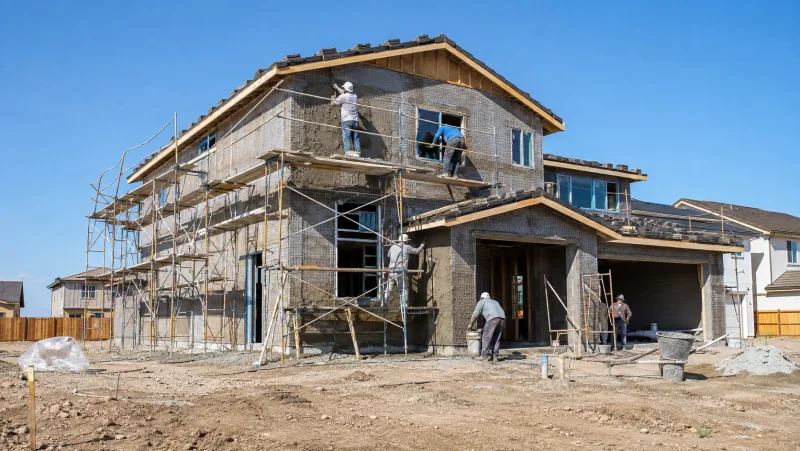
Washington Elite Stucco is a stucco contractor serving Pine Valley property owners who need repair, removal and replacement, installation, or new construction work on cement plaster walls.

Our stucco work reaches across Washington County, including this valley. Pine Valley sits at 6,542 feet, 3,648 feet above Washington City, and the season for exterior work is shorter here than it is on the valley floor. That does not change how your wall is built. It changes when a coat can go on, which is why we book exterior work around the weather rather than the calendar.

ASTM C926 is the trade standard for mixing, applying, and curing cement plaster. The same visit can cover three-coat stucco, recoating, painting, decorative detail, and interior plaster, with exterior work sorted into the weather window the wall needs.

Call (435) 319-6039 or use the quote form to request a free estimate for stucco work in Pine Valley.

Get A Free Estimate

Why Pine Valley Property Owners Call Washington Elite Stucco

Washington Elite Stucco looks at access, wall condition, and exterior plaster timing before we quote a Pine Valley repair or installation. You should know before work begins whether the proposed wall work fits the property in front of us.

The company is licensed and insured, with general liability insurance and workers compensation for the crews on your property, and has 15 years of experience.

Our first visit separates the choices that can look similar from the ground:

  • We separate framed plaster over lath, thinner engineered one-coat stucco systems, and drainage EIFS, a complete insulated cladding system with a path for water behind it, before recommending a wall assembly.
  • We use a moisture meter when staining, cracking, or soft areas suggest water may be moving behind the finish.
  • We keep framed walls and masonry separate, because block does not need lath, the wire sheet that holds plaster on framed construction, but block still needs surface preparation.
  • We match a repair into the wall already there, including texture, sand, and integral color, where the existing finish allows it.

When you are ready to start, call (435) 319-6039 or use the quote form for a free estimate and a written scope before work begins.

We also work in New Harmony.

Stucco Contractor Services Across Pine Valley, Utah

Our stucco services menu in Pine Valley runs from a new exterior on a building shell to a small repair on a wall that has started to open. The first visit places your wall in that menu before we talk through the repair, coating, or installation that fits it.

When a Stucco Contractor Can Work at 6,542 Feet

Exterior cement plaster in Pine Valley can start only when the wall has a run of workable air temperatures. A local stucco contractor has to account for that before a wall you want finished this year reaches the crew calendar, because the coats do not all go on in one warm afternoon.

How Long the Cold Lasts Here

Washington County's general plan records winter daytime temperatures in Pine Valley as often below freezing, with nights well below zero (Washington County general plan for Pine Valley). A cold night can delay a morning, but cold that stays through the day closes a stretch of the year.

ASTM C926 sets a 40 degrees F floor for exterior plaster while the coat is applied and for 48 hours after. Ambient temperature means the air around the wall as the coat goes on. Cement plaster hardens through hydration, a reaction that needs water and warmth, and cold slows or stops that reaction. The same county plan puts summer highs here in the 80s, against well over 100 in the lower valleys, so the workable stretch is warmer but not the same long hot season a lower town gets.

Why the Job Needs a Run of Weather, Not a Warm Day

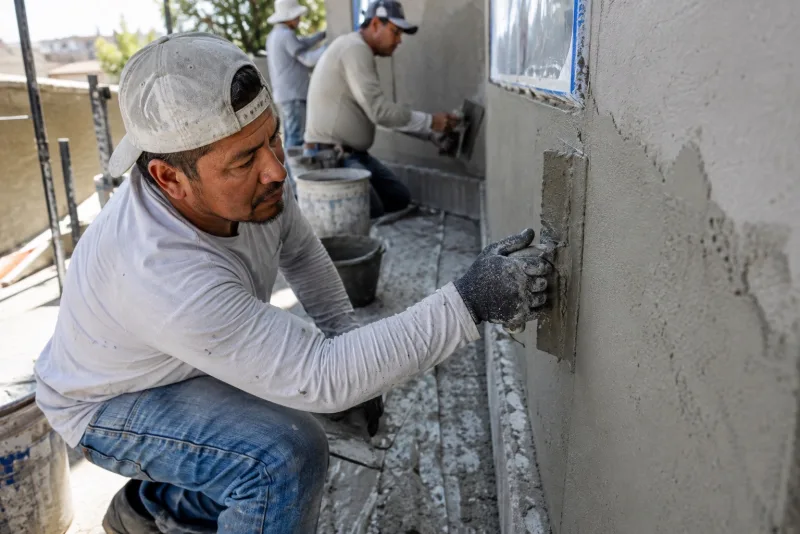
Three-coat stucco has waiting time built into the wall. The brown coat goes on no sooner than 48 hours after the scratch coat. The finish coat waits at least a full seven days after the brown coat, and each coat is kept moist at least 48 hours in between.

Moist curing means keeping a fresh coat damp so it can keep hardening. Those intervals are minimums, and cold nights can stretch them. That is why we book exterior plaster as a block of days in Pine Valley rather than treating one clear afternoon as enough weather for the wall.

About Pine Valley, Utah

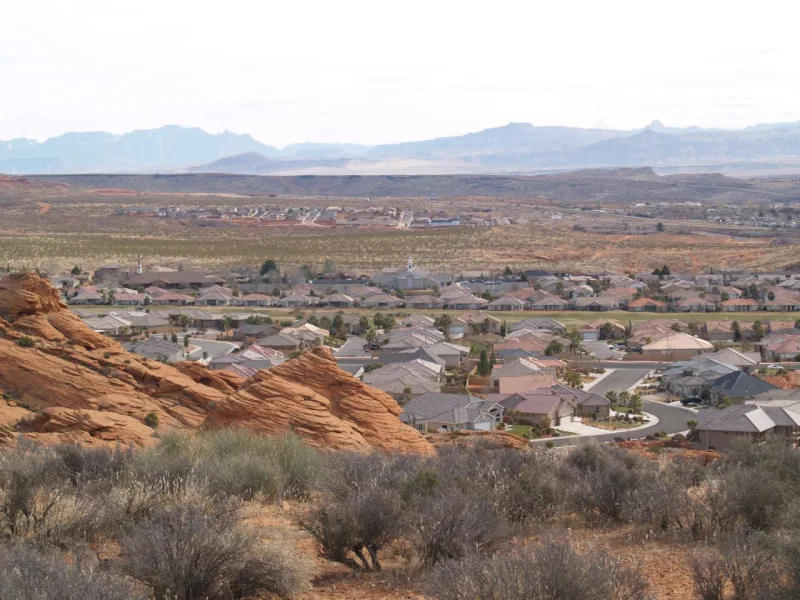
Pine Valley is a small community at the head of the Santa Clara River, northwest of the valley floor and up in the Pine Valley Mountains. Private land sits here with Dixie National Forest on every side, so your property is part of a small developed area within a much larger forest.

The settlement began in 1859, after a sawmill was built here in the fall of 1855. Pine Valley timber supplied the St. George valley and beyond, including timber for the St. George Tabernacle and the organ in the Salt Lake Tabernacle.

The Pine Valley Ward Chapel gives that history a visible center. It is the oldest Latter-day Saint chapel in continuous use, built in 1868 from native timber cut here, and Ebenezer Bryce, a shipbuilder, designed and built it on an upside-down boat scheme. The Pine Valley cemetery and the Pine Valley fire station with the post office beside it on Main Street are part of the same small town setting.

Red rock country in Washington County, Utah

Where We Work Around Pine Valley

The county's community plan names four areas in Pine Valley, and stucco siding work is not the same in all of them. Pine Valley Ranchos, the original town site, the east end, and the meadows along the Santa Clara River each put a different question first when you ask us to look at a wall.

Pine Valley Ranchos: New Plaster on the West Side of the Valley

Pine Valley Ranchos is the west area of the valley, one of the residential areas named in the county plan. We prepare a wall for its first stucco surface by establishing a firm base, adding the barrier that keeps water out, attaching lath to hold the plaster, and applying the plaster coats that form the new exterior. We check the wood sheathing type and whether a water-resistive barrier is present before quoting plaster over existing cladding.

The Original Town Site: Recoating Walls in the Old Center

The original town site is the central area, laid out in lots, blocks, and streets, and the community town site runs to roughly 1,300 acres. Pioneer homes built by early settlers are still in use there. We recoat an old wall by checking the existing plaster, repairing loose or damaged areas, and applying a new finish that gives you an even color and texture without removing sound plaster that can remain in place.

The East End: Tying an Addition Into an Existing Wall

The east end lies between the original town site and the forest boundary. When new work meets an existing wall, we place a control joint at that boundary. A control joint is a planned break in the plaster, and ASTM C1063 calls for one between dissimilar construction. An addition sits on its own footing and moves on its own, so the plaster is deliberately broken there instead of being carried across the join.

The Meadows Along the River: Damage at the Base of the Wall

About 550 acres of meadow run through the center of the valley, sub-irrigated by the Santa Clara River, with a high water table under much of it. At the base of a plaster wall, the weep screed is what drains that ground water back out. IRC R703.7.2.1 places it at least 4 inches above bare earth, or at least 2 inches above a paved surface. Built-up soil or gravel against that edge is the first thing we check.

Old Houses, and Houses Nobody Is Watching

Pine Valley has old houses with hidden repair histories and houses that stand empty for stretches. A local stucco company uses the first visit to check the wall surface, the base of the wall, and any places where water may have moved behind the cement plaster.

We take moisture meter readings where cement plaster looks stained, soft, swollen, or cracked, and what we find goes into the written scope. You decide from a description of your wall, not from a number that assumes the wall is built one way.

Houses That Stand Empty for Part of the Year

Some Pine Valley houses stand empty for part of the year, so exterior damage can remain unnoticed for months. The town had 249 people at the 2020 census, while the 2010 census counted 186 residents and 461 housing units. That is why a first visit here is a survey rather than a look at the spot you called about. We walk every exterior wall and the base of it, where ground water gets in, so a defect that has been spreading unseen is found on the visit rather than a season later.

What Is Behind the Wall of an Old House Here

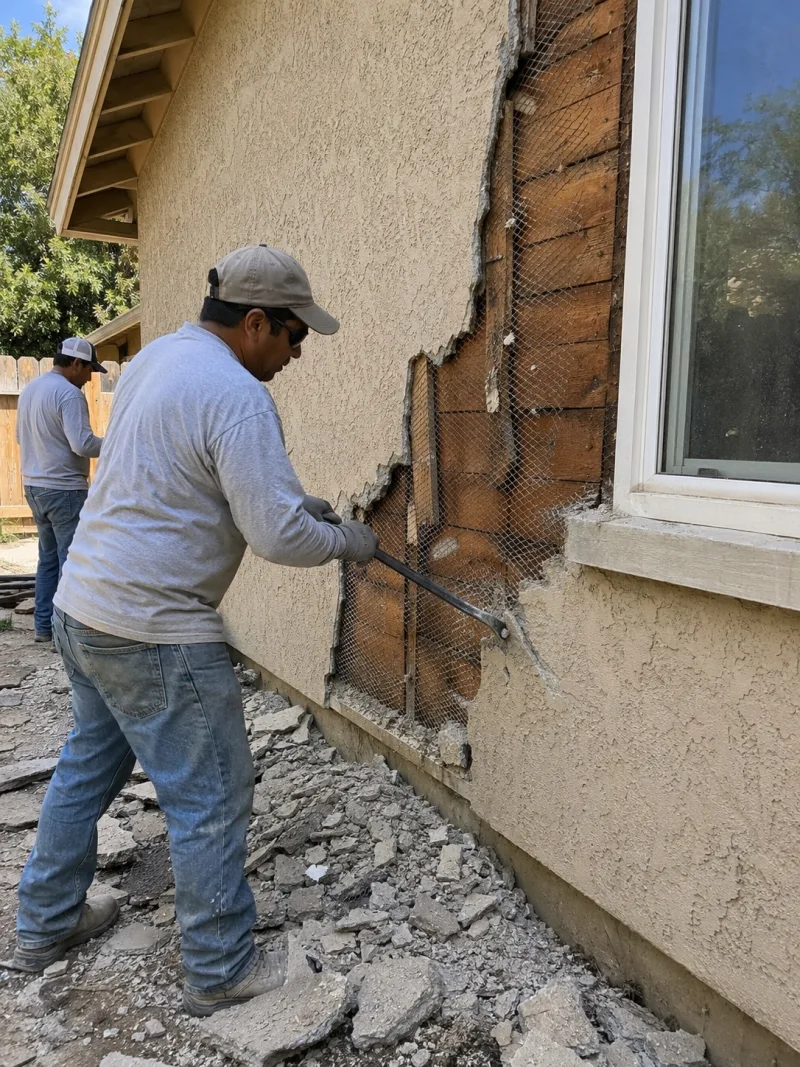
Houses from the sawmill years are still lived in, and an old framed wall may have been repaired, coated, or re-clad several times. That build-up is not visible from outside, so the strongest first-visit record is a test opening, a small opened area that shows the layers behind the surface. What we find separates a patch, a recoat, and tear-off, and the bond still has to be settled before anyone decides whether a bonding compound belongs on the wall.

If you want us to inspect a Pine Valley wall and write down what the first visit found, call (435) 319-6039.

Permits, and Who Decides Your Finish Color

Pine Valley is unincorporated, so Washington County Community Development manages each building permit and inspection (washco.utah.gov/departments/community-development). The valley also has its own general plan, with a 2010-11 addendum, but that plan is guidance rather than an ordinance, a review, or an approval (washco.utah.gov, Pine Valley community general plan).

The plan's building recommendations point in a consistent direction:

  • It encourages homeowners to use earth tones on exterior and roof treatments.
  • It carries goals for height, scale, and historic character.
  • It tells the county not to permit building in meadow flood-plain areas.

Those policies are addressed to the county rather than to you, and none of them is a specification for your wall. The plan can ask for a visual direction, but the finish color on your house is still your choice.

Washington Elite Stucco helps you make that choice by explaining how color ages on plaster. Integral color is mixed into the finish coat, while a coating puts color over that coat after the plaster cures. Sun pulls color from every exposed wall over time, but color mixed into the coat tends to fade more evenly than a coating over it and is easier to match when a repair comes later.

Stucco Questions From Pine Valley Owners

Pine Valley owners usually ask a stucco siding contractor about timing, access, and old walls before they ask about finish. The answers below start with those practical limits.

Can stucco go on a Pine Valley house in the winter?

Not on an exterior wall through the cold months. Pine Valley is the highest of the 19 places in Washington Elite Stucco's stated service area, at 6,542 feet, and it sits 1,223 feet above New Harmony, the next highest place on that list. That height gives exterior work here less room on the calendar than any other town we serve.

How far ahead should I get on the schedule for a job up here?

Earlier than you would for a valley-floor house. One paved road reaches the valley from Central, and most streets inside Pine Valley are gravel, so access is part of the schedule before materials or crew time are set aside. That access means we book the job as a continuous run of working days rather than fitting separate visits between calls on the valley floor, with materials and crew time reserved together.

Will you work on one of the old houses in the valley?

Yes. An old wall's build-up is checked before anything is quoted because older houses may have more than one layer of repair, coating, or cladding under the surface. Over an existing plaster wall, a test application settles whether new plaster will bond, or we apply a bonding compound first. The result tells you whether the old plaster can stay, and it lets us include the required surface preparation in the quoted scope.

Do you come all the way up to Pine Valley?

Yes. Pine Valley is one of the 19 places in Washington Elite Stucco's stated coverage, and the road up runs through Central, which is also on that coverage. Washington Elite Stucco includes the trip through Central when we prepare the estimate and plan the crew's visit, rather than treating Pine Valley as an exception after the wall has been measured.

Is a wall up here built differently from one in Washington or St. George?

A Pine Valley wall uses the same assembly, coats, and thicknesses as one lower in the county. IECC climate zone 3B is assigned at county level, so Pine Valley sits in the same zone as the valley-floor towns even though higher communities have colder nights and a longer cold season. The elevation changes when exterior plaster can go on because colder nights leave fewer suitable days, rather than changing how we build the wall.

Will a patch match the rest of my wall?

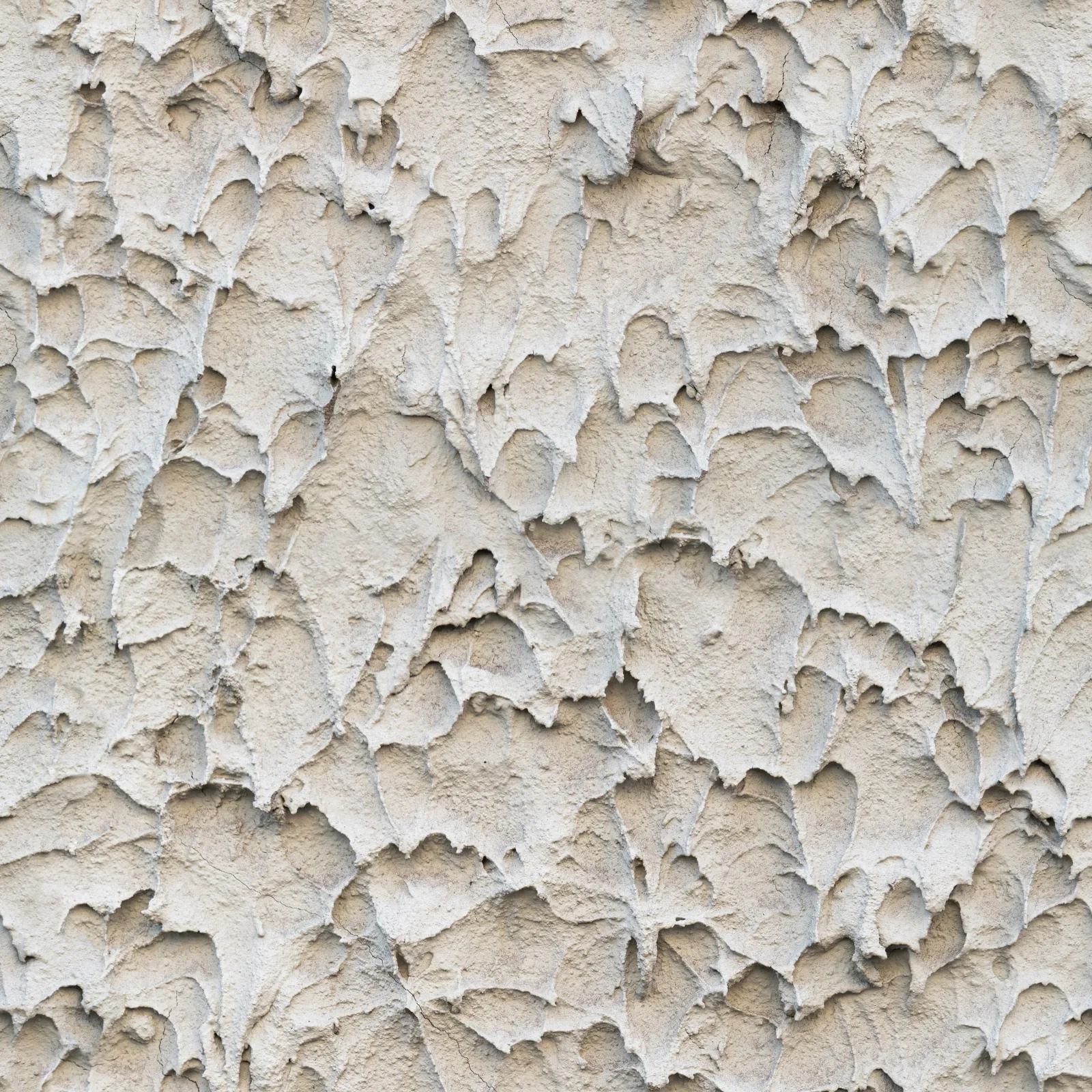
A patch matches when the sand, texture, and color are handled together. We compare those three pieces whether the wall has a knockdown texture, a flattened raised pattern, a smoother finish, or integral color. If a whole elevation has drifted, a fog coat, a thin color coat over the existing finish, can bring the wall back to one color instead of leaving a bright square. We feather the patch edge, thinning it into the surrounding finish rather than stopping it at a hard line.

Get a Free Stucco Estimate in Pine Valley

Washington Elite Stucco gives you a free on-site estimate in Pine Valley. Within 24 to 48 hours of the visit, we send a written scope that names the system, the coats, the finish, and the color.

To get started, call (435) 319-6039 or use the quote form to schedule your free estimate.