
Stucco Removal & Replacement in Washington, UT: Tear-Off, Substrate and Re-Stucco | Washington Elite Stucco
Washington Elite Stucco provides stucco removal & replacement for homeowners and building owners in Washington, UT, backed by 15 years in business. Your wall's appearance is a weak guide to what it needs, because some walls that look ruined are still sound behind the finish and some walls that look acceptable are hiding failure behind the surface.
Stucco removal can mean a whole-house tear-off, a single-elevation tear-off, or removal down to the framing so the wall can be rebuilt instead of covered again. Once the wall is open, we can plan the stucco replacement, choose the system that goes back on, price re-cladding in another material, and rebuild the flashing, penetrations, and trim that have to meet the new wall.
We measure your wall area before we recommend re-stucco, and the opened wall shows whether the sheathing, the boards behind the exterior, can still carry the new metal lath and finish. ASTM C926 governs cement plaster work on the new wall, so the replacement has to be planned around the coats, materials, and workmanship the standard covers.
For stucco removal and replacement in Washington County and the St. George area, call (435) 319-6039 or request a quote through the quote form.
Get A Free Estimate
What We Do
When Removal Is the Right Call
Stucco removal & replacement starts with two checks: how much wall area is failing and whether the substrate, the surface behind the finish that the stucco depends on, is sound. A wall can look alarming from the driveway and still need a repair rather than replacement. Another wall can look presentable while the material behind the finish coat has already lost its grip.
Measuring the Damage Instead of Judging It
A typical patch covers 10 to 20 sq ft, while one elevation, meaning one outside face of the building, can carry hundreds of square feet of wall area. The useful comparison is not the failing area against the whole house. You compare the failing area with the elevation it sits on, because every patch adds an edge, and each patch edge gives the repair another place to show.
Many small repairs on one elevation can cost more than stucco replacement for that elevation because each repair needs its own cut, texture match, and tie-in. We measure the wall on site before we make that call, because the measurement shows whether the damaged spots are isolated or connected across the same elevation.
When the Substrate Is the Problem
Stucco removal becomes necessary when the wall behind the finish cannot hold a repair. Metal lath that has corroded through loses its grip before the outside finish always shows the failure. OSB sheathing that has gone soft cannot carry a new coat, and we address stud framing that has stayed wet long enough to lose strength before any new exterior surface goes back on.
Confirming that condition means opening a section of wall. The open wall can show failed lath, soft sheathing, or weakened framing, but replacing stucco without establishing why the wall failed can leave the same cause in place. Cracks that follow the foundation or run corner to corner across windows and doors can keep opening through a new wall if ground movement is not addressed first.
The Four Kinds of Stucco Removal & Replacement
Stucco removal & replacement is not a single scope with one price and one method. In each version, old wall material comes off and a new exterior wall system goes back on. The difference is the amount of wall removed and the material that replaces it, so the right re-stucco plan depends on what you want changed and what the opened wall can support.
Whole-House Replacement
Whole-house stucco replacement removes the exterior finish from every side of the house, then rebuilds one continuous wall system around the structure. Owners choose it when failure is spread across the house, or when they do not want one new wall meeting older stucco at visible boundaries. Doing every side at once avoids staging the same disruption again later and gives the house one texture match and one color plan. The tradeoff is that the whole exterior is open during the job, so protection, access, disposal, and the rebuild sequence all have to be planned as one project.
One Elevation at a Time
Single-elevation stucco replacement removes and rebuilds one side of the house while the other sides stay in place. This version fits when the damage sits on one elevation, or when your budget has to be staged across more than one season. Fresh stucco has to meet the older walls somewhere, so the boundary belongs at an outside corner, a trim band, or a control joint, the planned break that lets stucco stop cleanly. Aged stucco and fresh stucco are not the same color, and a fog coat, a thin color coat over the full elevation, brings the surface color closer together.
Tear-Off Down to the Framing
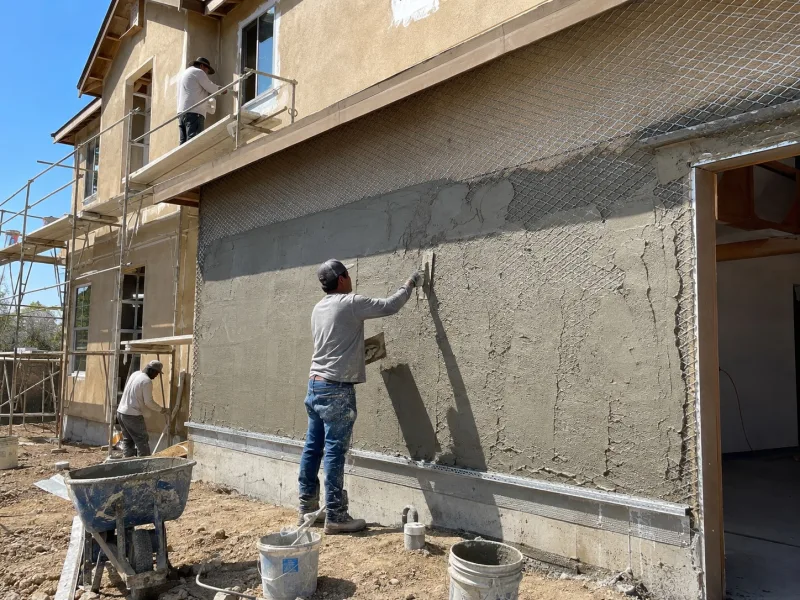
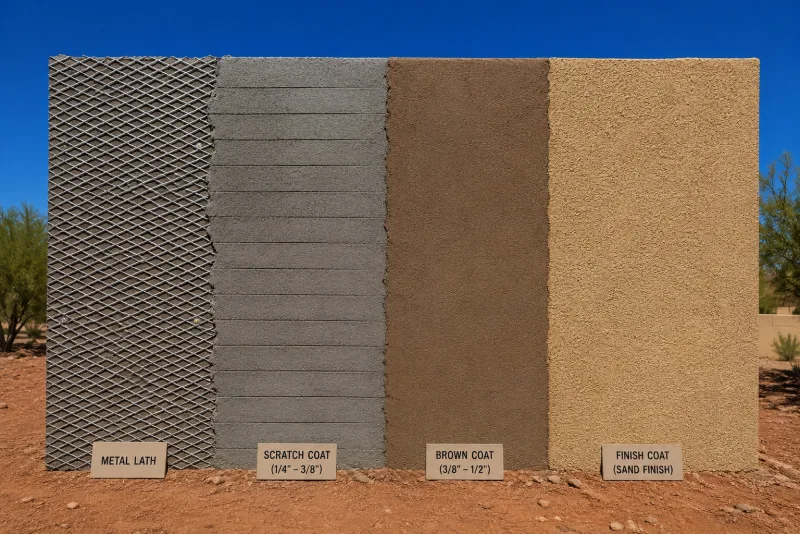
Deep stucco removal starts with the finish, then the brown coat and scratch coat, the cement layers under the finish. The metal lath and furring nails, the fasteners that hold lath slightly away from the wall, come next. We remove the building paper behind the lath because that old water-resistive barrier is the weather layer behind the stucco and is not reused after the wall is opened. We stop removal at the framing and sheathing unless those parts are compromised, and we replace bad sheathing before the new water-resistive barrier and lath go back on.
Choosing the System That Goes Back On
The replacement wall can be traditional three-coat stucco, an engineered one-coat stucco system installed under the manufacturer's ICC-ES evaluation report, the published approval that tells the crew how that product is allowed to be used, or an acrylic finish over a cement base. Three-coat stucco uses separate cement layers. One-coat stucco uses a tested manufactured system. Acrylic finish, sometimes called synthetic stucco, is the finish material. An acrylic finish over hard-coat stucco does not make the wall EIFS, which is a complete insulated cladding system, and the re-stucco scope should name that difference clearly.
We choose among those systems by looking at the substrate, the exposure, and the material on the rest of the house. That keeps the replacement tied to the wall you have instead of treating every tear-off as the same job.
Taking a Wall Down Without Taking the House With It
A tear-off removes stucco from your house while windows, doors, roof edges, paving, meters, vents, and planting stay attached to it. We remove the stucco while keeping the glazing in the windows, the roof edge, and the hardscape below the wall intact. That is why stucco removal starts with protection around the parts the old wall touches.
Protecting What Stays
We mask windows, doors, and their frames before demolition starts. We protect the roof edge flashing where roofing materials lap the wall, then locate and cover each service penetration, including meters, vents, and utility openings. At the base of the wall, drop cloths and other protection keep falling debris off planting and paving where the rubble lands first.
Dust control begins where the cement plaster is cut or ground. A tear-off in a dry climate sends dust farther than many owners expect, so water or on-tool extraction keeps dust down while the wall is being opened. Managing dust at the tool keeps the job from turning into cleanup after the dust has already moved across the property.
Where the Old Wall Goes
Cement plaster is dense, and an elevation's worth of old wall can be measured in tons rather than bags. The debris goes into a debris container as it comes down instead of being allowed to pile up against the house. The site is cleared daily, so disposal is part of the stucco removal plan and a real line in the price.
Older buildings can contain asbestos in original wall materials, and that possibility has to be tested before demolition. Testing and abatement are licensed specialties, so Washington Elite Stucco refers that work to a licensed specialist and does neither as part of the tear-off. That keeps the replacement scope focused on the wall material we are qualified to remove and rebuild.
What a Stucco Removal & Replacement Exposes
A stucco removal & replacement opens the wall assembly for a short period, which means the wall can be seen instead of inferred from the outside. The first scope is still written from a closed wall, so the tear-off gives you information no contractor could honestly have before demolition. While the wall is visible, we photograph the conditions instead of relying on a description after the wall is covered again.
Reading the Sheathing and Framing
We check whether OSB sheathing or plywood sheathing is firm, stained, soft, or separating into layers. We check lath, fasteners, and building paper at the same time, because corrosion can weaken the attachment before the finish shows much change. We compare stud framing where water has reached it with sound framing nearby, then leave sound framing alone.
We take a moisture meter reading and record it against the elevation. The record gives you and the crew the same reference point for the exposed wall, and the reading shows whether the opened wall needs more investigation before it is covered again. Most walls open up sound enough to rebuild, and that result is as useful as finding damage because it keeps the stucco removal scope from growing without a reason.
Why the Scope Can Change After the Wall Is Open
Stucco replacement can change after demolition because the first written scope measured the wall area and visible finish, not the covered materials behind them. Sheathing replacement and framing repair are the additions most likely to appear after the old stucco comes down. When a found condition appears, we photograph it, price it, and get agreement before that added work is built.
Planning for that possibility is different from pricing the worst case into every proposal. A worst-case price costs more on jobs that never needed extra sheathing or framing work, while an open-wall review lets the added cost follow the condition actually found.

Rebuilding the Flashing and Trim a Tear-Off Takes With It
Stucco replacement gives the crew direct access to the edges, openings, roof lines, and lower wall on your house. With the wall open, we install flashing and trim transitions new, in order, instead of working around old pieces. Each piece has to lap the piece below it, so the sequence of the wall is as important as the material chosen for the wall.
Flashing at Windows, Doors and Roof Lines
Head flashing goes over windows and doors, step flashing climbs where a roof runs into a wall, and kick-out flashing sits at the bottom of that roof-to-wall junction. Pipes, vents, and light boxes need sleeves and collars, including a pipe collar where a round penetration passes through the wall. Sealant alone is not the detail because sealant cannot create the lapping order behind the new stucco.
A patch has to work around the flashing already buried in the wall. Stucco replacement lets Washington Elite Stucco set the flashing new from the outside in, so each upper piece sheds onto the one below it. Kick-out flashing is often missing on existing houses, and a tear-off gives the crew the access needed to install that piece before plaster covers the area again.
Trim Transitions and Where the New Wall Stops
Casing bead sets the edge around openings, corner bead sets the line at outside corners, and weep screed sets a new lower edge for the wall instead of being reused. We set those beads to a line before plaster goes on. A bead that stands out from the finished wall or sinks behind it by a few millimeters shows in raking light, the low-angle light that exposes waves and uneven edges.
Partial stucco replacement needs a planned transition where new stucco meets the retained wall. That transition may land at a trim band, sill, surround, corner, or control line, but we do not fade a new plaster edge into the middle of a broad stucco surface. Decorative bands, sills, and surrounds are named in the replacement scope, while the separate decorative work decides how each profile is made.
Why Us
Why Choose Washington Elite Stucco for Stucco Removal & Replacement
Washington Elite Stucco installs traditional three-coat stucco, engineered one-coat stucco, and drainage EIFS assemblies, a complete cladding system rather than a finish over stucco. That range means the recommendation for stucco removal & replacement is not limited to one wall system. When the old wall is open, we can compare the substrate and exposure with the rest of the house before choosing the replacement system.
One Wall, More Than One Answer
When the wall is open, we find whether the replacement is going over framed construction, masonry, or CMU block, the stacked concrete block used for some exterior walls. Those builds do not receive the same wall assembly. The choice set for re-stucco can stay open until we see the wall in front of us, then the exposure and the surrounding finish narrow the decision further.
Opening the wall gives the crew information that was hidden before demolition. Because Washington Elite Stucco installs the three main systems, that information can change what we put back on your wall instead of being set aside because the crew installs only one method.
What You Can Check Before the First Panel Comes Off
Washington Elite Stucco is licensed and insured, carries general liability insurance and workers compensation coverage for crews working on the property, and has 15 years of experience. Those credentials exist before demolition day, and you can verify them before the first panel comes off. The company has completed 1,000+ projects, and the estimate visit is free and based on a real measurement of the wall.
The written scope also arrives before work starts. It names the wall system, coats, finish, and color before removal begins, so the replacement is not being defined after the house is already open. For a stucco replacement estimate, call (435) 319-6039 or use the quote form.
Pricing
What Replacement Costs and Why It Varies
We price stucco removal & replacement by the square foot of wall area, not by the square foot of house floor space. That distinction gives you a usable way to think about the job: measure the wall faces involved, then treat any published range as a bracket until an estimate turns the wall into a written scope.
What the Published Ranges Say
Published national cost guides report full stucco removal and replacement at $8 to $21 per square foot of wall area, which is a citation, not Washington Elite Stucco's price. Published national guides also report stucco removal alone at roughly $3 to $10 per square foot, which shows how much of a replacement project can be demolition before the new wall is built.
A range multiplied by your measured wall area gives a bracket, not a quote. The spread between the low and high ends is the reason the estimate has to inspect the elevations, details, and access instead of applying one number to every house.
What Moves Your Number
The items below move a stucco replacement price because they change how much wall we reach, how much detail we rebuild, or what the opened wall adds to the scope.
- Measured wall area sets the base because every added square foot has to be removed, prepared, and rebuilt.
- Stories and access change the staging because upper elevations and tight side yards can require scaffolding and more labor.
- Substrate condition can change the number after demolition because damaged sheathing or framing cannot be priced exactly from a closed wall.
- Openings and details raise the cost per foot because windows, doors, trim, and roof lines take more layout than open field wall.
- The system chosen for the new wall changes material and labor together.
- Disposal rises with the thickness and amount of material leaving the site.
A free estimate is the step that narrows the bracket into a wall-specific number. For stucco replacement pricing, call (435) 319-6039 or use the quote form.
Tear-Off, Inspection, Rebuild
Stucco replacement follows a sequence you can track, and nothing comes off the wall until the measurement and written scope exist on paper.
- We walk the elevations, measure the wall area, and record the stucco removal conditions that are visible from the outside.
- You receive a written scope within 24 to 48 hours of the free estimate visit.
- Openings, roof edges, hardscape, and planting are protected before demolition day.
- The wall comes off in layers, and debris leaves in a container as removal proceeds.
- Washington Elite Stucco inspects and photographs the open wall, then prices any found condition before added work is built.
- Metal lath, accessories, and flashing are set to a line before plaster starts.
- The coats go back on in sequence, with the required curing, weather, or inspection holds between them.
- The finish is checked against an approved finish sample before the elevation is completed.
- The elevation is cleaned down and walked with you before sign-off.
To schedule a stucco removal or replacement estimate, call (435) 319-6039 or use the quote form.
Putting Something Other Than Stucco Back
Stucco removal creates the same open wall whether the replacement finish is stucco, siding, stone, or brick. The old stucco still comes off, the substrate still has to be inspected, and damaged sheathing still has to be replaced before any finish can go back. The choice changes after the framing is exposed, when the new finish system, trim, and termination details can be planned.
Fiber-Cement, Stone and Brick Over the Same Framing
Fiber-cement siding fastens to stud framing on a set pattern and stops at trim around openings, corners, and the base of the wall. Stone veneer and brick veneer add weight that the framing and footing have to carry, and they may need a ledge, the support that carries masonry veneer at the bottom. Each material also ends differently at windows, doors, and the base of the wall.
Those are physical requirements, not arguments for one finish over another. If you are already paying for the tear-off and substrate work, the re-clad question is whether the exposed wall can receive the finish you want after the old stucco is gone.
What the Wall Behind Lets You Put Back
Stucco replacement and re-cladding both depend on the wall that demolition exposes. A wall that needed sheathing replaced starts the material conversation differently from a wall that opened up sound. Veneer weight is carried by the same stud framing that was just inspected.
The inspection that justified removing the old stucco also scopes the alternative finish. The exposed wall tells you whether the new material can fasten, carry, and terminate correctly on the structure that remains, or whether that finish needs a different support before it can go back.
What a Replacement Scope Should Say Before You Sign
A stucco replacement quote is only comparable to another quote when both documents name the same work. A lower number can mean less work is included, or it can mean the scope left important parts unnamed. The useful document is the one you can check before you sign.
The Parts of the Scope That Get Left Vague
The written scope should name which elevations are included and how many square feet of wall area each elevation contains. It should name the wall system, whether three coats are part of that system, and the finish sample used to approve the color before the finish is applied. It should also name the accessories and flashings included, such as casing bead at openings, rather than treating them as assumed pieces.
Disposal belongs in the same document. A scope that includes the debris container and disposal lets you compare the removal side of the job as well as the new wall. Without those details, the quote has not shown whether the price covers the full replacement or only the visible finish.
How a Found Condition Is Handled
A found condition clause tells you what the quote says when the open wall shows sheathing replacement or another addition. The document should commit to pricing the change before anyone builds over it, with added work measured and stated the same way the base scope was.
A quote that says nothing about found conditions has not removed the risk. It has left the risk unwritten, which makes two quotes harder to compare because one may be naming the change procedure and the other may be silent.
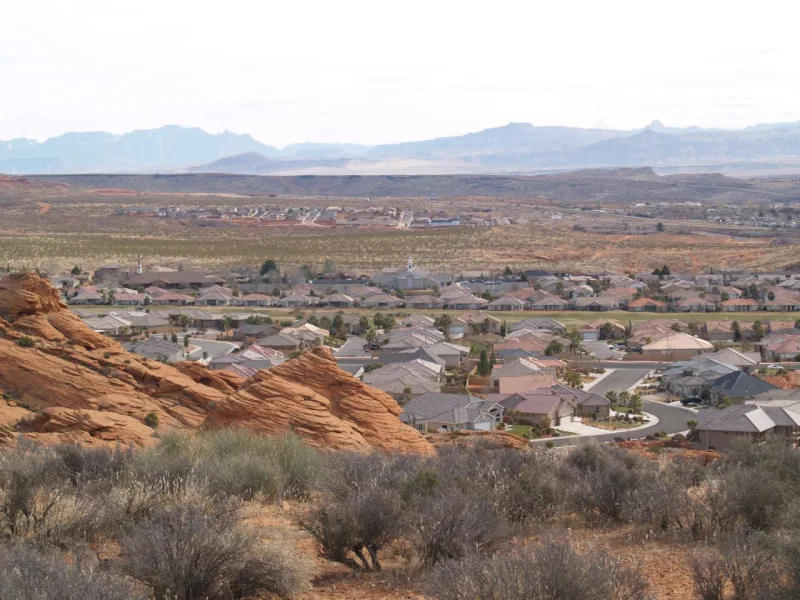
Replacing Stucco Across Washington County
Stucco replacement in Washington County has to account for summer highs above 100 degrees because your wall stands open to the weather between tear-off and the first coat. Fresh plaster, including the scratch coat, has an upper working temperature, so the hottest afternoons are planned around instead of treated as ordinary work hours. Summer storm season also changes how long your open wall can safely remain exposed, and those conditions reach across the county rather than changing by town.
Washington Elite Stucco Serves These Southern Utah Communities
Washington Elite Stucco removes and replaces stucco for owners in these nineteen Southern Utah communities, so you can check whether your address is on the service list:
- Washington, UT
- St. George, UT
- Santa Clara, UT
- Ivins, UT
- Winchester Hills, UT
- Diamond Valley, UT
- Dammeron Valley, UT
- Veyo, UT
- Central, UT
- Pine Valley, UT
- New Harmony, UT
- Leeds, UT
- Toquerville, UT
- La Verkin, UT
- Hurricane, UT
- Apple Valley, UT
- Virgin, UT
- Rockville, UT
- Springdale, UT
Replacing Stucco: Questions Owners Ask First
Stucco replacement raises different questions depending on whether you are comparing repair, planning a full re-stucco, or considering another finish after the wall is open. Each answer below stands on its own, so you can start with the question closest to the decision in front of you.
Can stucco be removed and replaced?
Yes. The stucco coats, metal lath, fasteners, and paper behind the lath can be removed while the structure of the wall stays in place. We leave the framing and sheathing in place, inspect them, and replace only what has been damaged. The work can be done across the whole house or one elevation at a time.
Is it worth removing stucco?
It is worth pricing removal when the measured wall area and the substrate condition point beyond a repair. Many small patches on one elevation can cross the point where replacing that elevation is the clearer scope, because each patch brings another edge, texture match, and tie-in. The site visit looks for that crossing point.
What can you replace stucco with?
Stucco can be replaced with new stucco, fiber-cement siding, stone veneer, or brick veneer. Demolition and the prep underneath run the same way at first, so the choice is about what goes back on the exposed framing after the old wall material is removed.
How much does it cost to replace exterior stucco?
The $8 to $21 you may have seen quoted for each square foot of wall comes from published national guides, not from Washington Elite Stucco. Wall area is the outside surface being removed and rebuilt, not the floor area of the house.
What is the fake stucco called?
Synthetic stucco is the common name many owners hear, and EIFS is the complete wall system the name usually points to. Hard-coat stucco carrying an acrylic finish has that finish as its outer layer only, and it is not EIFS. Those names are sometimes used interchangeably in quotes, so the written scope should separate the finish from the wall system.
Is synthetic stucco cheaper than regular stucco?
No verified comparison figure is quoted here because material and labor change with the wall system, substrate, and exposure. On a replacement, demolition costs the same either way, so any price difference sits in the new wall system you choose.
How often should you replace stucco?
A hard-coat stucco wall commonly lasts 50 years or more with routine maintenance, but replacement is driven by failure rather than age alone. Sealant at joints and penetrations is on a much shorter cycle, often 5 to 10 years, so maintenance can be due long before the wall itself needs replacement.
How expensive is it to replace stucco?
Replacement gets expensive when access is difficult, the elevation has many openings and trim details, or the tear-off shows damaged material behind the finish. A measured free estimate narrows the number because the wall is being counted and inspected, while a phone-only quote cannot see those drivers.
Find Out Which One Your Wall Needs
Washington Elite Stucco can measure the wall area, check what the wall is built on, and put the repair-or-replacement decision into a free estimate. That visit gives you the next step for a stucco replacement question in Washington County.
To have your wall measured, call (435) 319-6039 or send the details through the quote form.