
Plastering Services in Washington, UT | Washington Elite Stucco
Washington Elite Stucco brings 15 years in the trade to plastering services for homeowners, custom home builders, general contractors, and designers in Washington, Utah. Plaster predates drywall as a wall and ceiling finish and can outlast it. Interior plaster is a separate finish trade performed by a plasterer.
We install veneer plaster over blueboard and full-thickness gypsum plaster for walls and ceilings. For an existing wall or ceiling, we use skim coating to cover surface variations with a thin layer of plaster and create a continuous finish. We also provide a Level 5 finish when plans call for the highest drywall finish grade. Decorative choices include Venetian plaster and limewash, ornamental and carved plaster, and fireplace surrounds.
Every plaster system needs a prepared base rather than bare framing. Depending on the system, we install plaster over wood or metal lath, blueboard gypsum base, or gypsum base panels in 3/8- and 1/2-inch thicknesses. We follow ASTM C843, which sets requirements for preparing the wall, mixing the material, applying each layer, and checking the completed surface.
We set out the finish, the base beneath it, and the applicable published standard in a written scope for your project. Our stucco pages cover exterior walls, while the plastering services described here cover the finishes we provide inside your house. We provide interior plaster services in Washington and surrounding towns across Washington County.
Call (435) 319-6039 or request a free estimate for your interior plaster project.
Get A Free Estimate
What We Do
Plaster Work, Inside and Out
Plaster work is one craft practiced inside and outside buildings: interior plastering is the subject of this page, while our stucco pages cover exterior plastering. The indoor services described here include veneer plaster over blueboard, skim coats and Level 5 finishes, lime finishes, and ornamental or carved plaster for walls and ceilings. A plasterer builds a full-thickness gypsum plaster system in successive coats over lath, creating a thicker traditional wall surface rather than a thin veneer over a gypsum base.
Veneer Plaster Over a Blueboard Base
Veneer plaster is a thin plaster surface applied over blueboard, a gypsum base made to hold plaster rather than serve as ordinary drywall. Manufacturers supply blueboard in sheets 4 feet wide and 8, 10 or 12 feet long, with 3/8- and 1/2-inch thicknesses. A designer or building official may specify a Type X gypsum base when the approved wall or ceiling assembly must resist fire. ASTM C843 governs the application of gypsum veneer plaster, which forms a layer 1/16 to 3/32 inch thick. The finished plaster is harder and denser than painted drywall without adding a thick layer, so you can choose it for walls, ceilings and a fireplace surround, the finished area around the fireplace opening.
Skim Coats Over a Wall You Are Keeping
A skim coat is a thin layer of joint compound, the paste used to fill and smooth drywall seams and surface defects, spread over an existing wall or ceiling. When resurfacing walls, a skim coat can flatten dated texture, patch marks and shallow damage without removing sound drywall or old plaster. The existing surface is a candidate when it remains dry, firmly attached and stable, because movement underneath can crack the new surface and water-damaged material may no longer support it. Loose, moving or water-damaged sections therefore need repair or replacement before the wall is resurfaced. For a wall that has to look perfect, ask for a Level 5 finish.
Lime Finishes: Venetian Plaster and Limewash
Interior decorative plaster made with lime gives you a choice among polished, matte and deliberately coarse surfaces. Venetian plaster is applied in fine layers and burnished, which means a plasterer compresses and rubs the surface with a smooth tool until the finish becomes polished and its visual depth changes as light moves across it. Limewash is a thin mineral coating that leaves a soft, matte surface. Pebble cast and roughcast come from the same lime plaster tradition, but they create coarse, visibly granular textures.
Lime hardens as it reacts with carbon dioxide in the air, while gypsum hardens through a reaction with water. A plasterer uses different application methods for lime plaster and gypsum plaster and gives each material the conditions it needs to harden.
Ornamental and Carved Plaster
Ornamental plaster forms the raised and shaped details that finish a room. A cornice is a decorative band where a wall meets a ceiling, while related plaster moldings include crown profiles, ceiling roses and centerpieces, as well as borders around an arch or a recessed wall niche. A plasterer can form a long profile directly in the room by pulling a rigid template along wet plaster; the template’s edge matches the desired outline, and the trade calls this running the profile in place.
With casting, a plasterer presses or pours wet plaster into a mold in a shop, allows each piece to harden, and attaches the finished pieces inside. Forming a profile in place suits a continuous band, while casting allows separate or repeating shapes. Carved plaster is cut by hand after it firms, and modelled plaster is shaped by hand while the material remains workable. Ornamental work is part of the plasterer’s trade alongside flat wall and ceiling finishes.
Plastering Services for Homeowners, Builders, and Designers
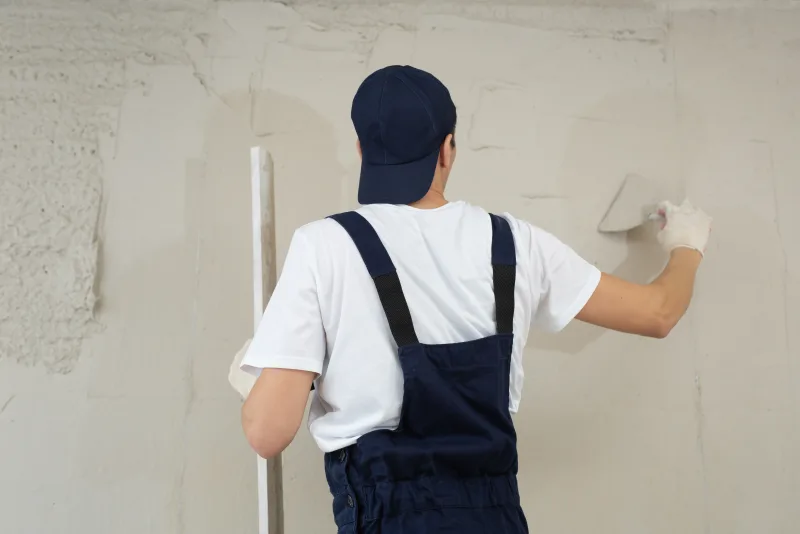
Plastering services use the same selected material and finish standard whether a homeowner, a custom home builder, or a designer or architect commissions the job. A homeowner usually defines the job as a room or a repair, while a builder coordinates a finish package across a house and a designer or architect selects an appearance that requires approval. Who buys the plastering changes who approves the finish and whose project schedule the plastering contractors follow, but it does not change the material that goes on the wall.
Working With a Custom Home Builder
Builder coordination begins while the finish schedule, the room-by-room document that records the selected wall surfaces, is still being written. At that stage, we work with the custom home builder or general contractor to identify which rooms receive each finish. The written scope then names those rooms and finishes separately, which allows the builder to calculate the plaster package and compare it with the drywall package.
Each plaster wall also needs gypsum board panels as its base, and the builder buys those panels through the drywall package. We confirm the required gypsum base before the builder places that order, including blueboard where the selected finish calls for it. We also keep one point of contact for finish decisions, so a later change reaches the crew and the written scope instead of remaining only in a revised project file.
Seeing the Finish Before It Goes on the Wall
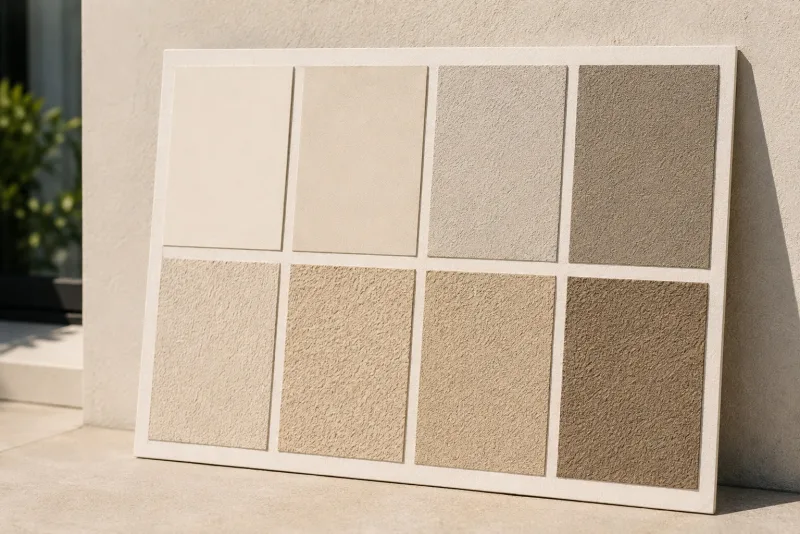
A plaster finish is made by hand with a flat tool called a trowel, so the worker’s pressure and movements affect the final appearance. Daylight and the room’s electric lights can also reveal different parts of the surface. A color card shows color alone, and a photograph shows another wall under different lighting, so neither can provide reliable approval for a hand-finished surface.
For useful finish samples, we apply an area of the actual finish in the room where the finish will remain. You, your designer, or your architect can examine that sample in daylight and under the room’s own lights before the crew begins the remaining walls. Approval of the in-room sample gives everyone the same surface to judge; if the appearance is first rejected after a full wall is complete, changing it requires redoing the wall.
Where Plaster and Stucco Part Ways
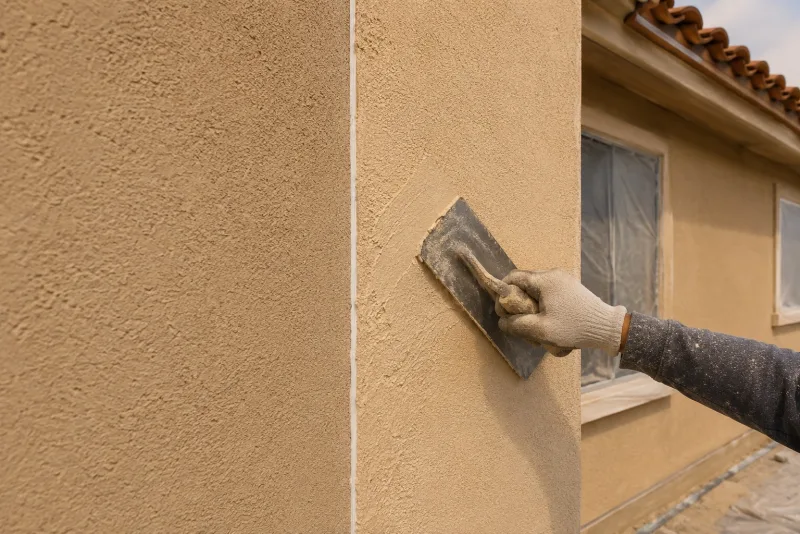
Interior plaster creates the finished surface on walls and ceilings inside a building, while stucco uses cement plaster in an exterior wall-covering system exposed to weather. The visible exterior finish is one part of the stucco system, not another name for the entire system. A plasterer works in the recognized occupation that covers both stucco and plaster, but the specifications for interior vs exterior plastering are different.
Specifying plaster versus stucco as if the names were interchangeable can place an indoor plaster material on an exterior wall or apply exterior wall requirements to an interior surface. The completed wall may then fail or look wrong. Correcting either outcome requires removing the completed surface and installing the appropriate interior finish or exterior wall system, which adds removal and replacement to the original work.
What Sets, and What Has to Be Cured
Gypsum plaster used indoors hardens through a chemical reaction called a set rather than becoming firm only because water evaporates. Its set time is the period in which mixed plaster changes from workable to firm. On a two-coat veneer wall, the base coat, which is the first layer, sets before the visible finish coat is applied, so crews commonly complete both layers in the same day.
Interior gypsum plaster hardens fast enough for crews to apply its coats within the same working day, whereas workers keep exterior cement plaster damp during curing and wait before applying the next coat. For that reason, you need to allow for an exterior plastering job to continue across separate working days.
Inside It Goes Over Board; Outside It Goes Over Lath
Plaster relies on a substrate, the surface or framework that supports the wet material until it hardens. Indoors, the substrate may be a gypsum base, an existing wall being skimmed, or lath in an older house. Wood lath consists of narrow strips with spaces between them, while metal lath is a formed metal sheet or wire mesh. Wet plaster presses into those openings and grips the lath as it hardens.
IBC Section 2511, Interior Plaster, sets the minimum number of coats according to the substrate. The provision requires three coat plaster, meaning at least three separate plaster layers, over metal lath or wire fabric lath, and at least two coats over other permitted bases. A plastered wall in a 1920s house and one in a new build can look identical when finished even though the supporting materials and required coat counts differ. A plasterer must identify the substrate before selecting the number of coats required by the interior code.
A Level 5 Wall, and How It Is Built Up
A Level 5 finish is an additional continuous coat over the entire drywall surface, not a better paint job. The industry standard known as GA-214 organizes drywall finish levels into shared grades, allowing you, the painter, and the plasterer to mean the same condition when referring to a finished wall. Within that scale, Level 5 is the only grade that covers the board from edge to edge instead of treating only the places where boards and screws meet. The complete covering gives paint one prepared surface, making Level 5 the only grade specified for strong, low-angle light and paints that reveal small differences in the wall.
The Continuous Skim, and Why the Whole Wall Gets It
At lower drywall finish levels, a plasterer applies joint compound to specific areas: the lines where boards meet, the corners, and the heads of the screws holding the boards in place. The paper face across the rest of the board remains uncovered. Because joint compound and bare board absorb paint at different rates, strong side light or paint with a sheen can make the straight joint lines and screw locations visible through the finished paint. To build Level 5, a plasterer spreads joint compound across every part of the wall to form a continuous skim coat. The skim coat gives the painter one material instead of two, so Level 5 controls paint absorption as well as surface smoothness.
Checking It Under the Light That Will Show It
A plasterer checks the unpainted wall by holding a light close to the surface at a low angle and looking along the wall before a painter applies paint. The low angle reproduces critical lighting, meaning severe light that travels across the wall and emphasizes small surface changes. You may want to ask for Level 5 in a room with a long wall beside a large window or wall fixtures that shine across it, especially when you plan to use a dark color. It is an added finishing step rather than the standard treatment for every room.
Your choice of gloss paint, semi-gloss paint, enamel, or smooth, non-textured flat paint can also justify the added finish. If the joint pattern becomes visible only after painting, a plasterer must apply another skim coat over the entire wall, and a painter must repaint the wall.
Why Us
Why Choose Washington Elite Stucco for Plastering Services
Washington Elite Stucco works on both interior plaster and exterior stucco, so the same crew can specify both finishes when a house includes them. We begin our plastering services by explaining whether each surface calls for interior plaster or exterior stucco.
Washington Elite Stucco is a licensed stucco contractor that has worked in the trade for 15 years and is insured through general liability insurance and workers compensation coverage for crews working on your property. The company has completed 1,000+ projects.
For interior plaster, we document the system, prepare a sample in the room, and match the plaster to the surface beneath it:
- The applicable standard is recorded. We name the selected plaster system and its governing standard in writing, so you have a clear record of the finish specified for your room.
- You approve a sample in the room. Our interior plaster crew prepares a sample area in your room for you to approve before the crew starts the full surface.
- One crew covers the interior and decorative work. The wall beneath a finish limits which plaster system can be used. Our interior plaster crew uses blueboard as the base for veneer plaster; for full-thickness gypsum plaster, the crew uses wood or metal lath. The same crew works with both plaster systems and with decorative or ornamental finishes, including Venetian plaster.
To request a free estimate and ask whether your project belongs with interior plaster or exterior stucco, call (435) 319-6039.
Pricing
Pricing Plaster by the Room
The cost to plaster a room is based on the wall and ceiling surface that will receive plaster, not on the room’s floor area. A 12-by-12-foot room with an 8-foot ceiling has 144 square feet of floor, but its four walls have about 384 square feet of surface before doors and windows are subtracted. Including the 144-square-foot ceiling brings the plastered surface to about 528 square feet. That surface is nearly 3.7 times the floor area.
A price per square foot becomes useful only when it applies to the same kind of surface and finish. Published national estimating guides dated May 2026 list labor-and-material ranges of $5.51 to $6.66 per square foot for gypsum plaster application, $0.95 to $1.35 per square foot for a skim coat, and $5.86 to $8.02 per square foot for Venetian plaster. These published national figures exclude contractor overhead, tax, and permits, and they are not Washington Elite Stucco’s prices. Using the published gypsum plaster range, 528 square feet would total about $2,909 to $3,516.
The plastering cost for a specific room changes with features that affect the amount of surface, the condition of that surface, or the labor needed to reach and finish it:
- Ceiling height and included surfaces: Taller walls increase the wall area even when the floor stays the same size, while including the ceiling adds another complete surface.
- The selected finish: A skim coat, gypsum plaster application, and Venetian plaster require different amounts of material and labor, so they do not share one square-foot rate.
- The existing wall or ceiling: A sound, even surface generally needs less corrective work than a surface with loose areas, cracks, damage, or pronounced unevenness.
- Openings and shaped areas: Doors and windows reduce the broad wall area, but arches and returns, the narrow inside faces where a wall turns into an opening, add smaller surfaces that require separate measuring and finishing.
- Access and clearing: High surfaces, stairs, fixed obstacles, and rooms that need clearing can add setup and protection time before the plastered surface can be reached.
Ornamental plaster uses a different pricing unit because square footage does not describe each individual feature. It is priced per piece or per run, with a run meaning a measured continuous length, rather than by the square foot.
Our estimate prices walls and ceilings separately, so you can see how each surface contributes to the total instead of comparing the price with the room’s floor area.
To receive an estimate based on the surfaces and finish in your room, request a quote from Washington Elite Stucco.
Scratch, Brown, Finish - Indoors
Indoor plastering follows a sequence of coats, and the coat names describe how the wall is built. The surface beneath the plaster sets the count, so veneer plaster over blueboard takes fewer coats than full plaster over lath. We begin the plastering process with a free walkthrough and end with a finished-room walkthrough; once room preparation starts, most activity takes place within a few days.
Washington Elite Stucco plans each room with you at the first visit and reviews the finished plaster with you before final sign-off.
The Free Visit and a Written Scope
The free site visit allows Washington Elite Stucco to inspect each room and identify the material behind the existing surface where the planned finish depends on it. You and we agree which finish goes in each room, and we send you a written scope within 24 to 48 hours of the visit.
Emptying and Sealing the Room
Room preparation starts with the furniture, so we agree during the visit which items you will remove. We center and cover furniture that remains, protect the floors, and seal the room’s doorways with plastic dust sheeting, working on one sealed room at a time. When sanding is necessary, we use wet sanding, which uses water to keep dust from becoming airborne, or a HEPA-shrouded sander, a sanding tool enclosed by a cover and connected to a vacuum with a high-efficiency particle filter. Both methods catch dust where the tool meets the wall instead of allowing it to settle through the house.
The Base: Board, or the Old Wall Made Ready
The wall base determines the preparation. We either install a blueboard gypsum base or keep the existing wall and remove any loose material from it. Before we apply plaster, we fit corner bead, a slim strip that gives exposed corners and edges a straight, protected shape. Where the existing surface needs help holding fresh plaster, we coat it with a bonding agent that helps the new material stay attached.
The Coats Go On
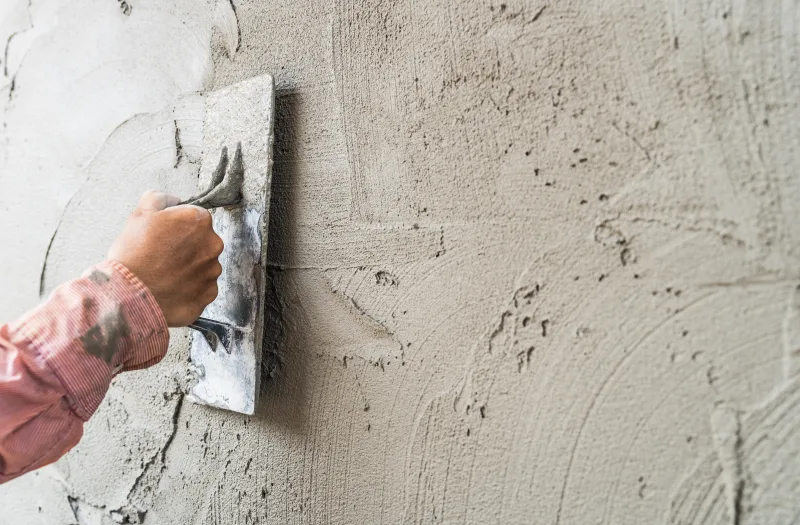
We carry fresh plaster on a flat handheld board called a hawk, then spread the plaster across the wall with a trowel. For veneer plaster over blueboard, we apply two coats, a base coat followed by a finish coat after the base has set.
For a wall built over lath, we apply the full three-coat sequence. The scratch coat is pressed into the lath and roughened with shallow lines, the brown coat fills and levels the wall, and the finish coat forms the visible surface. Once an indoor coat has set firmly enough to support another, the next coat can follow within hours, so a room usually receives all of its plaster coats on the same day.
Drying, Cleanup, and the Walkthrough
Fresh plaster then dries while we clean the room and remove the floor covers and dust sheeting. We walk through the finished room with you under the room’s own lighting because those are the conditions in which you will see the walls and ceiling. During that walkthrough, we deal with any uneven area, mark, or unfinished edge that you flag before we close out the job.
To arrange the free visit, request an estimate from Washington Elite Stucco.
How Plastering Work Is Regulated in Utah
Utah contractor licensing does not include a standalone license called a plastering license. Utah places plaster work within broader contractor classifications under the current Utah Construction Trades Licensing Act Rule, and those state categories identify the kinds of construction a contractor license covers. The rule uses two broader groupings for plaster work. One combines drywall, painting, and plastering, while the other combines masonry, siding, stucco, and plaster.
Those groupings can change when Utah amends the rule. In 2019, the state folded its former standalone stucco classification into the broader masonry grouping. On a Washington County project, asking to see a “plastering license” therefore requests a credential Utah does not issue. Look up the contractor on the state register, and use the written scope to confirm that it names the specific plaster work proposed for your property.
The Standards That Govern the Plaster Itself
Technical standards describe the interior plaster itself, while contractor classifications describe the work a license may cover. IBC Section 2511, Interior Plaster, governs how interior plaster is built up.
The specifications then separate different kinds of plaster work. ASTM C843 sets requirements for putting veneer plaster onto its prepared base, while ASTM C842 addresses the thicker interior gypsum plaster system rather than a veneer layer. The GA-214 scale defines the named finish levels, including Level 5. When a written scope identifies the applicable specification and quoted finish level, you can compare the stated result with another quote and check the completed surface against the same terms.
Testing an Older Ceiling Before Anyone Sands It
The Utah Asbestos Rule treats a residential owner and a contractor differently. Under the current rule, an owner of a residential structure containing four units or fewer is not required to obtain an asbestos inspection. A contractor does not receive the owner’s exemption and must have the material inspected by a Utah-certified asbestos inspector working for a company certified to perform those inspections. When a ceiling needs testing, we establish during the site visit how the inspection will be arranged and put that arrangement in the written scope.
In older homes, sprayed or painted ceiling texture is one material that can contain asbestos. Sanding or scraping that ceiling texture can release fibers into the air, and appearance alone cannot establish whether asbestos is present. Material testing therefore comes before anyone sands or scrapes the surface.
Asbestos abatement means removing or containing material that testing has confirmed contains asbestos. Abatement is licensed work that Washington Elite Stucco does not perform, so we refer required removal to a licensed abatement provider. Pre-1978 painted surfaces are regulated separately, but the order remains the same: the paint is tested before anyone disturbs it, and a person with the required certification performs any regulated handling.
What to Check Before You Hire a Plasterer
When you compare plastering contractors, begin by confirming that each contractor is licensed for the proposed scope through Utah’s public contractor license register. Direct verification matters because the license will appear under a broader contractor classification rather than under a standalone plastering credential.
The written scope provides the next comparison. Ask which specification governs the plaster and which finish level the quote includes, because two quotes that name neither may describe different materials or different finished surfaces. Finally, ask whether the contractor’s insurance covers the crew while they are on your property and which coverage applies to them.
Plaster in a Desert House
Interior plaster goes onto walls and ceilings inside your house, so we can apply it throughout the year. However, indoor work remains subject to Washington’s desert climate. The city sits on the Mojave Desert edge at about 2,894 feet, and July highs in the St. George metro area reach around 102°F. Dry air from outside can enter the house and remove water from fresh plaster before the material has hardened properly, so the crew must control the room as well as the plaster.
Indoor placement does not make gypsum plaster suitable for every wall. Gypsum plaster does not belong in a shower surround, where repeated spray keeps the surface wet. A shower surround instead requires cement board and tile.
Working Around Dry Air
Fresh plaster needs to retain enough water while it hardens. When dry air causes premature drying, plasterers call the failure dryout; the surface may remain weak or powdery instead of becoming firm. A flash set is different because the plaster stiffens before the crew can spread and smooth it. Either condition can leave a poor surface, including crazing, which is a closely spaced pattern of fine cracks.
We control water loss from both the wall and the room. A porous wall can absorb water from fresh plaster, a pull called suction, so we lightly damp the base before applying the new coat to keep it from drawing water out too quickly. When indoor heat shortens the available working time, we can use a set retarder, an additive that delays hardening long enough for the crew to finish the surface. We also keep doors and windows closed and prevent fans or extra heat from blowing across fresh plaster.
An evaporative cooler, often called a swamp cooler, creates the opposite concern because it adds moisture to the indoor air as it cools the house. Added humidity can slow drying, while air blowing directly across a wall can make one area lose water faster than another. We account for both the humidity and the direction of the moving air when protecting fresh plaster.
Old Town Houses and Newer Subdivisions
Wall bases vary between Washington’s older core and its surrounding subdivisions. A house in Old Town Washington is more likely to have wood lath, narrow strips behind the plaster that hold the material in place. Before we skim an older wall, we check whether the existing plaster remains attached and repair loose or broken areas so the retained wall provides a stable base.
Newer houses in Green Springs and Washington Fields commonly use gypsum board panels instead. With those walls, we identify the finish intended for the board and prepare the surface for that finish. After preparing either type of base, we still manage suction and indoor air while the fresh plaster hardens, regardless of the season.
What Plaster Gives You That Drywall Does Not
Interior plaster gives you a harder wall, adds mass that can help limit sound, and creates a continuous, hand-finished appearance. For an owner who values visible texture and depth, plaster can also be the better-looking wall. Those benefits define one side of plaster vs drywall, while the other side is higher cost, more time, and more specialized future repairs. Both sides matter because the finish you choose affects how long the room remains unavailable and how easily later changes can be repaired.
A Harder Surface and No Joints to Read
A plaster surface is finished as one continuous face. Drywall, by contrast, is installed as separate panels, and each taped joint is a seam covered with tape and filler before painting. Because the finished plaster face does not contain a series of taped panel joints, angled light has no panel seams to reveal later as faint lines or bands.
Gypsum plaster is also denser and harder than a taped-and-painted drywall surface. That hardness makes the wall less easily marked by routine contact, which can matter in hallways, stairways, and other areas where people or furniture often touch the walls. The added mass can help reduce some sound passing through a wall, although the complete wall, including its frame, insulation, doors, and other openings, determines how quiet adjoining rooms will be. A hand-worked finish can also retain subtle changes in texture and depth that a paint roller does not create.
What It Costs You in Time and Repair
Plastering is a skilled hand trade, so a plasterer applies and shapes the material across the wall instead of hanging panels and taping their seams. That difference requires more labor than a standard drywall finish, which means plaster generally costs more and takes longer. The room also remains out of use during application and drying, so the schedule affects more than the day when the material first goes onto the wall.
Future plaster repair carries the same trade-off. A patch, an opening for a new electrical outlet, or holes left after you remove a shelf interrupt the hand-worked finish, and a plasterer must blend the new area into the surrounding texture. Filler and sandpaper can close a small depression, but they do not by themselves reproduce the texture and depth of the original surface. If your main priority is a fast turnaround on a plain, painted wall, drywall is usually the more suitable choice; plaster suits you when its hardness, quieter feel, and continuous appearance are worth the added time, cost, and specialized repair.
Interior Plaster Across Southern Utah
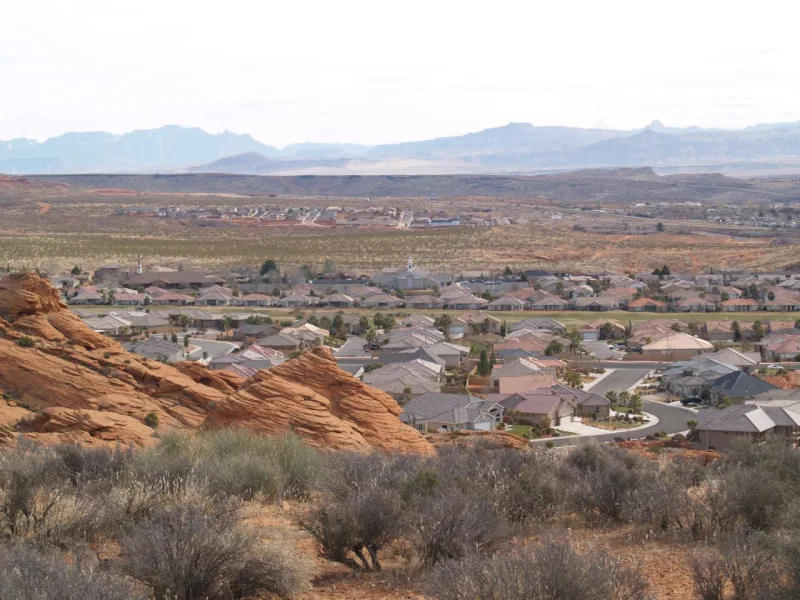
Interior plaster is available for houses throughout hot, dry Washington County, not only for properties in Washington itself. Washington is part of Washington County and the St. George metropolitan area. Washington Elite Stucco can plaster indoor walls and ceilings year-round because the rooms are sheltered from the outdoor heat. The same crew and the same finish choices are available across the company’s southern Utah service area.
The Communities Washington Elite Stucco Plasters
Washington Elite Stucco plasters interiors in the following nineteen communities, which make up the company’s Washington County service areas:
- Washington, UT
- St. George, UT
- Santa Clara, UT
- Ivins, UT
- Winchester Hills, UT
- Diamond Valley, UT
- Dammeron Valley, UT
- Veyo, UT
- Central, UT
- Pine Valley, UT
- New Harmony, UT
- Leeds, UT
- Toquerville, UT
- La Verkin, UT
- Hurricane, UT
- Apple Valley, UT
- Virgin, UT
- Rockville, UT
- Springdale, UT
If you are unsure whether your property is within these service areas, give us the property address and we will confirm it.
Plastering Questions
Plaster serves different purposes depending on the wall, the supporting surface, and the finish you want.
How much does it cost to plaster a 12x12 room?
Plasterers price a 12-by-12 room by the wall and ceiling surface rather than its floor area. Rooms with the same floor dimensions can therefore receive different quotes because ceiling height and the amount of wall surface can differ. A thin skim coat over sound existing walls costs far less than applying plaster over a new supporting surface, so an estimate must identify which job the room needs.
What do you call someone who does plastering?
A plasterer is someone who applies plaster to walls or ceilings. Plasterers can apply interior gypsum plaster, exterior cement stucco, and ornamental plaster; the federal occupation title for this combined trade is “Plasterers and Stucco Masons.” Because plasterers can work indoors, outside, and on decorative features, property owners often confuse the different disciplines.
What are the 7 stages of plastering?
No building code or standard defines a seven-stage plastering sequence. The phrase circulates online, but different sources give different sets of seven. Building codes instead specify coats, meaning separate layers of plaster, and the required number depends on the surface supporting the plaster; IBC Section 2511 applies this approach to interior plaster. Two accurate quotes can therefore describe the same room differently, so ask each plasterer to state how many coats are included and what wall base will support them.
What are the two types of plaster?
The two types of plaster most building owners mean are gypsum plaster for indoor walls and cement plaster for exterior walls, where most people call it stucco. Lime plaster is a third family and forms the basis of decorative finishes such as Venetian plaster, so the two-type division is a practical simplification rather than a strict rule. For an indoor project, gypsum plaster is the usual choice unless you have selected a lime finish for its appearance.
Can you plaster over existing drywall, or does it have to come off?
In most cases, existing drywall stays in place. When the drywall is sound, firmly attached, and not flexing, you can choose a skim coat to renew the wall you have. We apply a veneer plaster finish over the proper gypsum base, not directly over ordinary drywall. Removal may be necessary when the drywall is loose, water-damaged, moving, or covered with a material that plaster cannot grip. During the site visit, we inspect the drywall and the existing coating before specifying whether the wall can remain.
How long will the room be out of use?
The plastering itself is usually quick: indoor coats can follow one another within hours, and a room is commonly plastered in one day. The full period is longer because the room is unavailable from the day it is emptied and sealed for protection, and the finished plaster must dry before paint, wallpaper, or another decoration goes on. Drying time varies with the room, so the written scope states the allowance for your project instead of applying one number of days to every interior.
Ask About Your Interior Walls
Washington Elite Stucco begins a free estimate with a free visit to your property in Washington County. We inspect the rooms, identify a suitable finish for the walls and ceilings, and explain the preparation, plaster application, drying, and cleanup included. Within 24 to 48 hours, we provide a written scope that names the finish and the work for each room.
For your free estimate, call (435) 319-6039 or send your details through the quote form.