
Commercial Stucco Services
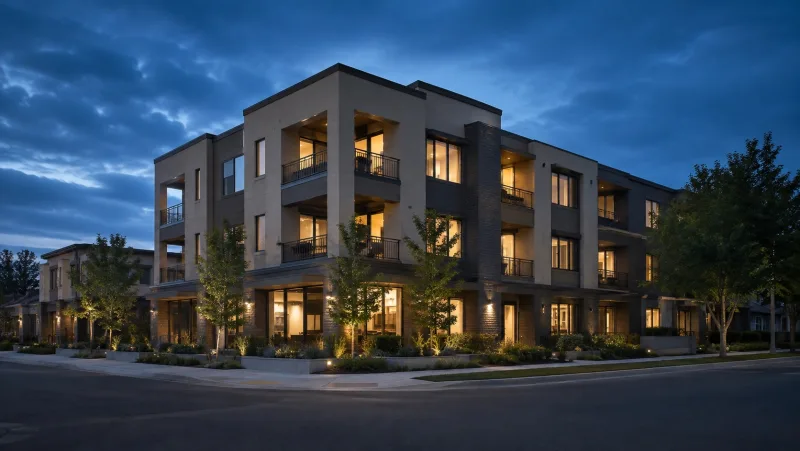
A building that is not a house usually puts your most visible wall on the frontage. When one bay has damage, we quote the whole wall face because a small patch can show beside the rest of the frontage.
Washington Elite Stucco has worked as a stucco contractor for Virgin, Utah property owners and nearby Washington County customers for 15 years. We handle stucco repair, stucco painting and coatings, replacement and removal, and new installation when a wall needs more than a surface touch. We also resurface and recoat older finishes, correct moisture-damaged areas through remediation, and work stucco into remodeling projects and additions.
Virgin is a small year-round town on State Route 9, at the west end of the road into Zion. That mix of daily living and visitor traffic makes the face of a wall visible from the road, the porch, and the yard, so we look at the whole surface before we price the work. We include commercial buildings, new construction, block walls, decorative detail, and interior plaster in our stucco services when your property needs them.
A free on-site estimate gives you a first look at the wall without a charge. Before any work starts, you receive a written scope, texture and color matching to the wall already there, and crews covered by general liability and workers' compensation. Call (435) 319-6039 or use the quote form to request a free estimate.
Get A Free Estimate
Why Us
Most people on this road are passing through, but we work for the owners who stay. We plan each job around the household using the property during the week and keep the highway separate from the job site.
These are the facts we put in front of you before you commit to the wall:
Call (435) 319-6039 to ask for the free estimate and confirm what we need to see on your wall. We also work as a stucco contractor in Rockville, the next town along the highway toward Zion.
Our Services
Virgin stucco work follows the way the town is built: houses strung along State Route 9, block walls around yards and lanes, outbuildings behind them, and a short line of buildings on the highway frontage. Almost every wall belongs to somebody's own property, so we cover new walls, worn finishes, damaged corners, and color changes without treating the town like a commercial strip.
A building that is not a house usually puts your most visible wall on the frontage. When one bay has damage, we quote the whole wall face because a small patch can show beside the rest of the frontage.
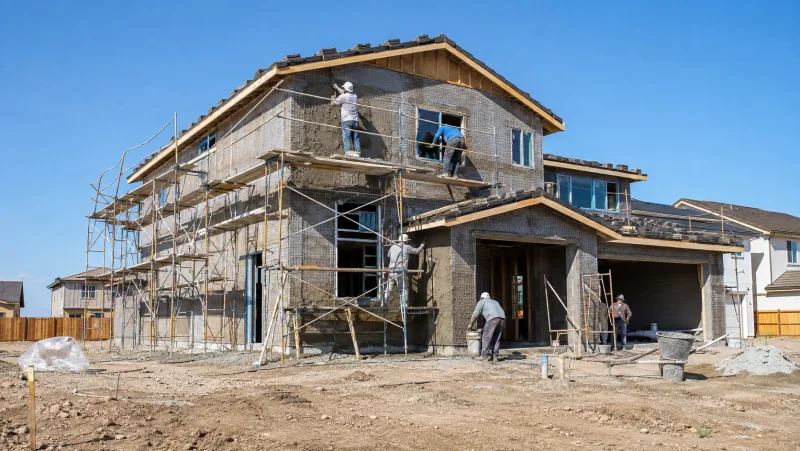
New houses off the highway need stucco after the roof and windows close the building to the weather. We fasten metal lath so plaster has something to grip, and we set straight edge trim at doors, windows, and corners before any plaster goes on.

Water inside a wall has to be traced before the surface closes again. We use probes and a moisture meter to check behind the finish, then look at the roof-to-wall and window-top flashing where leaks often start. That keeps your repaired wall from trapping the same leak behind new material.
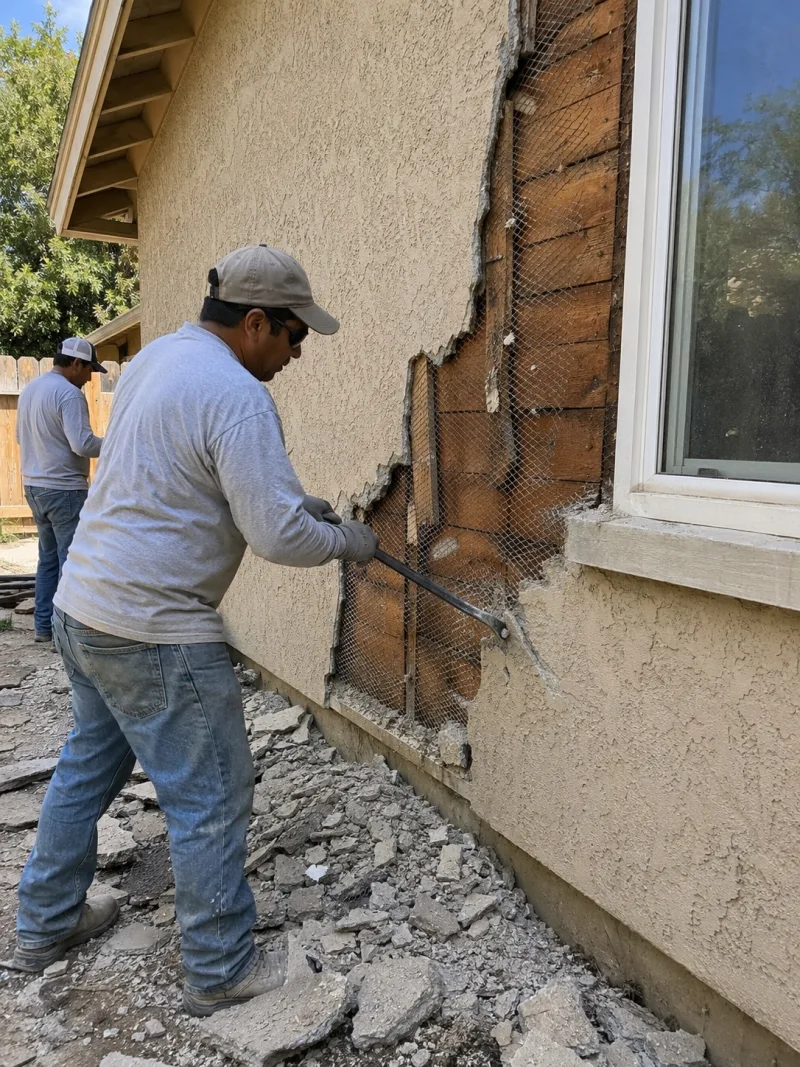
If your wall is past patching, we strip failed plaster and lath until the backing behind the stucco is exposed. The open wall lets us check the sheathing and framing before we rebuild, and we haul the debris off the lot.
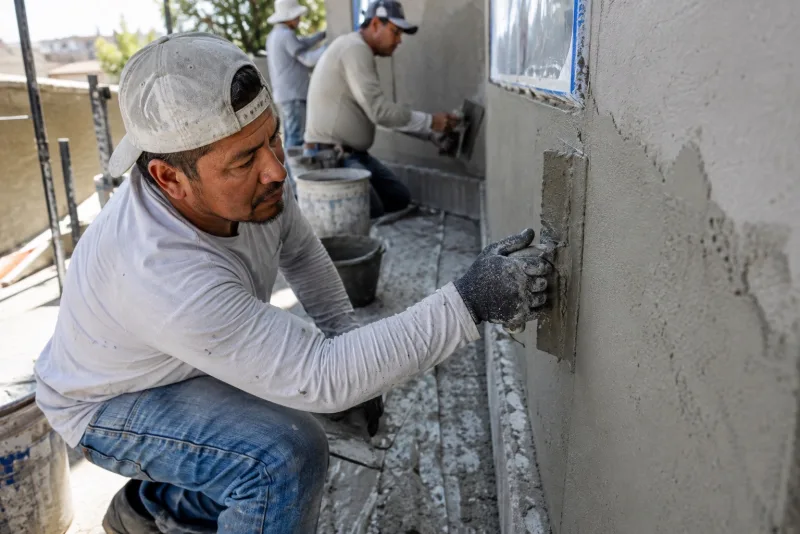
You may want stucco siding on a wall that has never carried it. We choose between traditional three-coat stucco over lath and a one-coat system designed as a tested assembly, then lay out the planned breaks that keep large wall areas from cracking in long uncontrolled lines.
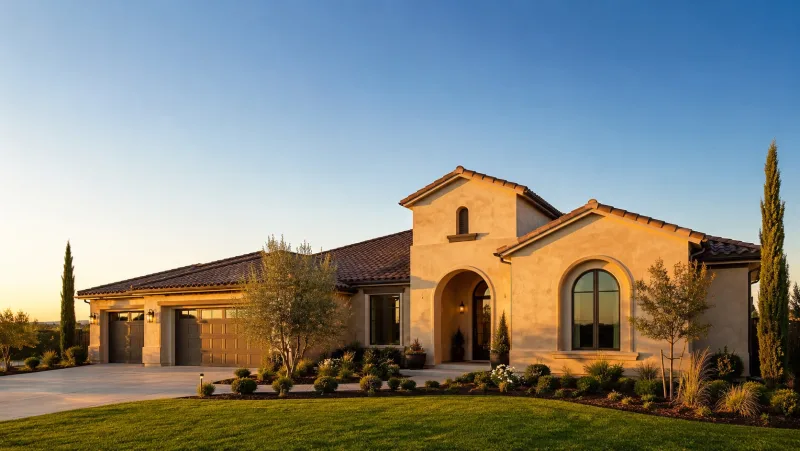
Your house may need one or two sides worked instead of the whole building. As a stucco company, we use dust sheeting where needed, give you a daily briefing, and walk the finished wall with you before packing up.
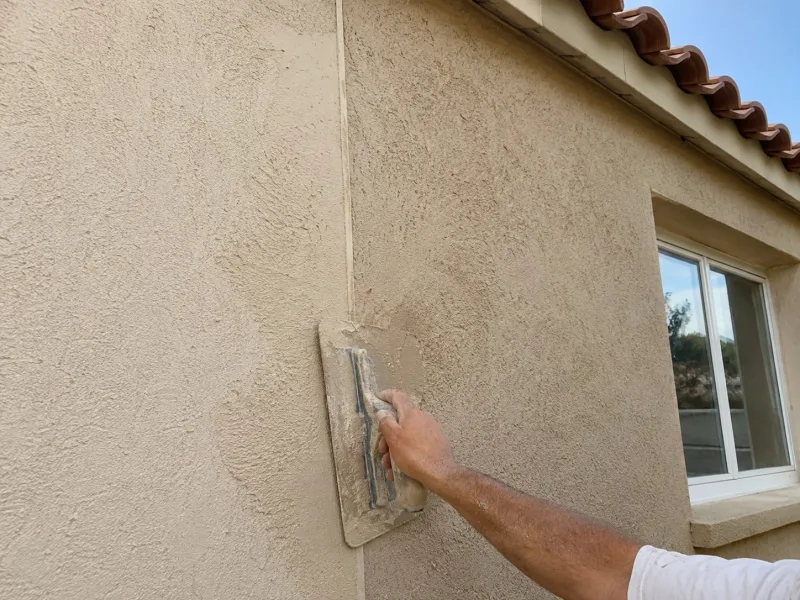
A new bump-out can make the joint between old and new show first. We place a planned break where the addition and the existing structure may move differently, then blend the new finish into the old face. That gives your added wall a clean stopping point instead of a crack where the two structures meet.
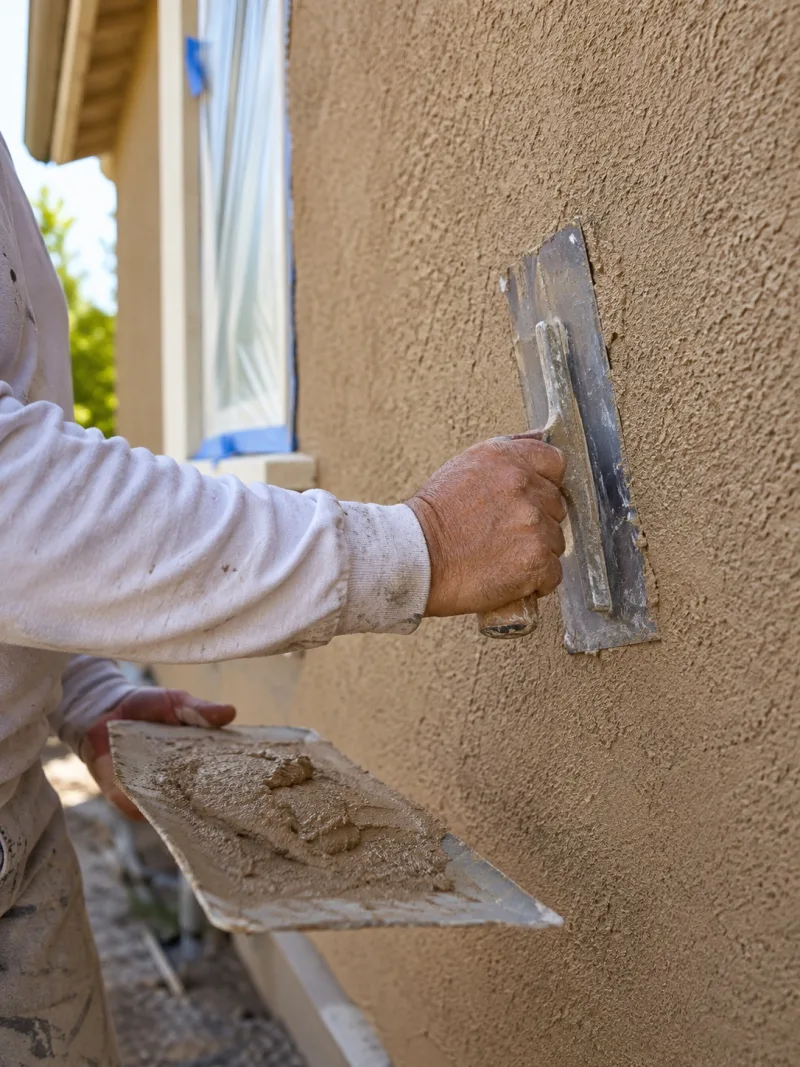
A sound wall with tired color may not need removal. We can use a fog coat or a new finish coat over the existing surface, but first we test whether the old finish holds firmly enough for the next layer.
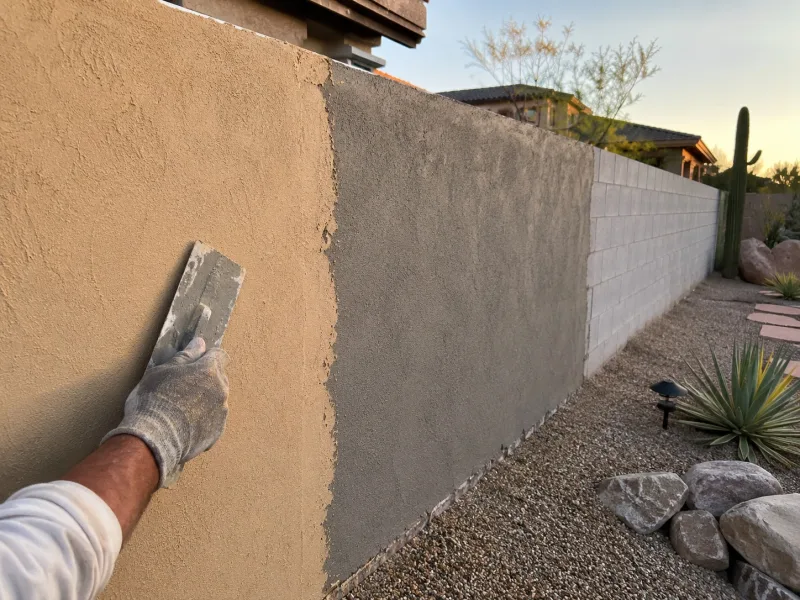
Block walls along lanes and around yards receive plaster differently than framed house walls. A concrete masonry unit is the individual block in that wall, and its dry surface can pull water out of fresh plaster too fast. We damp the block first and use bonding agent where the surface needs help holding the new coat.
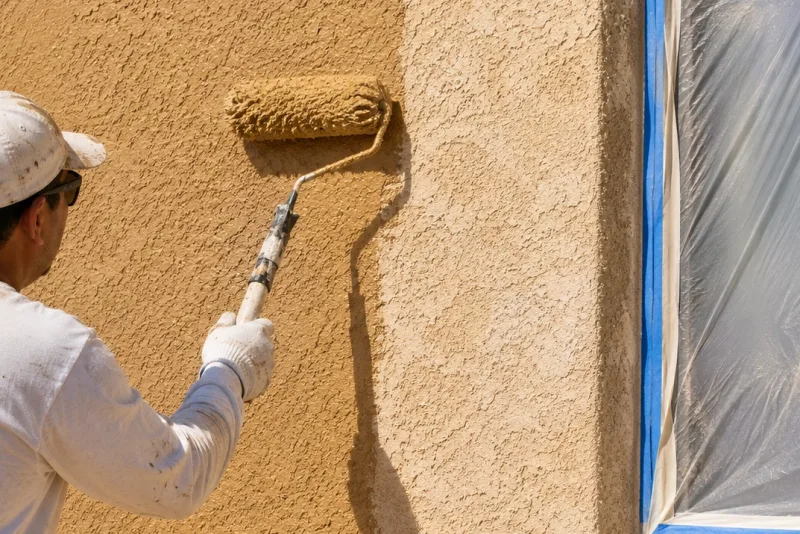
Stucco painting on a wall that takes full afternoon sun starts with color selection. We guide you toward pigments made to resist sunlight, and we may recommend a thicker flexible coating where fine cracks keep showing. A lighter color also runs cooler on a west-facing wall.
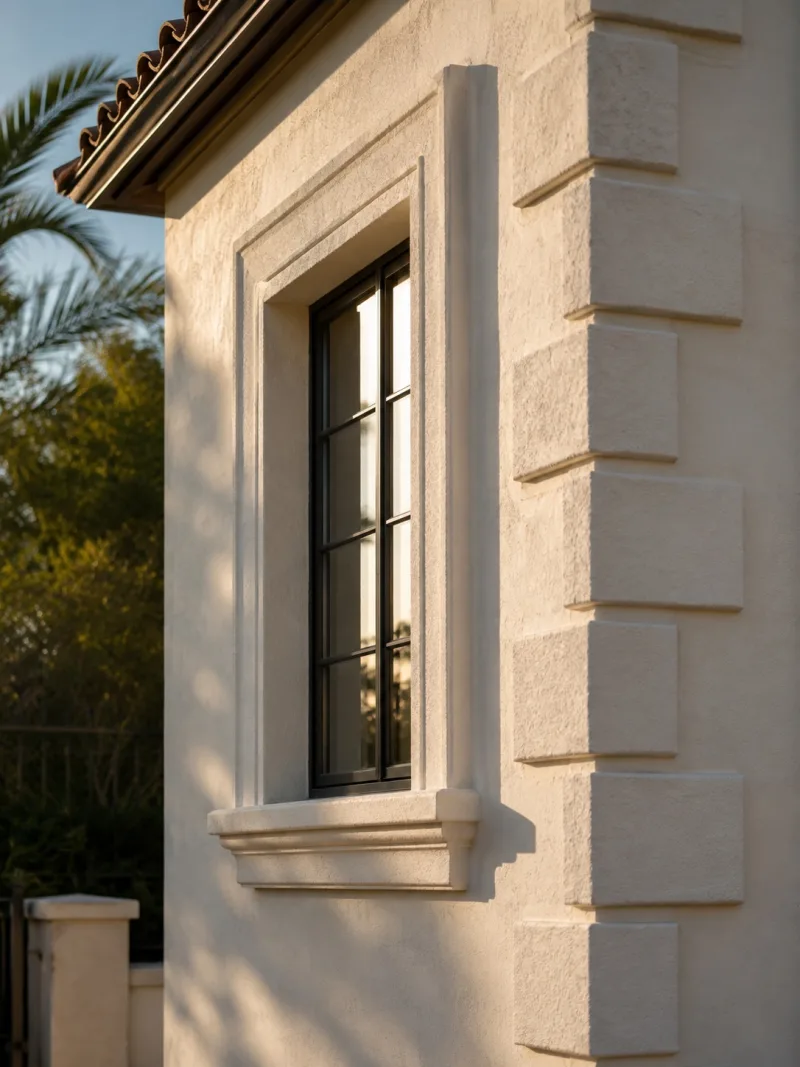
Arches, recessed lines, and shaped window surrounds can give a plain side of your building more structure. Foam trim carries no load, so we can set and coat those shapes on an already finished wall until they sit naturally with the stucco.
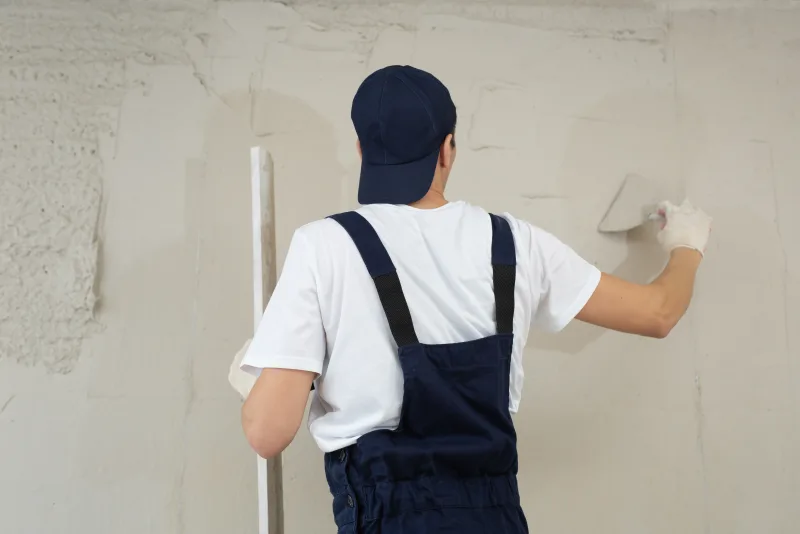
Interior plaster uses a different mix than exterior stucco. Veneer plaster over plaster-ready wallboard gives an inside wall a hard, smooth face, and we sheet the rooms so dust stays in one area. That protects the rooms you are still using while the wall surface is being finished.
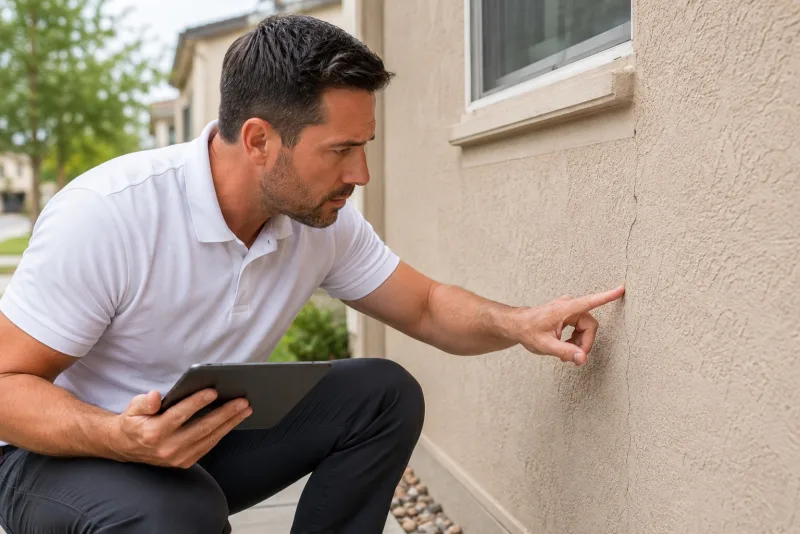
Stucco repair can address hairline cracking, wider cracks, and corners that have been hit. Wider cracks are opened cleanly before filling, and we feather the patch edge into the sound wall so the repair does not stop at a sharp outline.
On State Route 9, the setup question comes before the plaster question because the highway runs through Virgin rather than around it. A stucco contractor has to place people, tools, and fresh material so the work stays on your property and traffic keeps moving past it.
We place the scaffold, mortar mixer, material stack, and cut station on your ground because every one of those pieces has to serve the wall without spilling into the road edge. Before the crew arrives, we tell you which vehicles need to move, where the hose will cross, and which strip of yard, drive, or walkway has to stay clear so the crew can reach the wall from your side.
Work or traffic control inside the state highway right-of-way has to be permitted by the state (udot.utah.gov/connect/business/permits/encroachment-permits). We plan the job to stay off that area entirely, so the wall can be repaired or coated without making State Route 9 part of the site.
The road-facing side is exposed to moving air, so we cover the windows, doors, walks, and nearby surfaces before we coat that wall. Traffic pushes grit along the corridor, and a fresh finish coat can pick up whatever lands on it before it sets.
We work that side when passing air and road dust are least likely to contaminate the fresh coat. If grit dries into the surface, the color can look dirty before the wall is even finished, and the texture can feel rougher than the rest of the house. Before we leave, we clean down the surfaces we protected so the coverings do not leave dust on your windows, paving, or trim.
Virgin began in 1858 as Pocketville, where North Creek reaches the Virgin River. The town took its name from the river, sits at 3,514 feet in Washington County, and had 670 residents at the 2020 census. Zion National Park and the businesses around it are the largest employer, but your house is still part of a year-round town with its own streets, homes, and public spaces.
The James Jepson Jr. House is an 1877 limestone house on the National Register. Kolob Terrace Road climbs north out of town from the highway, Fort Zion sits as a roadside trading post, and Virgin Town Park serves the center of town. Falls Park lies down on the river, and Sheep Bridge crosses the Virgin River where the town's homes, roads, and river ground meet. Those places explain why your property may relate to the highway, the river, or both.
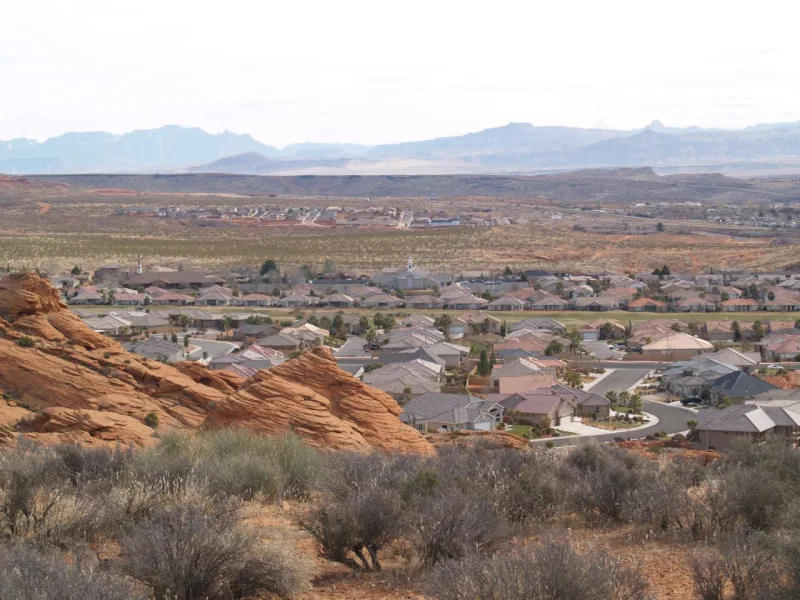
Virgin's parts are known by the old core, the highway frontage, and the ground down toward the river. A stucco contractor sees different wall problems in each setting, and we work all three, not only the houses along State Route 9.
The Old Pocketville townsite is the original core where North Creek meets the Virgin River. The oldest built stock in Virgin stands here, and some walls still have raised banding, shaped window sills, and surrounds formed into the plaster when the house was built. When a length is damaged, we cut back the broken run, rebuild the profile in place, and leave the rest of the detail on your wall instead of stripping it flat. That matters because a flat repair changes the shadow line around the window or band, even when the color is close.
The built frontage on either side of State Route 9 is the one part of Virgin that is not all houses. If your building has a shopfront wall and a house wall behind it, we can look at both in the same visit and write one scope for the two faces. That keeps the visible frontage and the private side from being priced as unrelated walls. The two faces may still need different repairs or coatings, but you see the whole building's stucco condition before you decide where to spend the work.
The low ground reached by Sheepbridge Road is where the bottom of a wall needs the closest look. A plastered house wall drains at a weep screed, the metal edge at the bottom of the lath. IRC R703.7.2.1 calls for that edge to sit at least 4 inches above bare earth OR at least 2 inches above a paved surface, depending on what is under the wall.
A freestanding concrete masonry unit wall has no weep screed, so its base is a different problem. Soil, gravel, or bark banked against either kind of wall cancels the clearance. We set the line and tell you where the ground may not go.
A year-round household looks at the same exterior walls in ordinary daylight, through the work week and after the crew leaves. For a local stucco company, that makes the week of work and the finish you live with afterward part of the same decision.
We work one side of the house at a time so the rest of the house stays usable. Your entry and driveway stay open, windows are covered only on the face being worked that day, and the crew packs the site down at the end of each day instead of leaving tools and material spread across the property.
That arrangement needs a little help from the owner. Sprinklers need to stay off on the side being worked, and pets need to stay inside while the crew is on the ground. A short daily briefing keeps you aware of which face is active before the house gets noisy or a window goes dim.
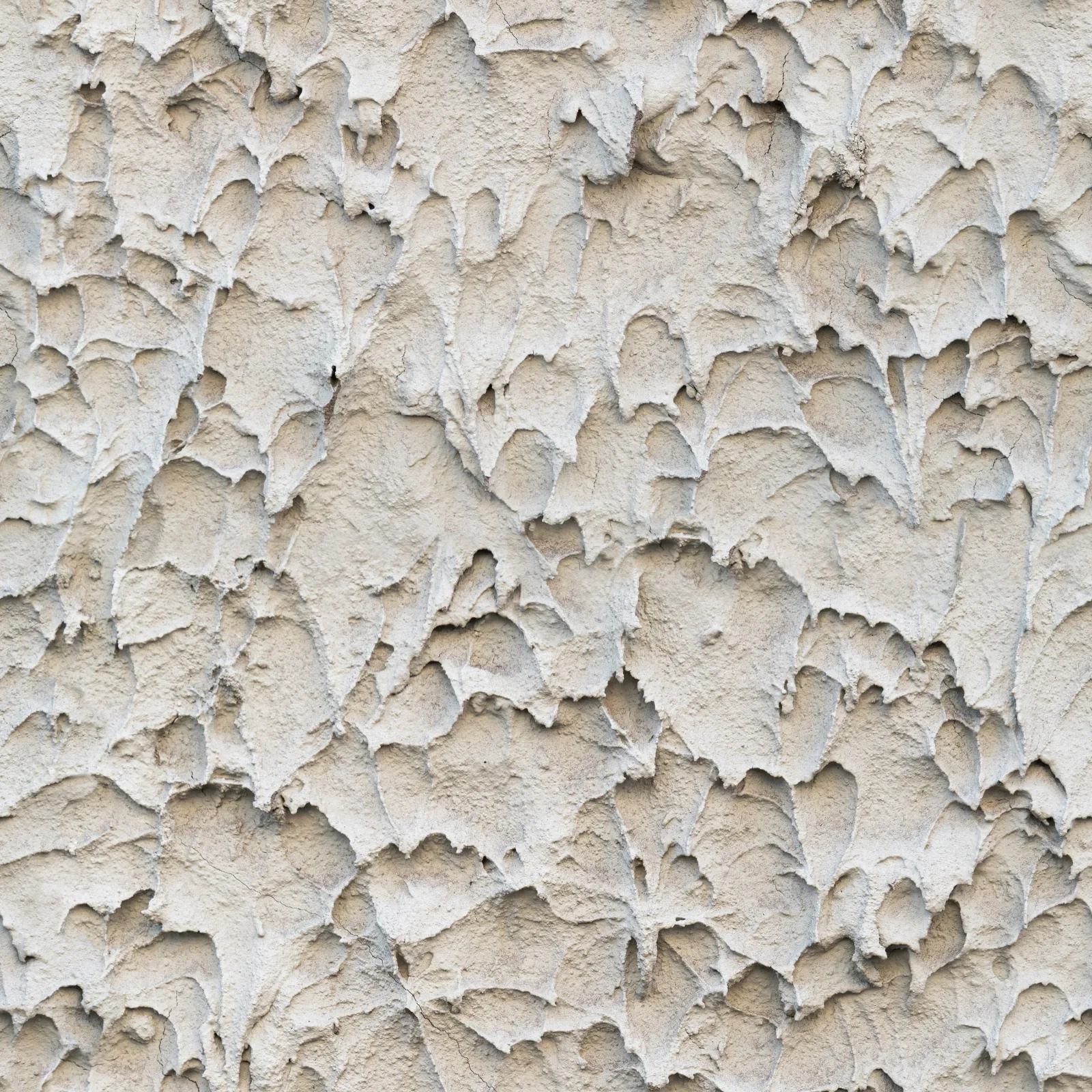
A cement finish carries integral color, meaning the color is mixed into the finish material itself. An acrylic finish carries its color in the material too and holds that color longer against the sun, but the later repair options differ. A cement finish can be evened out later with a fog coat across the whole side of the house, while an acrylic finish cannot be renewed that way.
An acrylic finish by itself is not EIFS. EIFS is a complete insulated cladding system, with insulation and layers built as one exterior wall covering, not a coat applied to a wall. Call (435) 319-6039 when you want to talk through which finish fits the wall you see every day.
We set the date from the wall in front of us, not from Virgin's place on the map. For a Virgin property, we book the run of work the wall needs rather than promising that stucco can be finished in a single day.
The free on-site estimate comes before any quote because a wall out here should be looked at in person, not priced from photographs. A photo can show a crack or a color, but it cannot show how the wall is built, where water may be entering, or whether the old finish has enough hold for another coat.
After the visit, the written scope follows within 24 to 48 hours. That scope names the system, the coats, the finish, and the color, so you know what will happen to the wall before the job is dated. The date goes on the calendar once you agree to that scope.
Stucco is built in coats, and each coat needs time with water still in it. The brown coat, the leveling coat, goes on no sooner than 48 hours after the scratch coat, the first rough coat. The finish coat goes on a full seven days after the brown coat, and each coat is kept moist for at least 48 hours.
IRC R703.7.5 sets those intervals as minimums, not targets. Southern Utah afternoons dry a fresh coat faster than it can cure, so heat stretches the timing rather than shortening it. The crew is not on site for every day of the run, but the wall is also not finished on the day the first coat goes on.
Virgin owners ask practical questions before a free estimate. Answers usually come down to crew placement, active rooms, and the kind of wall we are looking at.
On your ground, entirely. The highway shoulder is never part of the plan, and even a road-facing wall is reached from the property side, so you need to clear working room inside the property line rather than along the road. That gives the scaffold room to stand square and safely against the wall.
Only the side we are on is out of use. Most of the house stays usable, and the room behind the working face is the one that goes dim while that face is covered, so plan window light and room access around that side. Bedrooms and home offices are the rooms to flag before we start.
The wall and scope decide that, not the distance. A recoat over a sound wall and a full replacement need different calendar blocks, so the estimate visit comes before any date and tells you which work run to plan around. Photos can start the conversation, but they do not set the schedule.
Yes, Virgin is one of the places we serve. Town limits or Washington County ground just outside them makes no difference to us, and you do not need to know which one your address sits on before you call. Give us the address, and we will treat it as a Virgin-area visit.
Yes, a freestanding block wall is not built like a house wall. It is plastered on both faces, and its top edge is exposed, so we look at the wall cap before assuming the base is the source of the tired finish. If the cap leaks, water can travel down through the wall.
Both. Interior plaster and exterior stucco are quoted as separate lines and are usually scheduled apart, because the inside can go ahead in weather that stops the outside and may need different room access from the exterior crew. We separate the lines so you can approve one, both, or a later sequence.
You do not have to diagnose the crack, fading, soft spot, or failed corner before you talk to Washington Elite Stucco. The visit is for looking at the wall, checking what sits behind the surface on your property, and naming what it needs. Call (435) 319-6039 or use the quote form to request a free estimate.