
Stucco Painting & Coatings in Washington, UT: Repaints, Elastomeric Coatings and Color Changes | Washington Elite Stucco
Washington Elite Stucco provides stucco painting & coatings for homeowners and commercial properties in Washington, UT, with more than 15 years of coating work behind the way we plan each wall. Stucco expands, contracts and develops small cracks over time, so the product on the wall has to do more than carry the color you like.
We match the finish to the surface before we match it to a color card. A full exterior repaint, an elastomeric coating for a wall with fine cracking, acrylic latex paint for a sound color change, a fog coat where that option fits, and the trim and metal around the stucco all ask for different handling. Coating manufacturers publish how far their products stretch before they tear, and cement-industry guidance commonly treats new stucco as needing 28 to 30 days before coating, which is why a stucco painter has to look at the wall before ordering product.
Preparation decides how long stucco painting lasts because loose, dusty or chalking surface material keeps even a good coating from holding. Washington Elite Stucco is licensed and insured, and we serve Washington County and the St. George area. To talk through your wall and color plan, call (435) 319-6039 or request a quote through the form.
Get A Free Estimate
What We Do
Coating a Stucco Wall: What Stucco Painting & Coatings Includes
Stucco painting & coatings can mean four different jobs. The wall's condition decides which one you need, because a sound wall that only needs color is not the same project as a wall with fine cracking or a full exterior whose trim and metal need their own finish. If deeper damage is present, we repair the wall before coating it. If the wall needs a new cement-based surface instead of a paint film, resurfacing is the different answer.
Commercial and multifamily elevations use the same categories at a larger scale. A stucco painter still has to separate the wall coating from the doors, rails, fascia and other materials around it, because each surface takes a different primer and a different film thickness.
A Full Exterior Repaint
A full exterior repaint puts the whole envelope at one age. We wash the wall, repair coating-ready defects, prime with an alkali-resistant masonry primer where the surface needs it, then apply two coats so the color and film build are consistent from wall to wall.
Touching up one section rarely disappears, even when the new batch carries the same color code, because sun-aged coating has already faded and dulled. If your budget or access requires elevation-by-elevation phasing, the change can show at the corners where old and new coating meet. An airless sprayer can place the coating quickly, and back-rolling, pressing a roller through wet coating, helps push material into the stucco texture.
An Elastomeric Coat Over a Cracking Wall
An elastomeric coating is a thick, flexible film that stretches over fine cracks instead of splitting at them. It goes on several times heavier than ordinary paint, so the quote, material count and application method are different from a standard acrylic latex paint job.
Manufacturers publish elongation, the stretch a coating takes before it breaks. Published elastomeric wall coatings list elongation in the range of roughly 330 to 430 percent, which explains why they are used for crack bridging on sound stucco. A coating should never be asked to hide a wall problem that needs repair first, so we look at the cracking on your wall before we recommend one.
A Color Change on a Wall That Is Already Sound
A color change is the lightest version of stucco painting when the wall is already sound. Owners often ask for it before a listing because a uniform exterior signals maintenance to a buyer and an appraiser, while patched or mismatched walls draw attention even when the stucco itself is still working.
Prep is lighter on a sound wall, but we still clean the surface and address loose material before coating. Acrylic latex paint is one route to the new color. A fog coat is another route, and cementitious color work belongs with resurfacing rather than this paint-film job.
Trim, Fascia and the Metal Around the Wall
Exterior bids often differ because one includes the materials around the stucco and another does not. Fascia, the boards along the roof edge, garage doors, shutters, wrought iron, light fixtures and other metal details need to be named in the quote so you know what receives coating.
Wood and metal take different primers and a far thinner film than stucco. Coating manufacturers specify heavy masonry films for masonry and warn against carrying them onto wood, where trapped moisture can create problems. Rusting ironwork may need direct-to-metal primer before enamel, and a thin finish in the 1.5 to 3 mil range belongs there rather than on the stucco wall.
Picking a Product That Can Move With the Wall
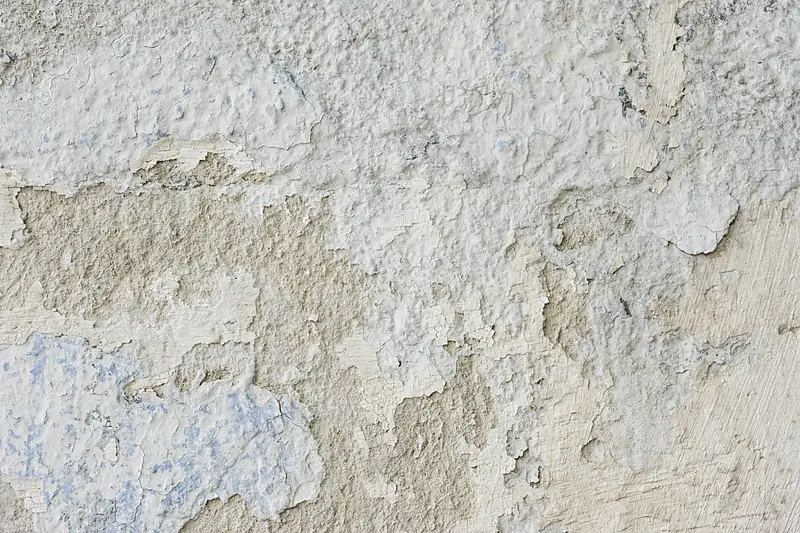
Product choice for stucco painting starts with how much the wall moves and how much water vapor has to leave the stucco. The color chart comes after that decision, because a coating that is too tight or too brittle can fail even when the color is right. An acrylic finish by itself is not EIFS, which is a complete insulated cladding system rather than a coating applied to stucco already on the wall.
We sort the coating into three families, then check the measured properties that fit your wall. A wall that is still drying rules out the tightest films, and a wall with fine movement needs more stretch than ordinary paint provides. There is no single product specification for elastomeric wall coatings, so the useful proof comes from published test methods and manufacturer data sheets.
Acrylic Latex, Elastomeric and Masonry Coatings
Acrylic latex paint is the thinner film. It breathes freely, usually costs the least, and works best where the stucco is sound enough that the coating does not need much crack tolerance.
An elastomeric stucco coating sits at the other end of the three. It carries fine cracking and sheds wind-driven rain, the sideways rain that can push water against a wall, with ASTM D6904 used as the standard practice for that masonry-coating claim. Because it goes on far heavier than paint, a wall takes considerably more of it.
A mineral masonry coating bonds into the cement matrix, the cement body of the stucco, instead of forming a plastic-like film on top. It stays very open to vapor, so it can fit walls where drying matters more than hiding small cracks.
Fog Coat or Film: Two Ways to Change a Color
A fog coat is a thin cement slurry, a loose cement-and-pigment wash, that recolors the stucco itself in one coat. Because it becomes part of the cement surface, it keeps the wall's own texture and stays fully open to vapor.
Paint and elastomeric coatings build a film on top of the stucco. That film covers the old surface and can be recoated in almost any color later, while a fog coat is limited by the integral color, the color already in the cement below. Cementitious recoating belongs with resurfacing when the wall needs more than a color change.
Stretch and Breathability: The Two Numbers That Decide
A coating is generally called elastomeric once its elongation reaches 100 percent or better, and published wall coatings often stretch several hundred percent before they fail.
Perm rating is how freely water vapor passes through a film, commonly tested under ASTM E96. Under the residential code, a film at or below 1 perm is a vapor retarder, which means water vapor has a hard time escaping through it. Published elastomeric wall coatings can sit near 13 perms, well above that line.
Cement stucco absorbs water and dries outward, so a film that seals the wall can trap moisture behind itself and lead to blistering, where the coating bubbles away from the surface. Around Washington, that trapped water usually comes from irrigation spray and roof discharge rather than rain, so the product has to match the water your wall receives.
How Much Coating Actually Reaches the Wall
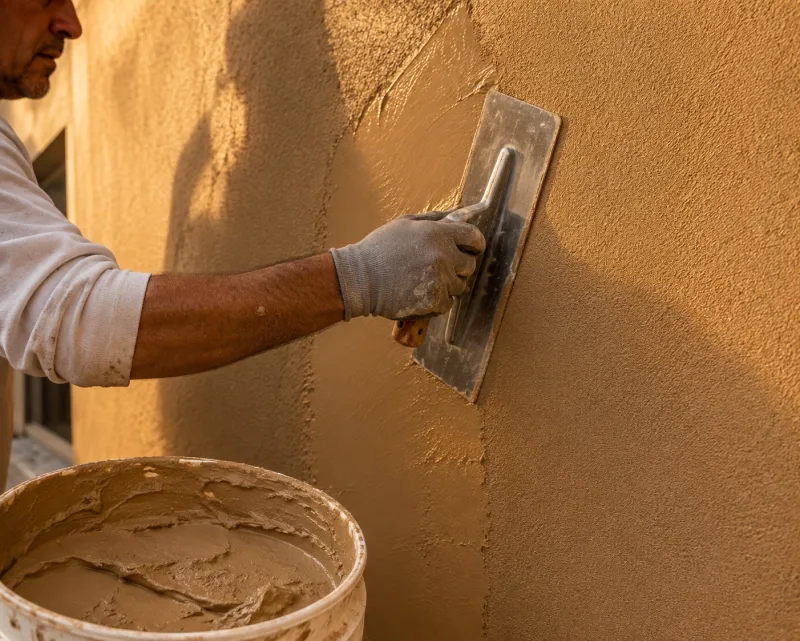
A coating performs only at the film thickness its manufacturer tested. A wall can look freshly painted on the day a crew leaves and still be carrying less coating than the product was built to work at, because the difference is in the film rather than in the color. We quote the gallons going onto your wall and the number of coats they buy you, so the two numbers that decide film thickness are on the paper you are reading.
Film thickness is product-specific, so the useful figure comes from the product data sheet rather than a universal rule. A bid that names the coverage rate, the amount of wall a gallon is expected to cover, gives you something to compare before the work starts.
Wet Mils, Dry Film and Why a Coat Gets Measured
A mil is one thousandth of an inch. Wet mils are read while the coating is still wet, using a small notched wet film gauge pressed into the fresh material. Once the water leaves, nobody can read that same wet thickness, so a crew checks the coating as it works.
Dry film thickness is the coating left on the wall after the water evaporates, and it is always less than the wet material applied. Published elastomeric systems over masonry ask for roughly 11 to 13 dry mils over two coats. An airless sprayer can place enough material quickly, but the measured wet film tells whether enough coating stayed on the wall.
Texture Eats Paint
A rough stucco wall has more real surface than its measured square footage suggests. Knockdown texture, lace texture and smoother finishes can have the same wall dimensions and still consume different amounts of coating, because ridges and pockets add surface that the tape measure does not show.
Ordinary exterior acrylic commonly covers roughly 350 to 400 square feet per gallon. Elastomeric over masonry can drop to between 25 and 135 square feet per gallon, depending on the product and surface. Back-rolling with a nap roller drives coating into the texture instead of leaving it stretched over the high points.
Getting a Stucco Wall Ready to Take a Coating
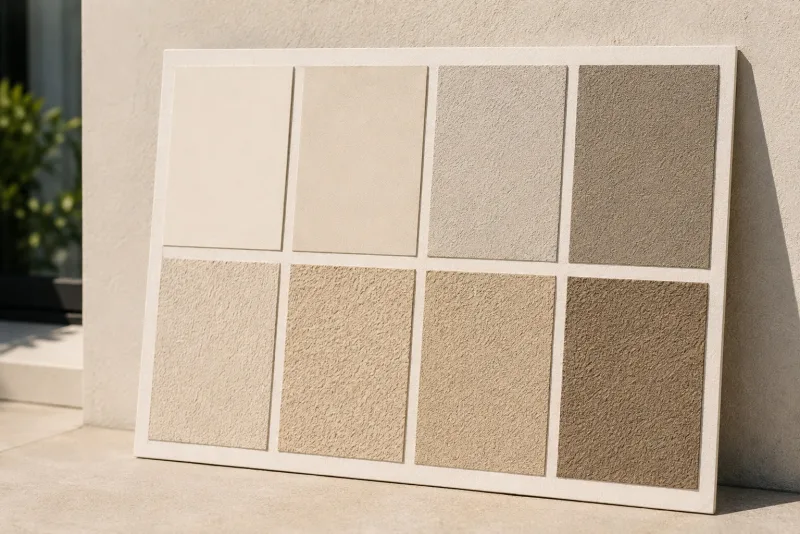
Stucco painting only bonds to the surface it lands on. If chalk, dust, failed sealant or mineral bloom sits between the coating and the wall, the new finish is bonded to loose material instead of stucco. Efflorescence is a mineral deposit left by water moving out through the wall, and we wash that deposit off before coating. If it returns on your wall after the coating is on, water is still moving through the stucco, and tell us rather than putting another coat over it.
ASTM D4258 is the published practice for cleaning cement surfaces before coating, and it is the practice stucco house painters work to. On your wall it comes down to one thing: everything that is not sound stucco comes off before primer or paint goes on.
Washing a Wall Without Damaging the Finish
Pressure washing cleans stucco, but excess pressure can erode the texture and push water behind the finish. We use a wide fan tip at moderate pressure and hold the wand back from the wall, then let the surface dry back before coating.
Dry-back means the wall has released the wash water it can release before paint traps it. One coating manufacturer publishes a substrate limit under 12 percent moisture content before coating. No published pressure ceiling covers every hard-coat stucco wall, so the crew works to the wall in front of it; the 500 psi cap often cited for EIFS belongs to a different wall system.
Sprinkler overspray and hard water, water with heavy mineral content, usually stain the bottoms of your walls more than the tops in southern Utah. Those mineral deposits need washing because coating over them puts the bond on the stain, not the stucco.
What Gets Filled, What Gets Sealed, What Gets Left Alone
Fine shrinkage cracking is filled and then coated over. Cracks wider than about 1/16 inch are routed open and patched rather than hidden under coating, using an elastomeric patching compound, a flexible repair material made for coating over.
Failed sealant at windows and penetrations is replaced as part of the coating scope. Urethane sealant stays flexible around those joints, and backer rod, the foam support behind deep sealant, keeps the sealant at the right depth. The weep screed, the open metal strip at the base of the stucco wall, stays clear so water can leave the wall instead of being painted shut.
Priming, Alkalinity and Stucco That Is Still Young
Fresh portland cement plaster, the cement-based stucco material, is strongly alkaline. Alkalinity can break an ordinary acrylic film down from underneath, a failure called saponification, so new or freshly repaired stucco cannot be treated like an older painted wall.
The long-standing cement-industry convention is about 28 to 30 days of cure before coating, and manufacturers set their own limits on top of that convention. An alkali-resistant masonry primer can make an earlier coat possible when the product manufacturer allows it, because the primer is made to sit between the fresh cement and the finish film.
Why Us
Why Choose Washington Elite Stucco for Stucco Painting & Coatings
Washington Elite Stucco approaches stucco painting as a stucco wall problem before it becomes a paint color problem. A stucco painter who reads the wall first can choose a coating against the wall's condition, exposure and moisture instead of starting with the color card.
The parts of the job that affect a coating decision are settled before work begins:
- We select the product against the wall surface, sun exposure and moisture signs.
- We choose finishes with UV-stable pigment, meaning colorants made to resist fading under strong sun.
- We write the scope before work starts, so the coating, trim and metal items are on paper.
- We provide a free on-site estimate for every job.
The Color Plan Comes Before the Sprayer
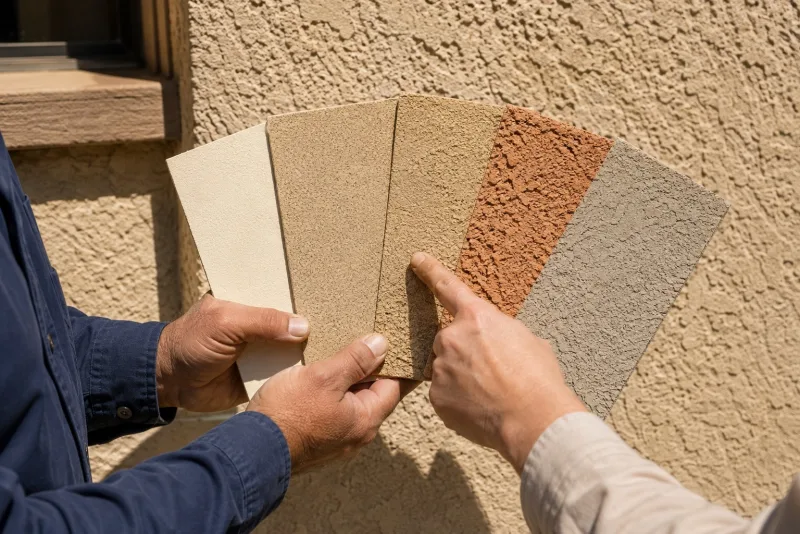
The wall is measured and the product is selected before the color is chosen. A draw-down, a sample of the actual coating placed on the wall or a sample board, lets you judge color on stucco in real light instead of relying only on a chip.
Where an architectural committee reviews exterior colors, we prepare the color submittal as part of the job. The written scope records the selected product and color before coating is ordered.
License and Insurance Before Anyone Starts
Washington Elite Stucco is a licensed and insured stucco contractor with 15 years of experience and 1,000+ completed projects. The crews who come onto your property are covered by general liability insurance and workers compensation, and that coverage is in place before anyone opens a can on your wall.
To schedule your free on-site estimate, call (435) 319-6039 or use the quote form.
Pricing
What a Stucco Repaint Runs
Published national cost guides place stucco painting near $2.45 to $4.75 per square foot of wall in 2026. That figure is measured against wall area rather than against the size of the house, so the total for your project follows how much wall you have and how tall it is. Those are published guide figures, not Washington Elite Stucco prices, and installing new stucco uses a different price structure.
A local stucco painter has to see the wall before putting a number on your project, but the drivers are visible before the visit:
- Wall area and two-story access set the base because larger or taller elevations take more labor and staging.
- Deep texture, including knockdown texture, consumes more coating over the same measured area.
- Elastomeric coating costs more per gallon and covers far less wall than acrylic latex paint.
- Prep, primer, trim, doors and ironwork add separate lines when they are in the scope.
What Moves the Number
Wall area sets how much coating the project can use, and two-story access changes how the crew reaches the upper elevations. Texture depth then changes the gallons needed over that same square footage, because a rough wall has more surface for coating to fill.
The product family changes the number again. Elastomeric coating has lower coverage per gallon than thinner paint, so a price built around ordinary paint does not describe the same job. Trim, doors and ironwork should sit in their own line so you can see whether those surfaces are included.
Where the Money Goes Before Any Color Does
Washing, crack filling, urethane sealant replacement and alkali-resistant masonry primer are commonly quoted as separate line items from the coating itself. We write them that way, so the preparation your wall needs is priced where you can see it rather than folded into a single figure.
Primer becomes a real material cost on a chalking or young wall, and pressure washing takes labor before any finish color appears. Both of those are spent on your wall before a single gallon of color reaches it. To get a written scope with a project number, call (435) 319-6039 or use the quote form.
Wash, Patch, Prime, Coat
Washington Elite Stucco runs stucco painting the same way on every job, from your first call through the final walkthrough. The steps below are that sequence, so you know what happens before anyone opens a can and what arrives in writing.
- You call or use the quote form, then we schedule a free estimate and site visit.
- We measure the wall and read its condition elevation by elevation.
- A written scope follows within 24 to 48 hours, naming the coating system, coats, finish and color.
- The color is drawn down on the wall and, where needed, submitted for approval.
- The wall is washed and left to dry back before coating.
- Cracks are filled, failed sealant is replaced, and weep screeds stay clear.
- We put an alkali-resistant masonry primer onto the areas that call for it, sometimes in spots and sometimes across a full elevation.
- The first coat goes on and is back-rolled into the texture.
- The second coat goes on after the first has set for the manufacturer's interval.
- Trim, doors and metal are coated last, then we walk the finished scope with you.
To start that sequence, call (435) 319-6039 or send the quote form.
Color Approval Before the First Gallon Is Ordered
Exterior color changes in most planned communities here go through architectural review before stucco painting starts. The CC&R, the community rules recorded for the property, and the architectural committee set the current requirements for each association, so we work to whatever is in force instead of relying on a countywide palette.
The submittal, the color package sent for review, is prepared as part of the job rather than handed back to you as homework. Review can add two to four weeks before a crew can be scheduled, because the decision arrives on the committee's own meeting cycle.
What an Architectural Committee Asks For
A typical committee review starts with the manufacturer, color name and color number for the body, trim and accent colors. Body and trim mean the main wall color and the colors used on the surrounding boards, doors or other exterior details.
The package usually includes a physical sample or draw-down rather than a printed chip, then identifies which elevations change. An elevation is one side of the building. Committees also look at whether the new scheme sits well beside neighboring homes, but each association decides that under its own rules.
Sample Boards and Draw-Downs on the Actual Wall
A draw-down is the real coating product spread out and dried so you can see the finish that will go on the wall. A sample board can serve the same purpose when the association wants a portable sample.
The same color can read differently in morning light, mid-afternoon light and afternoon sun on another elevation. Samples about two feet square on more than one side of the building give the color a fair test before the first gallon is ordered.
Choosing a Stucco Color That Survives This Sun
Stucco painting color is a durability decision in southwest Utah. This part of the state carries its highest ultraviolet exposure, so the pigment in the coating helps decide how long the chosen color stays close to itself and how hot the wall behind the film gets.
Deep organic pigments usually shift first under strong sun, while mineral and inorganic pigment, color made from mineral-based materials, tends to hold longer. How many years you get before the color has visibly moved depends on which of those you choose, how much sun that elevation takes, and the product carrying the pigment. A south or west wall reaches that point well before a north one on the same house.
Light Reflectance and How Hot a Wall Gets
Light reflectance value is a number for how much light a color throws back. A low light reflectance value means a darker wall surface, and a dark wall runs hotter than a light wall in the same sun.
Hotter stucco has more thermal movement, the expansion and contraction caused by heat changes, so the coating film over it has to move too. Infrared-reflective pigment is one way to make a dark color run cooler than a standard dark formula. A light body color with darker accent color is often the practical compromise when you want contrast without making every wall surface hotter.
Chalking: How a Coating Actually Fails Here
Chalking starts when ultraviolet exposure breaks down the binder, the part of the coating that holds pigment in place. The loose pigment left on the surface is the powder that comes off on your hand.
ASTM D4214 is the published method for grading how far chalking has gone, so this failure is measured rather than judged by appearance alone. Chalk has to be washed off before recoating. If a new coat lands on powder, the bond failure begins at the layer that should have been removed.
Why Your Old Color Code Will Not Match
A sun-aged wall can drift away from its original color code. Reordering that code gives you the color the coating started as, not the color now on the elevation, so the edge between old and new work can stay visible.
The practical answer for a repaint is coating the whole elevation or the full envelope, the complete exterior wall area included in the scope. Matching a small repaired patch to a faded wall belongs with repair, but repaint planning should assume the existing color has already moved.
What a Coating Can Bridge and What It Must Not Hide
Crack bridging means a flexible film moves over small cracks instead of splitting as the stucco expands and contracts, and an elastomeric stucco coating can honestly do that on a sound wall. The limit is not width alone, though published coating guidance treats about 1/16 inch as the point where a crack must be routed and patched rather than coated over.
A moving crack will reopen through any coating within a season. Pattern and location tell you more than width alone, so a coating quote should pause when the crack pattern points to repair or assessment first.
Hairline Cracking a Coating Can Carry
Hairline crack describes very fine cracking. Shrinkage cracking is fine cracking spread across a panel rather than running from an opening or corner. Cement shrinks as it cures, and walls keep moving through day-to-night temperature swings that can reach 40 degrees or more in southern Utah.
In that case, the coating can be the right answer after the wall is prepared. We fill the fine cracks first with elastomeric patching compound, then coat over them. The film is not the filler; its elongation helps it move after the cracks have been prepared.
The Cracks That Mean Stop
Diagonal cracking off the corner of a window or door, a long straight crack, a crack that has opened since last year, or a hollow area under a tap changes the next step. Those patterns are not a paint problem you can cover.
A movement crack, meaning a crack that is still changing, needs repair or assessment before coating is quoted. A 1/4 inch crack is outside the coating discussion altogether. The coating decision resumes after the wall condition is understood.
Painting Season on the Mojave Edge
Stucco painting has a real application window here, and the wall's own surface temperature can close that window before the calendar does. Summer highs in the St. George area run above 100 degrees, and coating data sheets commonly stop application at about 100 degrees, measured at the wall or in the air.
Spring and fall give the widest windows. Summer work chases the shade side of the building, the elevation out of direct sun, because a shaded wall can stay workable after a sunlit wall has become too hot.
Surface Temperature, Not Air Temperature
Surface temperature is the heat of the wall itself. A stucco wall in direct sun can run well above the surrounding air temperature, so the number on a weather app does not tell you whether the coating can go on.
Flash dry happens when coating skins over before it has wetted the wall and taken hold. That poor wetting can leave weak bond and lap marks, the visible overlaps between passes. An infrared thermometer reads the wall surface, and the crew works shaded elevations when heat pushes the wall toward the manufacturer's ceiling near 100 degrees.
Working Around the Monsoon
Monsoon season brings late-summer storm cells that can arrive fast and locally. Rain on a coat that has not reached its set time, the period it needs before it can resist weather, can wash coating off the wall or leave blotching.
The forecast window controls which elevation starts that day. We do not start an elevation that cannot be finished and set the same day, because an uncured coat needs time on the wall before a storm reaches it.
Stucco Painting Across Washington County
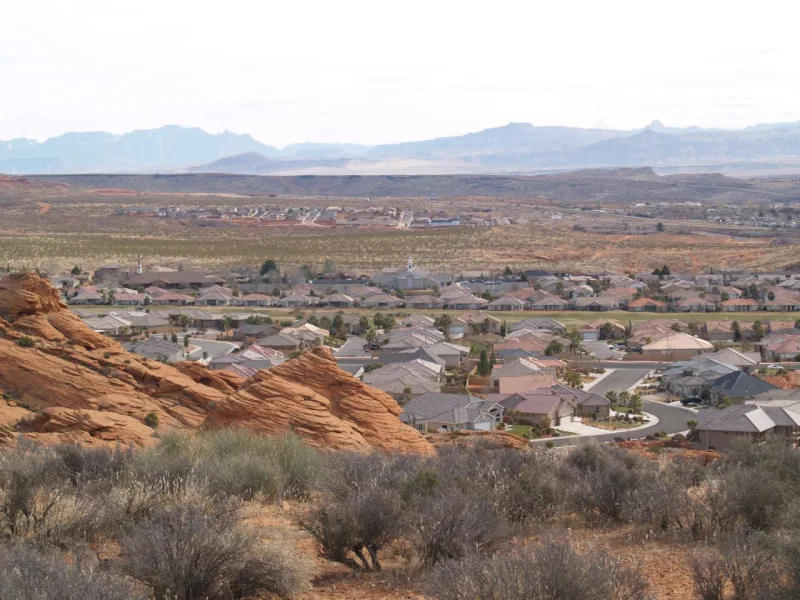
Stucco painting across Washington County is decided by the sun more than by anything else. Washington sits at 2,894 ft on the northeastern edge of the Mojave Desert, and the ultraviolet exposure that fades a coating reaches the higher communities as hard as it reaches the valley floor, so your wall gets the same product decision wherever you live.
What changes with elevation is the calendar. Summer heat above 100 degrees closes the application window across the St. George metropolitan area, while Pine Valley, Veyo, Central, New Harmony and Dammeron Valley sit thousands of feet higher and stay workable longer into the season. If your home is up there, we will put it on the schedule at a different time of year than a job down in town.
Where Washington Elite Stucco Takes Coating Work
Washington Elite Stucco takes stucco painting work at your address if it sits in one of these nineteen areas:
- Washington, UT
- St. George, UT
- Santa Clara, UT
- Ivins, UT
- Winchester Hills, UT
- Diamond Valley, UT
- Dammeron Valley, UT
- Veyo, UT
- Central, UT
- Pine Valley, UT
- New Harmony, UT
- Leeds, UT
- Toquerville, UT
- La Verkin, UT
- Hurricane, UT
- Apple Valley, UT
- Virgin, UT
- Rockville, UT
- Springdale, UT
Painting Stucco: Common Questions
What is the average cost of painting a stucco house?
Published national guides price stucco painting & coatings by the square foot of wall rather than by the house, so a figure quoted over the phone is a guess at how much wall you have. The on-site estimate is free and ends in a written scope with a real number on it.
Is painting over stucco a good idea?
Yes, on a wall that is sound and still able to dry. A coating that shuts the surface tight traps moisture behind it and lets go, and a wall with movement cracking gets repaired before it gets coated.
What is elastomeric coating, and is it worth the extra cost?
It is the coating built to move with a wall that is already cracking, and that is the wall it is worth the extra cost on. On a sound wall you would be paying for stretch the stucco will never ask for, and for the extra material a heavier coating takes.
How long before new stucco can be painted?
New stucco waits roughly a month. Where the product manufacturer allows it, an alkali-resistant masonry primer lets us start sooner than that. A fresh patch on an old wall is new plaster as well, so it runs its own clock even when the stucco around it is decades old.
Why has my painted stucco turned chalky?
Ultraviolet light has degraded the binder and left loose pigment on the surface. It reaches the south and west elevations years before the north, which is why one side of a house can look tired while another still looks close to new. Run a hand down the wall, and whatever comes off has to be washed away before recoating.
Will a coating stop the cracks in my stucco?
No. A flexible coating can carry fine shrinkage cracking, and nothing you put on the surface stops a wall from moving underneath it. A crack that comes back through new coating inside a year was moving, and no film would have held it shut.
Do I need HOA approval to change my exterior color?
Most planned communities in this county review exterior color before work starts, and we handle that paperwork for you. Plan around the committee's meeting cycle rather than ours: the next review date is usually what sets your start.
Does a lighter color really make a difference on a stucco house here?
Yes, and the difference shows up in movement rather than only in how the wall looks. A hotter wall expands and contracts further through the day, and the film over it works harder for it. If the color you want is a dark one, ask us about infrared-reflective pigment.
Can stucco be pressure washed before painting?
Yes, though the tip and the distance from the wall decide whether your texture survives it, not the number on the machine. No single published pressure ceiling covers hard-coat stucco. The wall then has to give the wash water back up before any coating goes on.
For an answer about your own wall, call (435) 319-6039 or ask through the quote form.
Get a Color and Coating Plan
Washington Elite Stucco gives you a product recommendation, a color plan and a written scope from the on-site visit. The free estimate is available across Washington County and the St. George area, so the stucco painting plan starts with the wall in front of us.
Call (435) 319-6039, or start on the quote form.