
Stucco Remediation in Washington, UT: Moisture, Failed EIFS and What Is Behind the Wall | Washington Elite Stucco
Washington Elite Stucco provides stucco remediation for homes and commercial buildings in Washington, UT, with 15 years in the trade. When you see staining, bubbling, soft areas or cracking on the outside of a wall, the visible mark is only the symptom. The leak may be above it, beside it or hidden at a joint where water can enter behind the finish.
Stucco remediation starts with moisture diagnosis before repair begins. We use moisture meters, probes and inspection at wall junctions to decide where the wall needs to open. That matters because a patch over an unfound leak can hide the damage while water keeps reaching the sheathing, the wood layer behind the wall finish, or the framing behind it.
The scope can include water intrusion, failed EIFS, a synthetic wall covering built with insulation board behind its finish, EIFS remediation, rotted sheathing and mold behind the finish. We also look at flashing, the metal or sealed pieces that move water away from openings and edges, because leaks often begin where different parts of your wall meet. The first decision is still where water is getting in.
Washington Elite Stucco is licensed and insured, and our remediation work extends across Washington County and the St. George area. Call (435) 319-6039 to schedule a wall assessment.
Get A Free Estimate
What We Do
What We Address With Stucco Remediation That Repair Does Not
Stucco remediation is for a wall where damage has moved behind the finish. A surface repair can restore a visible area, but remediation first establishes where the water came from and how far it traveled. A hard-coat wall has cement plaster over the wall framing rather than a synthetic insulated covering. The extent of moisture intrusion, not the size of the stain or crack, decides whether the wall needs a small repair or a larger removal.
Water Intrusion Behind a Hard-Coat Wall
Cement plaster can look sound while the board behind it is wet. The water-resistive barrier is the layer behind the plaster that keeps water off the sheathing. When that layer is broken, water can reach the wall board behind a hard-coat wall even though the outside still feels solid. We map the wet extent before material comes off, because the mark you see may not show the full path. That map tells you whether the wall needs a local opening or a larger removal behind a finish that still looks intact.
Failed EIFS and Barrier Synthetic Systems
Failed EIFS and older barrier synthetic systems need EIFS remediation when water has reached past the outer finish. The scope can run from the finish coat through the base coat, reinforcing mesh, insulation board and sealant back to the sheathing. Once water is held against the board behind the system, we remove the affected wall assembly rather than cutting out a visible patch. That matters on your wall because a synthetic assembly can keep the wet area hidden until removal shows how far the failure reaches.
Rotted Sheathing, Framing and the Base of the Wall
Rotted sheathing and framing bring the structural part of the wall into the scope. OSB, plywood, studs, bottom plates and headers are removed to sound material on every edge, not to the stain line. We set the cut line from the readings before work starts, so the written scope tells you which area comes out and which framing members are replaced in kind and refastened. That gives the rebuild a sound edge to tie back into instead of leaving weakened material behind the new finish.
Mold and Biological Growth Behind the Finish
Mold and biological growth behind the finish can place wet board, wet insulation and wet framing inside the removal area. Our scope removes those wet materials and closes the entry that wetted them. Assessment, air testing and clearance testing are a separate specialty that we refer out before the wall is closed, so another trade may follow this part of the remediation work. That order matters because the wall should not be closed around damp materials before any needed specialty review happens.
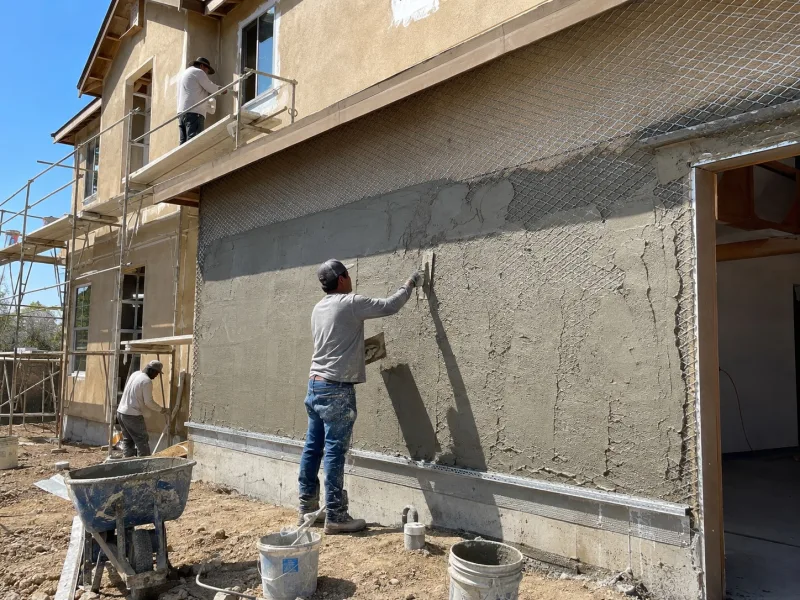
Where Stucco Remediation Differs on an EIFS Wall
EIFS remediation removes a layered synthetic assembly from the sheathing, while hard-coat stucco remediation removes plaster from the wall. EIFS and hard-coat stucco can show the same stain, crack or soft area, but they are not the same wall. An assessment first separates the two, because EIFS remediation follows a different path from repair on plaster over a wall.
EIFS Is a Cladding System, Not a Finish
EIFS is a complete insulated cladding system made from expanded polystyrene board, base coat, reinforcing mesh and finish coat. The insulation board adds a foam layer between the finish and the wall sheathing, and the coating over it is thin compared with hard-coat stucco. Because the assembly is adhered or fastened to the sheathing, there is no plaster thickness to sound or cut back to, so both diagnosis and removal change. On your wall, EIFS remediation may mean separating a layered assembly from the sheathing rather than repairing a plaster surface.
Barrier EIFS Against Drainage EIFS
Barrier EIFS tries to stop water at the finish face and sealant joints. Drainage EIFS adds a water-resistive barrier and a drainage plane, a space or layer behind the wall covering that gives water a path back out. IRC R703.9.2 addresses EIFS with drainage on framed walls only; it does not govern engineered one-coat systems, which run on the manufacturer's ICC-ES evaluation report. Which system you have affects whether the correction can rebuild drainage or whether the failed assembly needs replacement.
Why an Acrylic Finish Is Not EIFS
An acrylic finish coat is a finish material over an existing wall and does not make the wall EIFS. The coating may make hard-coat stucco resemble a synthetic wall, but it adds no insulation board and does not turn the wall into an insulated cladding system. If the wall is named incorrectly, the proposed scope can answer the wrong problem. We identify whether your wall has insulation board behind the finish before recommending EIFS work or hard-coat stucco remediation.
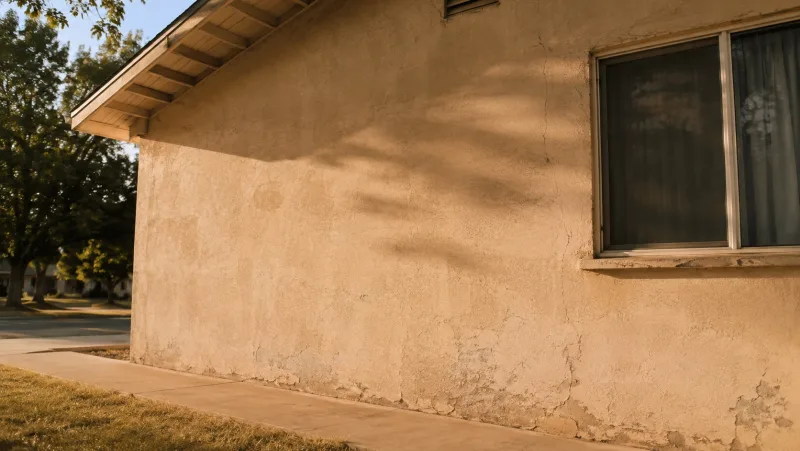
Tracing Water to Where It Actually Enters
Water rarely enters a stucco wall at the same place where damage appears. It can run behind the finish, follow framing or collect at the bottom of a cavity before you see a stain. ASTM E2128 is the ASTM standard guide for working out where a wall is leaking and why, and it directs the investigator to treat the wall as one system so they establish the cause instead of chasing the symptom. That is why we read the wall, measure it and then open it.
What the Wall Shows Before Anything Is Opened
Staining, bulging, soft spots, finish layers separating from each other and blistered finish coat are surface evidence that a cavity may be wet. Efflorescence, the white mineral bloom on the face of the wall, means water has moved through the wall and carried salts out with it. A chalky band low on the wall can mark where water sits, and an interior stain is usually older than the day you noticed it. Photographs and a marked-up elevation drawing record what was found, so the investigation has a visible record before the wall is opened.
The Openings and Junctions Water Uses
Windows, doors, decks and roof-to-wall junctions are common entries because different materials meet there. Foam trim and flat decorative bands can hold water against the wall, while sealant at a joint can fail long before the plaster around it does. Hose bibs, light boxes, vents, parapets and other penetrations can also leak quietly. We check those points before removal because the opening should expose the water path, not only the stained area. A controlled water test can confirm where water enters before we repair that opening during the rebuild.
Moisture Readings and What They Settle
A pinless moisture meter reads moisture in the wood behind the finish without opening a large area. A moisture probe is invasive testing: we make small holes on purpose and read the sheathing on a grid. Wood sheathing above about 19 percent moisture content is wet enough to investigate before rot becomes more extensive; that figure is an investigate threshold, not the point where decay begins. Dry readings can rule out a closed cavity as quickly as wet readings can open one.
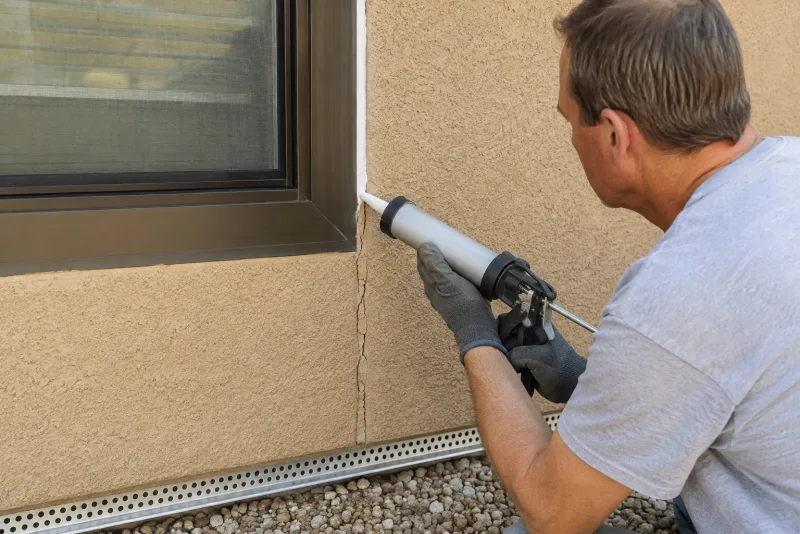
What Water Does Once It Is Behind the Wall
Water behind stucco does most of its damage before the wall shows you a problem. Once moisture reaches the wall cavity, the finish can hide wet sheathing, damp framing and early corrosion for a long time. When water reaches sheathing or framing, the affected material may need replacement rather than a surface repair.
From Wet Sheathing to Lost Strength
Wet sheathing first absorbs water, then stays wet where air cannot reach it. OSB can swell at the edges until the bond inside the board releases, and plywood can separate ply from ply. Studs can stay damp around the fasteners that hold the wall together, and fastener corrosion can reduce their grip. Once board or framing has gone soft, drying it and covering it again does not restore its strength. That is why a remediated opening has to reach material that can still hold the rebuilt wall.
Mold Behind a Failed System
Mold behind a failed system needs a damp surface, and a closed wall cavity can keep that surface damp. Growth can sit on the face of gypsum sheathing or wood board where air does not move. An odor indoors may arrive before a visible stain because the cavity is already holding moisture. Coating over a damp wall seals the condition in, and drying the cavity without closing the entry only starts the same cycle again. The practical issue for your wall is whether the cavity is still wet and what material that moisture has reached.
How Far Down the Water Gets
Water inside a wall runs down until framing, trim or the base of the assembly stops it. Bottom plates, rim joists and other base framing take that moisture first, so the weep screed, the wall's drainage exit at the bottom, is one of the first places checked. Staining or flaking plaster at the slab edge is evidence that water reached the base; it is not proof that the foundation itself is damaged. The rebuild works upward from sound material at the bottom.
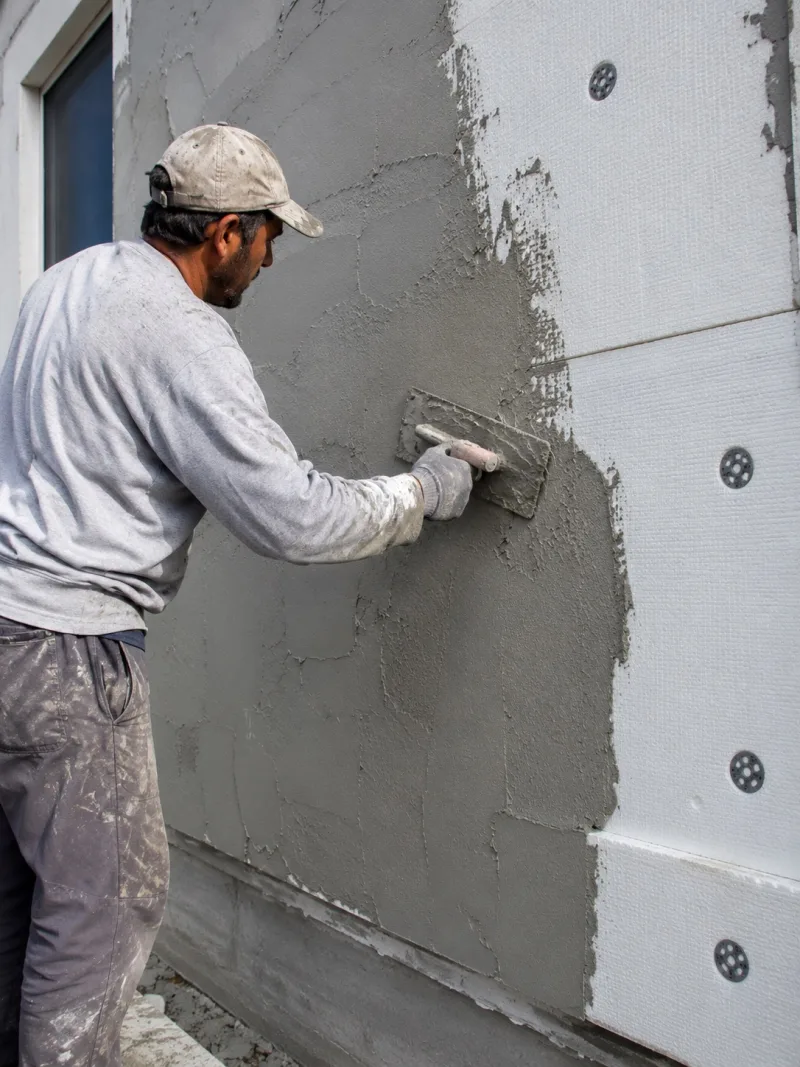
Why Us
Why Choose Washington Elite Stucco for Stucco Remediation
As stucco remediation contractors, we find and measure the cause before any stucco is removed. We build the scope from the evidence inside the wall before removal begins. We use moisture forensics and EIFS system knowledge while accounting for local heat exposure before a price is written.
Before we price remediation, we connect the estimate to the wall evidence you can review:
- moisture meter readings from the areas that show damage and the areas around them
- a probe grid where the wall needs invasive readings through small holes
- junction inspection at windows, doors, roof edges, trim, sealant and penetrations
- photographs and a marked elevation drawing showing what was found
The Investigation Comes Before the Estimate
Meter readings, a probe grid and junction inspection come before a firm number because the estimate needs to say what will be opened and why. With Washington Elite Stucco, you see the readings, photographs and marked elevation behind the written scope.
Licensed, Insured, and Fifteen Years in Washington County
Washington Elite Stucco is a licensed stucco contractor carrying general liability insurance and workers compensation coverage for crews working on your property, with 15 years of experience, 1,000+ projects completed and a free estimate for every job. You can ask about licensing, insurance coverage, experience and estimates before work starts. Call (435) 319-6039 or use the quote form to request an estimate.
Pricing
Remediation Pricing and What Sets It
Nobody can price stucco remediation from the curb because the damaged area is often larger or smaller than the mark on the finish. The investigation turns the unknown into a scope by showing which part of the wall is wet, which parts are still sound and which entry has to be corrected. The final number follows that information instead of coming from a list price.
What Moves a Remediation Number
The main cost drivers are the parts of your wall that change the labor, access and rebuild:
- the wall area that reads wet, rather than the area that looks bad
- whether the sheathing and framing behind the finish are still sound
- whether the wall is hard-coat plaster or an EIFS system
- access for height, scaffold, landscaping and surfaces that need protection
What the Written Estimate Includes After Investigation
The written scope comes after the visit, not at the door. It names the wall area, the removal limits and the correction, so you can see what the estimate includes before work begins. If the wall opens and exposes damage that the closed wall could not show, that added work is priced as a change order, a written change to the original scope and price.
We use full removal and replacement for a larger wall assembly rather than a targeted wet area. Call (435) 319-6039 or use the quote form to schedule an assessment.
Assessment, Removal, Correction, Rebuild
Stucco remediation moves in a set order so you know what is happening to the wall before the next stage begins. The work starts with the first call and ends with a walkthrough of the finished elevations. Nothing is closed before you have seen what was behind the finish.
- We visit the property and inspect the outside of the wall.
- We record readings, photographs and a written scope.
- We contain dust and debris so removal does not spread across your property.
- We correct the entry and replace damaged wall parts.
- We rebuild the wall and walk it with you.
The Free Visit and What We Look At
The free visit starts with the elevations, the outside faces of the wall. We look at every junction and penetration, including windows, doors, roof edges, vents, light boxes and hose bibs. The visit carries no obligation, because the wall has to be assessed before anyone can know what the scope should include.
Readings, Photographs and a Written Scope
You receive a written scope within 24 to 48 hours of the visit. The scope carries the moisture readings, the photographs and the removal limits, so you can see why each part of the wall is included before work starts.
Controlled Removal Back to Sound Material
Cement plaster is cut wet or with dust capture because dry cutting can create respirable silica, a fine dust that should not be breathed. We contain debris around the opening, protect occupied areas from dust and cover the open wall with weather protection at the end of each working day.
Correcting the Cause at the Opening
The entry is corrected while the wall is open. That can include flashing, sealant, sheathing or framing at the affected area, depending on what the assessment and removal show. You see the open wall before it is closed, so damaged structure is not covered without being shown.
Rebuilding the Wall and Walking It With You
The wall goes back as the assembly it was built as, with finish coat and texture returned as part of the rebuild. We walk the finished elevations with you before we leave. Call (435) 319-6039 or use the quote form to start with a free visit.
Monsoon Rain, Wind-Driven Water and the Walls That Leak Here
A dry climate does not guarantee your wall is dry. In Washington County, water that wets stucco joints can arrive in concentrated monsoon storms, while summer afternoons run above 100 degrees. Long dry stretches and hard sun can make the outside of a wall look sound even while water remains trapped behind the finish.
Sideways Rain at Roof Junctions and Parapets
Wind-driven rain can push water into junctions that were built to shed rain falling downward. Roof-to-wall junctions, parapets and low walls take water on the top as well as the face, so a joint that sheds a normal shower can admit a driven one. Coping, the cap on top of a parapet or low wall, becomes part of the water path when storm rain moves sideways. We treat those areas as diagnostic targets because the leak may begin above the mark you see on the wall.
Why a Dry Climate Hides a Wet Wall
Long dry spells can leave the face of the wall looking untouched after a leak begins. Sun bakes the finish coat and causes chalking, while the wall cavity behind the finish can stay damp where air does not move. Ultraviolet exposure is the dominant aging force on the outside here, so visible evidence may surface years after the entry opened. That delay is why an assessment follows the moisture path instead of judging your wall by the cleanest surface.
Keeping Water Out After the Wall Is Closed
After we address the current failure, soil, paving, roof drainage and irrigation can still send water back to the same vulnerable areas. Sealant is the short-lived part of many wall junctions, so those edges still need routine checks. With routine crack and sealant maintenance, a hard-coat wall commonly lasts 50 years or more.
The Once-a-Year Walk Around the Wall
An annual inspection works best after monsoon season, when driven rain has already tested the wall. Walk the junctions at windows, doors, penetrations and roof edges, then look for split sealant, new staining or a changed crack. Photograph what you find so next year has a clear comparison, especially where a roof-to-wall junction or trim piece has changed. That record helps separate a stable old mark from a new path that needs attention before water reaches the wall cavity.
Grade, Splash and Where the Roof Sends Its Water
Grade is the soil or hard surface height at the base of the wall, and it can block the weep screed when it rises against the stucco. Downspouts and scuppers, the roof outlets that discharge water, can undo a correction when they empty at a wall. Keep irrigation spray off the plaster, and watch patio edges where splash-back wets the bottom of the wall through the hot months. Those changes matter because they control whether water can leave the base or keeps returning to the area that was repaired.
Stucco Remediation Across Washington County
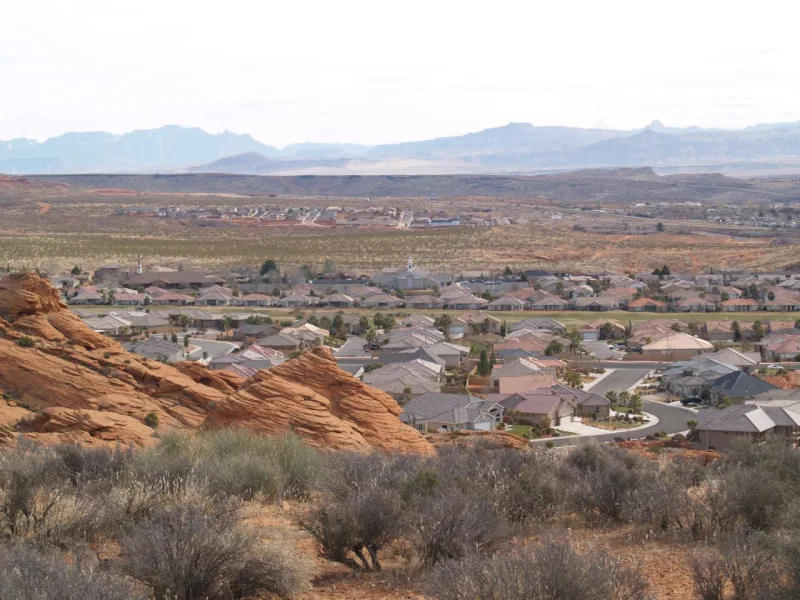
Stucco remediation across Washington County deals with the same desert exposure and storm pattern from one town to the next. Washington sits at 2,894 feet on the northeastern edge of the Mojave Desert, and the same sun, driven rain and dry spells reach your walls across the valley. That shared exposure is why the same wall failures appear in different neighborhoods.
Washington Elite Stucco Investigates Failed Walls Across Southern Utah
Washington Elite Stucco provides stucco remediation in these areas:
- Washington, UT
- St. George, UT
- Santa Clara, UT
- Ivins, UT
- Winchester Hills, UT
- Diamond Valley, UT
- Dammeron Valley, UT
- Veyo, UT
- Central, UT
- Pine Valley, UT
- New Harmony, UT
- Leeds, UT
- Toquerville, UT
- La Verkin, UT
- Hurricane, UT
- Apple Valley, UT
- Virgin, UT
- Rockville, UT
- Springdale, UT
Remediation Questions, Answered Plainly
These are the questions owners usually need answered before they call about stucco remediation.
What is the difference between stucco repair and stucco remediation?
Stucco repair puts the visible finish back. Stucco remediation removes what water damaged behind the finish and closes the entry that caused the failure. A patch on a wall with an open entry is work you can end up paying for twice, because the same path can wet the wall again.
Is EIFS stucco still used?
EIFS is still used, usually with drainage behind it. Older barrier assemblies are the concern on many failed synthetic walls, and the EIFS section above explains that difference in full. On an older barrier wall, EIFS remediation may have to remove the sealed assembly back to the sheathing instead of correcting a drainage path behind it.
How long will synthetic stucco last?
Synthetic stucco needs regular checks at openings, edges and sealant joints because those are the places water can get behind the finish. The finish is not usually the part that sets the life of the assembly. On a barrier wall, the sealant joints often become the weak point because they are the first line of defense at openings and edges.
How much does stucco remediation cost?
Stucco remediation cost follows the wet wall area and the condition of what is behind it. Neither is known from the driveway, so a curbside number can only speak in passing to the visible repair. The useful question is whether the estimate names the removal limits, the correction and how added hidden damage will be handled.
What are the signs that water is getting behind my stucco?
Water signs usually cluster at openings and junctions rather than in the open field of the wall. Look around windows, doors, roof edges, trim, vents and hose bibs for staining, blistering, soft spots or a mark that returns in the same place after each storm. A repeating mark is more useful than a single blemish because it points to a water path.
Can there be damage behind the wall if nothing shows inside the house?
Damage can sit behind the wall before a room shows any stain. A closed wall cavity can hold water for a long time, and the interior face may stay clean while the sheathing outside it is wet. A meter reading answers that question more directly than an interior look.
Does failed stucco cause mold?
A failed stucco system can supply the sustained damp that mold needs behind the finish. The useful first step is a moisture reading rather than a mold test, because the reading shows if damp material remains behind the finish. A wet result points toward opening the wall, while a dry result can narrow the investigation to staining, odor or another source.
Can water behind stucco damage the framing?
Water behind stucco can damage framing, and framing in the scope changes the job from a finish repair to wall rebuilding at the affected area. That means the open wall has to show whether the wood can still hold fasteners and carry the new assembly. When structural material has softened, it is replaced rather than dried and covered again.
Get the Wall Assessed
Washington Elite Stucco starts stucco remediation with a free look at your wall, moisture readings and a written scope. The visit establishes where the water enters and how far the damage runs, and no obligation follows the visit.
Call (435) 319-6039 or use the quote form to request a free estimate.