
Stucco Repair in Washington, UT: Cracks, Patches and Hollow Areas | Washington Elite Stucco
Washington Elite Stucco provides stucco repair in Washington, UT for cracks, patched areas, hollow sections, trim damage and joints where the wall stops at another material. A hairline crack may only mark the surface, while a movement crack can show that something behind the finish is still shifting. Because the visible line is not always the full problem, we read the wall before anything is mixed.
Stucco patching starts with the reason the old finish opened, loosened or separated. A patch over a live problem can split again, pull away at the edge or show through the new finish, so we diagnose the area before we repair it. That diagnosis may lead to a small patch, a larger opened section, texture matching around an older repair or sealant work at a joint, depending on what the wall shows.
We are licensed and insured. We handle stucco repair for homes and properties in Washington County and the St. George area, where sun, heat and building movement can make small wall problems more visible over time. Call (435) 319-6039 or use the quote form to ask Washington Elite Stucco for a free quote on your stucco repair.
Get A Free Estimate
What We Do
What We Cover in a Stucco Repair
Stucco repair starts with the wall behind the damaged surface. We first determine whether the substrate, the solid backing the stucco is attached to, is still sound enough to support a repair. From there, the scope depends on how far the damage extends. A small repair may require rebuilding only a limited section of the stucco, while more extensive damage may mean opening a larger area, rebuilding additional coats, and tying the new work securely into the surrounding wall.
Crack Repair and Sealing
Crack repair begins by asking whether the crack sits in the finish coat, the outer surface you see, or if it runs through the deeper layers.
Elastomeric sealant, a flexible material made to stretch, is used in moving joints such as a control joint, a planned break that lets a wall section move. We patch cracks that are not supposed to move, after we understand why they opened.
Patching Damaged and Broken Areas
Small stucco repair for impact damage, broken corners and holes starts by cutting damaged material back to sound stucco. We rebuild the patch in the same layered assembly as the wall around it: the scratch coat grips the base, the brown coat builds the flat body of the wall and the finish coat forms the visible face.
Corners and edges need more than filler. A corner bead, the straight metal edge under an outside corner, has to be set back in line when it is bent or broken. Where the metal lath, the mesh that holds wet stucco in place, was cut or corroded, we tie the lath back in before the new coats go on.
Hollow and Delaminated Sections
Stucco can stay on the wall after it has lost its bond, the attachment between the stucco and the material behind it. Delamination is that loss of attachment. A coating over a debonded area fails with the loose material beneath it, even when the surface still looks intact.
We map the extent of the hollow area before we remove material. Because debonding can continue behind stucco that looks untouched, removal stops only when every edge reaches sound, bonded material.
Trim, Flashing and Joint Repairs
Trim repairs often start where stucco meets another part of the building. Windows, doors, rooflines and penetrations, the pipes, vents or fixtures that pass through the wall, give water more ways in than an open flat wall does. Flashing, the thin metal or membrane that directs water out, carries water out of the wall itself, while the stucco around it only sheds water off the face.
At a sloped roof-to-wall junction, step flashing carries water down the roof edge and kick-out flashing turns that water away from the wall at the bottom. If the flashing is missing or out of place, a joint repair without that correction lets water return.
How We Match a Stucco Repair to the Wall Around It
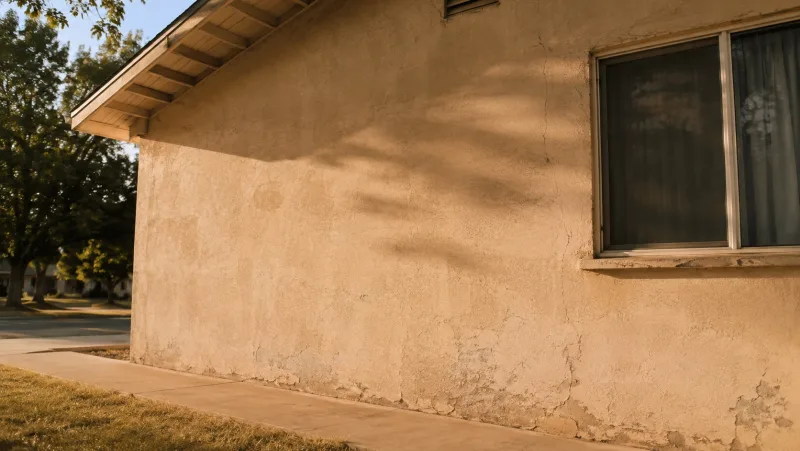
Stucco patching has to match the wall, not a product label. The original surface came from material, a tool and the hand that worked it. As stucco house repair contractors, we read all three before new material touches the opening.
Identifying the Texture You Already Have
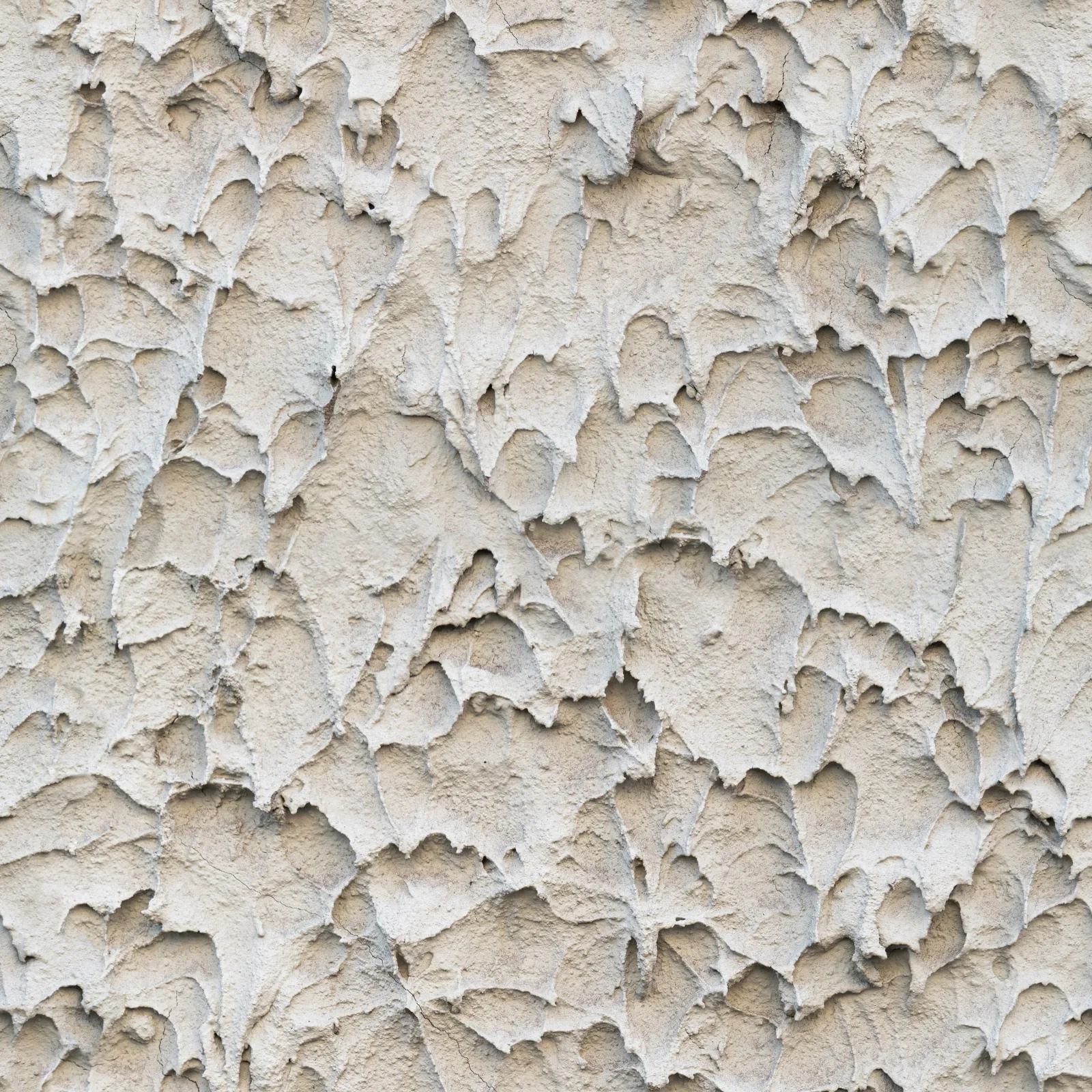
We identify texture matching from the finished wall. Aggregate, the sand or stone grains inside the mix, sets the size of the surface pattern. Tool marks show whether the finish was floated, dashed, sprayed or knocked down.
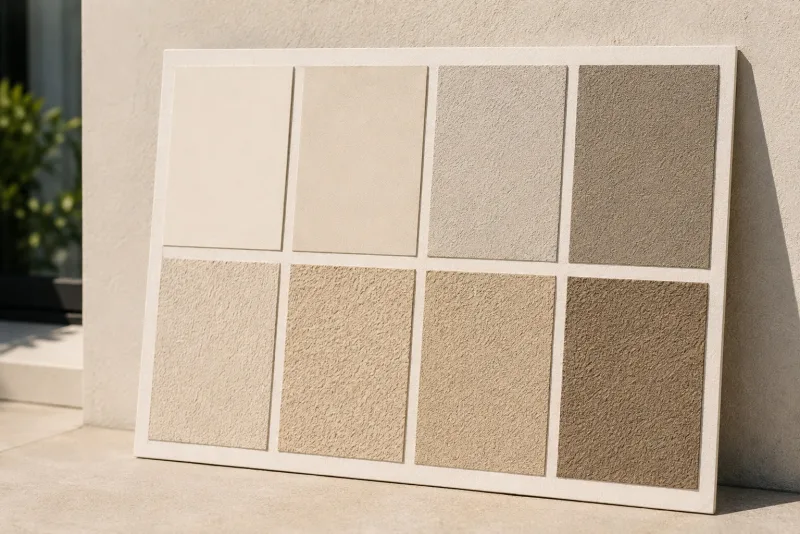
A sand float finish has a rubbed surface made with a flat tool. A dash finish is thrown or sprayed on, leaving raised points. Knockdown starts with raised texture and flattens high points. Matching one of these on your wall means repeating how it was made: the same tool, the same throw or spray, and for a knockdown finish the same wait before the high points are flattened.
Why Color Is the Harder Half
Color is harder because wet stucco and cured stucco do not look the same. A color coat, the tinted outer layer of cement stucco, dries lighter or darker than it looked during mixing. A sample panel lets us work a small test area and judge the match after it dries in daylight.
A wall that has weathered for years has changed while fresh material has not. Integral color, pigment mixed into the stucco, and an acrylic finish, a colored coating applied over the wall, age differently. When the repair cannot disappear inside the old field, we carry the patch to a corner or trim line. A fog coat, a thin color wash over cured stucco, can even out the repaired face.
Reading a Crack Before Filling It
The crack pattern on your wall tells us whether stucco repair can close the surface or whether the wall is moving behind it. We use crack mapping, marking where each line runs and whether it has changed, before we choose a repair method. A crack that weeps or stains gets addressed first because water is traveling through your wall.
Shrinkage Cracking
Shrinkage cracking is a fine, widely spread pattern that usually appears early as the finish coat dries and cures. Curing is the period when wet stucco hardens into its final surface. These cracks usually sit in the visible outer layer instead of following the framing behind the wall.
Your wall can carry surface cracks and movement cracks at the same time. If a line is shallow and stable, we can treat the surface. If a line keeps opening, filling the face alone gives the crack a path back.
Movement Cracking
A movement crack is usually longer, less scattered and tied to the structure behind the stucco. Diagonal cracks from window or door corners often point to frame movement. Cracks that follow the lath line point to attachment trouble rather than an outer-finish problem.
Soil movement in this valley can open a control joint or expansion joint that was tight a season earlier. An expansion joint is a planned break that gives building materials room to move. When a crack reopens on its old line, we treat movement as the cause.
What Sounding a Wall Finds
Sounding a wall means tapping the stucco in a steady pattern and listening for the pitch to change. A solid area gives back a tighter sound because the stucco is bonded. A hollow return tells us the stucco has separated from the substrate, even if the face looks unbroken.
How a Wall Is Sounded
We sound beyond the visible damage instead of testing only the broken spot. Delamination can run behind intact stucco, so the damaged face is not a reliable border. As the pitch changes, we mark the boundary, and that chalk line becomes the measured cut line.
That boundary also protects sound material. If an area sounds solid, we leave it alone even when nearby stucco needs removal. If the pitch turns hollow again farther out, the repair area grows to include separated material.
Why the Repair Is Bigger Than the Damage
The hollow area is often larger than the damage you can see. Sounding turns a guessed square footage into a measured one because the repair follows the attached and detached areas, not the stain, crack or broken edge on the surface.
A measured boundary lets us write a scope around the stucco that needs removal. Written scope means the repair area, materials and limits are described before work starts. That helps an estimate hold once the wall is opened.

Sealant Joints and Where the Wall Stops
Stucco repair changes at joints because some breaks in your wall are supposed to move. Control joints, expansion joints, window edges, door edges and penetrations give building materials room to shift. A rigid patch across one of those moving breaks tears itself open.
Which Joints Are Meant to Move
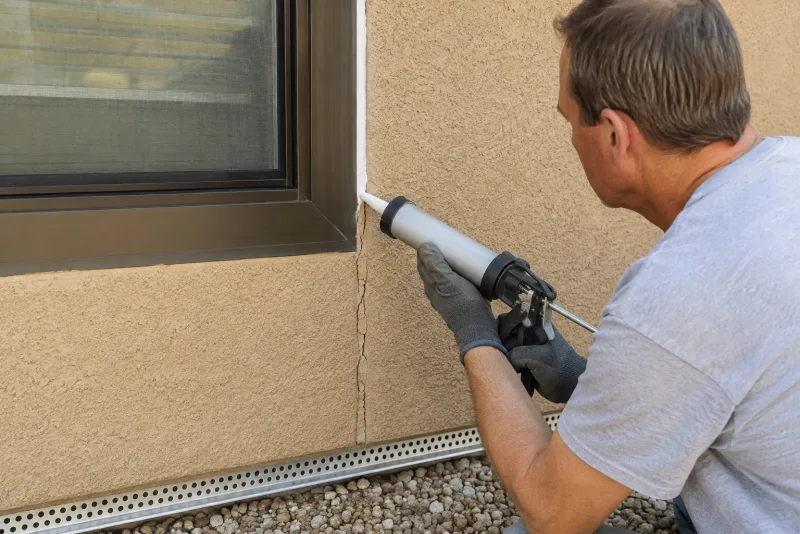
Windows, doors and penetrations move differently from flat wall areas. A penetration is a pipe, vent or fixture that passes through the wall. Joint width tells us how much stretch the material has to absorb, so we use sealant where the gap is built to flex instead of filling it with stucco.
Sealant at joints and penetrations usually lasts about 5 to 10 years, so gaps, splits or hard material pulling from the edge may need new sealant.
Choosing and Replacing the Sealant
We remove old sealant because new sealant will not bond well to failed material. Backer rod, a foam strip behind the sealant, sets the depth so the face can stretch. Paintable elastomeric sealant and silicone sealant are not interchangeable under a coating.
An elastomeric coating is a flexible film applied across the whole wall, not packed into a joint the way sealant is, and it does not solve a wet joint. If the wall is taking water, trapped moisture can blister the coating. Vapor permeable means the coating lets water vapor pass through, and a perm rating measures that release.
Why Us
Why Choose Washington Elite Stucco for Stucco Repair
A failed stucco repair can trap and hide water behind a wall that looks fixed from the outside. If your repair touches lath, flashing or coat timing, the crew has to understand what each layer does before the surface is closed. Washington Elite Stucco sends the same crew that diagnoses the wall to repair it, so the work follows what was found during the visit.
Diagnosis Before a Price
A price written from what is visible on the surface can change once the loose stucco is opened, so you get your number after we have examined the whole wall rather than before. The written scope names the wall system, the measured area, what we will do and what we will leave alone. Washington Elite Stucco provides a written scope within 24 to 48 hours of the visit.
Licensed, Insured, and Fifteen Years In
Washington Elite Stucco is a licensed stucco contractor with general liability and workers compensation, and both coverages are carried for crews working on the property. General liability covers property-related risk, while workers compensation covers crew injury risk. We have 15 years of experience, have completed 1,000+ projects and provide a free estimate on every job.
For a stucco repair estimate, call (435) 319-6039 or send the details through the quote form.
Pricing
What Drives the Price of a Stucco Repair
A stucco repair estimate follows the area that has to come off, not only the crack, chip or stain you first noticed. Sounding sets that square footage. The written scope then shows why the price belongs to that wall.
What Moves the Number
Beyond that measured area, a handful of conditions on your building move the estimate up or down.
- How close our crews can get to the damage changes the labor behind a repair. When the patch sits on a ground-floor wall and we can reach it standing on the soil, the setup is short and the crew spends its hours on the wall rather than on getting to it.
- Damage high on the building costs more than the same damage at ground level. A gable wall, the tall wall end under a roof peak, is the common case, and when the height or the footing under the wall makes ladder work the wrong setup, our crews work from scaffolding, a temporary work platform that has to be put up before the repair and taken down after it.
- The finish also affects the estimate. Matching an aged wall takes more testing than matching a recent repair, and that test work is time our crews spend before any new material goes on your wall.
- Some repairs bring a second trade with them. If water is getting behind the wall because the flashing is wrong, our crews correct the flashing before new stucco goes on, and the estimate covers both pieces of work.
- Several repairs handled in one visit can cost less than the same work spread across separate visits, because our crews set up once for all of them rather than once for each, and that shared setup time comes off the total.
Repair Against Replacement
Published national guides place full removal and replacement well above patch work, but those guides are not Washington Elite Stucco's price for your wall. They are useful only for scale: a contained patch and a full re-stucco are different levels of work.
A repair caught early can stay a patch. The same wall left open to water or movement can become replacement work, so the estimate has to name the measured area before it names the price. To have Washington Elite Stucco look at the wall, call (435) 319-6039 or use the quote form.
From Your Call to a Cured Patch
A stucco repair follows a sequence because fresh material depends on the wall being read first and each coat curing before the next one covers it. Nothing is mixed until what we found on your wall and what the written scope says are the same thing.
- We walk the wall, use sounding where separation may be present and map what is hollow, cracked or moving.
- Before we open the wall, you receive and approve the written scope, so the job you agreed to is the job we start.
- We remove broken stucco until the remaining edge is solid, then repair lath where the opening exposes cut, loose or corroded mesh.
- We rebuild the coats in order. The second coat follows the scratch coat no sooner than 48 hours later, and the finish follows the brown coat a full seven days later.
- We match the finish against the approved sample, seal the joints that belong in the repair and protect hot-weather curing when heat can dry the patch too fast.
Hot-weather curing can add a day because stucco needs moisture long enough to harden correctly. We leave the site clean each day, not only after the final finish is on the wall.
Efflorescence and What a White Bloom Means
Efflorescence is the white mineral bloom left on your stucco when water carries soluble salts through the wall and then evaporates. Soluble salts are minerals that dissolve into moving water. The deposit matters because water had to pass through the wall to leave the mark behind.
What the Deposit Actually Is
The white mark is not the same as surface dirt. Water moves through the stucco, carries dissolved minerals and leaves those minerals on the face as the water dries. That movement is the warning sign, because the wall has an open path for moisture rather than a one-time stain on the outside.
Finding the Source Before Cleaning It
Washing off the bloom treats the visible mark, but it does not close the path that carried the water. We find the moisture source before the deposit is cleaned so the same salts do not return through your repaired wall.
A moisture meter, a handheld tool that reads moisture inside building material, helps decide when the wall needs more investigation. A moisture content of 19 percent in the wood behind the stucco is wet enough to investigate, not wet enough by itself to condemn the wall. If efflorescence returns after cleaning, the moisture path is still open.
Storm Damage and Insurance Claims
Homeowners insurance usually treats sudden storm damage or impact differently from slow wear, subject to the policy. A branch strike, wind-driven impact or other sudden event may belong in a claim. Gradual deterioration is generally excluded, and many claim disputes begin there.
Sudden Damage Against Slow Deterioration
Storm damage needs to be documented while the condition is clear. We record the damage the day it is seen, before repair work begins. Photos show the visible break, while sounding and the written scope show how far the damaged area extends behind the face.
A policy claim window is the deadline in your insurance policy for reporting or documenting a loss. Because claims run on that deadline, the documentation set matters: photos, a sounded area, the measured boundary and the written scope need to line up with the event being reported.
What a Claim Needs From Us
We document the stucco damage; the coverage decision belongs to the insurer. An adjuster, the person assigned by the insurance company to review the loss, may write a different scope from the contractor's repair scope. Our role is to describe what the wall needs, what the repair includes and what damage we observed before work begins.
Desert Sun, Heat and the Life of a Repair
The desert climate around Washington changes repair timing more than the method. Your stucco still needs sound edges, coats and a matched finish, but heat and sun decide when fresh material can be placed and protected.
What the Sun Does to a Finish
Ultraviolet exposure fades color faster here than in a milder climate. Chalking is the powdery surface that forms as a finish ages. South and west walls age faster than north-facing walls because they carry more afternoon heat.
That uneven aging affects repairs because the patch has to meet the wall you have now. Color holds longer on a properly cured finish, so the schedule still matters after the color is chosen.
Working in Summer Heat
Summer afternoons above 100°F drive the curing schedule here. We schedule work out of direct afternoon sun when summer heat would dry fresh stucco too quickly. Moist curing keeps new stucco damp long enough for hydration, the hardening reaction between cement and water.
Mid-July to early-September monsoon weather can put wind-driven rain on fresh work. Mild winters bring cold snaps, and fresh repair material needs protection when overnight temperatures can interfere with curing.
Stucco Repair Across Washington County
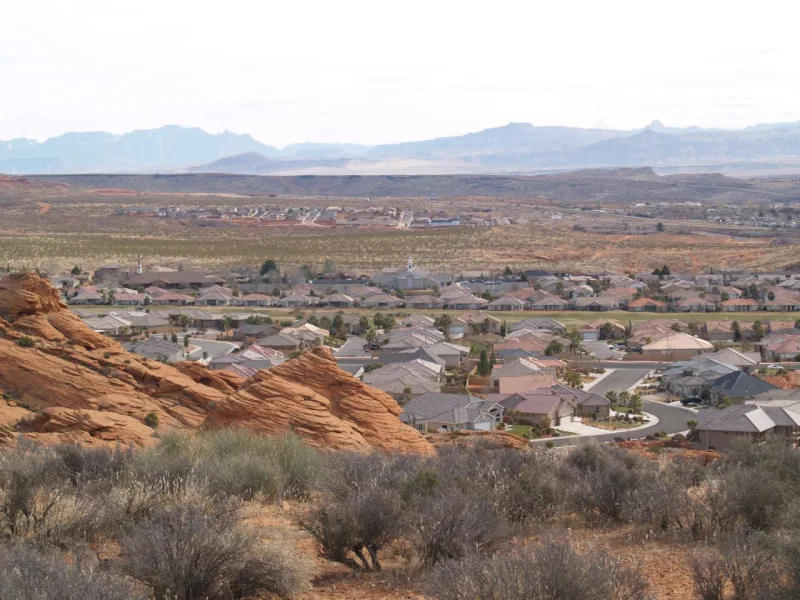
Stucco problems repeat across Washington County because desert exposure and soil movement affect walls valley-wide. Washington sits at 2,894 feet on the edge of the Mojave Desert, and the same sun, heat and ground movement can show up as cracks, failed joints or loose areas on homes in nearby communities. Green Springs went up around its golf course through the 1990s and 2000s. Washington Fields is the newest part of the city and is still being built on former farm ground, so the repair still starts with the wall in front of us.
Washington Elite Stucco Repairs Stucco Across Southern Utah
Washington Elite Stucco works on stucco repairs throughout these Southern Utah communities:
- Washington, UT
- St. George, UT
- Santa Clara, UT
- Ivins, UT
- Winchester Hills, UT
- Diamond Valley, UT
- Dammeron Valley, UT
- Veyo, UT
- Central, UT
- Pine Valley, UT
- New Harmony, UT
- Leeds, UT
- Toquerville, UT
- La Verkin, UT
- Hurricane, UT
- Apple Valley, UT
- Virgin, UT
- Rockville, UT
- Springdale, UT
Across those communities, the repair decision still comes back to your specific wall, not to the town name.
Stucco Repair Questions Washington Homeowners Ask
How much does a stucco repair cost?
Stucco repair cost depends on the measured square footage after sounding. We account for access, height and matching an aged finish because each one changes the crew time the repair takes.
Will insurance pay for stucco repair?
Homeowners insurance commonly treats damage from a sudden storm or impact as a possible claim, subject to the policy. We document the damage and repair scope, while the insurer decides coverage.
When should I worry about stucco cracks?
Fine cracks spread across a surface are often shrinkage. Fewer, longer cracks that follow framing, reopen on the same line or run diagonally from window corners deserve a closer look because movement may be involved.
Can you match the new stucco to my existing home's stucco?
Usually, yes. Texture matching starts with the finish already on the wall, and stucco patching should be judged after a sample dries because cured stucco does not match the color it showed while wet.
Is it better to repair or replace stucco?
The answer depends on how much stucco is unsound after the wall is sounded. Limited damage over a sound substrate can often be repaired, while larger detached areas may need removal and replacement.
Can stucco be spot repaired?
Stucco can be spot repaired when the surrounding stucco is still bonded. The patch has to extend to sound material. A wall is a poor candidate when loose areas keep appearing in new places, or the lath behind the stucco has rusted, because the problem then sits in the wall rather than on its face.
What bonding agent should be used for stucco?
The right bonding agent depends on the substrate, coat and product directions. Surface preparation matters more than the brand name, because dust, loose material or moisture can keep a good product from bonding.
Can a handyman repair stucco?
Small cosmetic filling may be possible, but lath, flashing or coat timing belongs with a licensed and insured crew. A failed repair can hide the water or movement that caused the damage.
How often does stucco need to be repaired?
A hard-coat stucco wall commonly lasts 50 years or more with maintenance. Sealant is the shorter-lived part of the assembly, and joints or penetrations often need attention about every 5 to 10 years.
Why is stucco repair so expensive?
Most of the cost is preparation, access, lath work and matching, not the bagged material. Coats also cure on code-set intervals, so a proper repair cannot always be compressed into one visit.
For answers about your wall, call (435) 319-6039 or use the quote form.
Get Your Stucco Wall Looked At
A Washington Elite Stucco visit establishes what moved, how far the damage runs and what the wall needs before stucco repair begins. You receive a written scope for the repair, and the visit puts you under no obligation to hire us. Call (435) 319-6039 or use the quote form to request a free estimate.